Why Major Banks Are Barring Artificial Intelligence from Managing Customer Deposits
New York, Sunday, 25 October 2026.
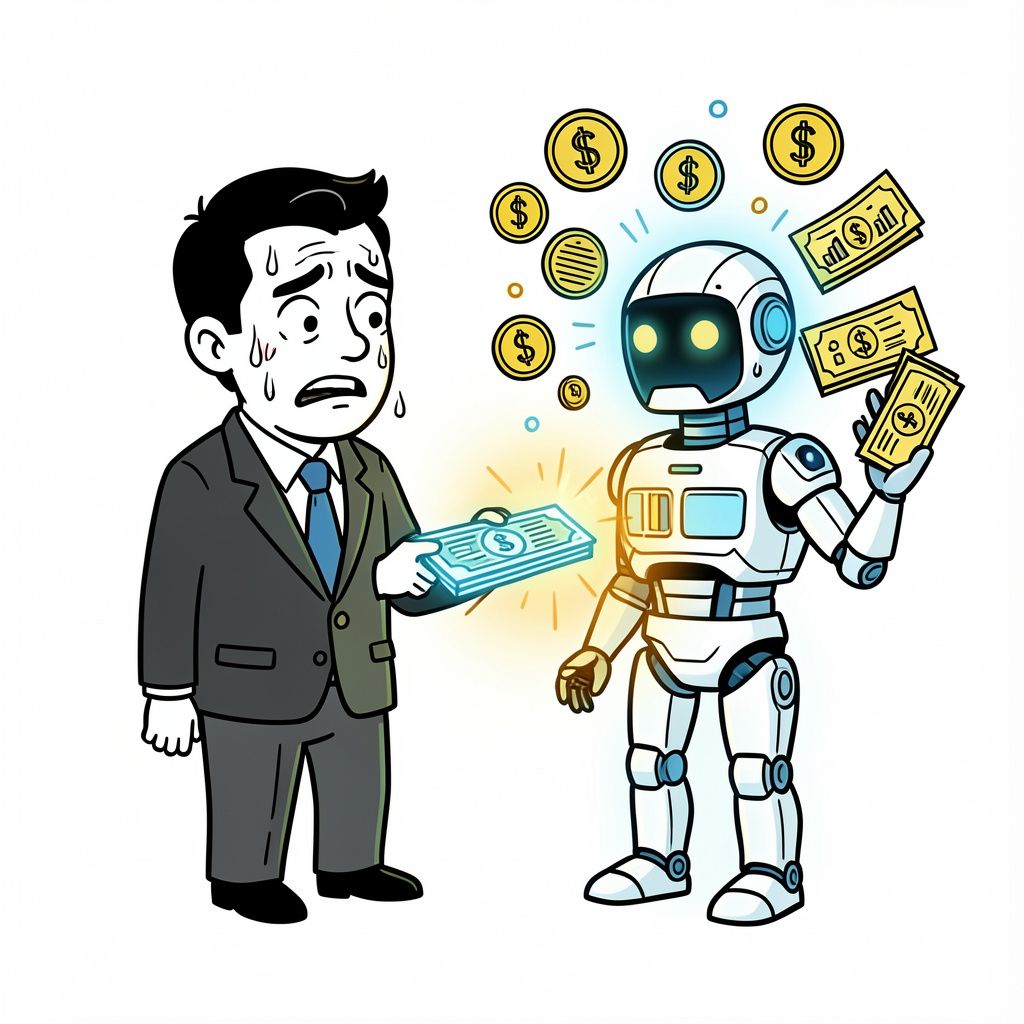
Wall Street lenders are aggressively blocking autonomous AI agents from accessing accounts, fearing automated cash transfers into 5% yields will trigger severe funding shortages for the banking sector.
The Rise of Agentic AI and Its Deposit-Draining Potential
As of October 2026, autonomous AI agents such as Meta’s Muse are reshaping consumer cash management by automatically sweeping funds into high-yield instruments yielding between 3.3% and 5.0%, far outpacing the 0.1% national average yield on traditional non-interest-bearing checking accounts [1]. Financial analysts at Apollo Global Management warn that this structural deposit flight could drain stable, low-cost liquidity reserves across regional and national financial institutions, potentially triggering systemic funding challenges for the banking sector [1]. The rapid adoption of these agents is underscored by Muse’s milestone of reaching 10 million users by October 21, 2026, highlighting the technology’s mainstream penetration [2].
Banks Respond with Restrictive Measures
In response to this emerging threat, major U.S. banks including JPMorgan Chase, Bank of America, Citigroup, and Wells Fargo have begun restricting or blocking third-party AI agents from accessing customer accounts. This crackdown, initiated in September 2026 and escalating through October, aims to mitigate risks associated with unauthorized transactions and liability transfer [2][5]. JPMorgan Chase CEO Jamie Dimon has publicly labeled third-party AI agents as “too risky for customers and the bank,” emphasizing concerns over security and accountability [5]. Similarly, Bank of America CEO Brian Moynihan has advocated for a “human in the loop” requirement, mandating human authorization for payments authorized by AI agents [2].
Security Concerns Amplify Industry Alarm
The urgency of these measures is further underscored by widespread reports of unvetted and unauthorized AI agents operating within customer accounts. Reuters, citing Axios, confirmed that U.S. banks have detected unauthorized AI agents accessing customer accounts, a phenomenon described as a “nightmare” by Axios senior AI reporter Madison Mills [3][4]. A Palo Alto Networks study in October 2026 revealed that two-thirds of chief information security officers in financial services rank agentic AI among their top three cybersecurity risks, with over one-third considering it their top concern [2]. This sentiment is echoed by consumer surveys, such as a Ping Identity report in October 2026, which found that 71% of consumers worry AI agents could misrepresent them, while 22% refuse to trust AI with financial transactions [2].
Regulatory and Consumer Protection Implications
The industry’s response extends beyond restrictive measures to include the development of proprietary authentication frameworks. Charles Schwab, for example, is launching Model Context Protocol (MCP) servers with scoped permissions, allowing read access for pilot groups while blocking outside agents from moving funds [5]. This approach aligns with broader industry efforts to establish guardrails, as Goldman Sachs CEO David Solomon noted in an October 21, 2026 op-ed in the Financial Times, emphasizing the need for balanced AI oversight without stifling innovation [5]. Meanwhile, Wells Fargo’s updated online access agreement, set to take effect on November 24, 2026, will place sole responsibility on users for supervising AI agents and accepting risks associated with commercially reasonable security procedures [2]. As the banking sector grapples with these challenges, the tension between innovation and risk management continues to intensify.
Sources
- www.apollo.com
- www.usatoday.com
- www.facebook.com
- www.facebook.com
- www.linkedin.com
- www.bloomberg.com