Solar Leases Surge After Federal Tax Breaks for Owners End
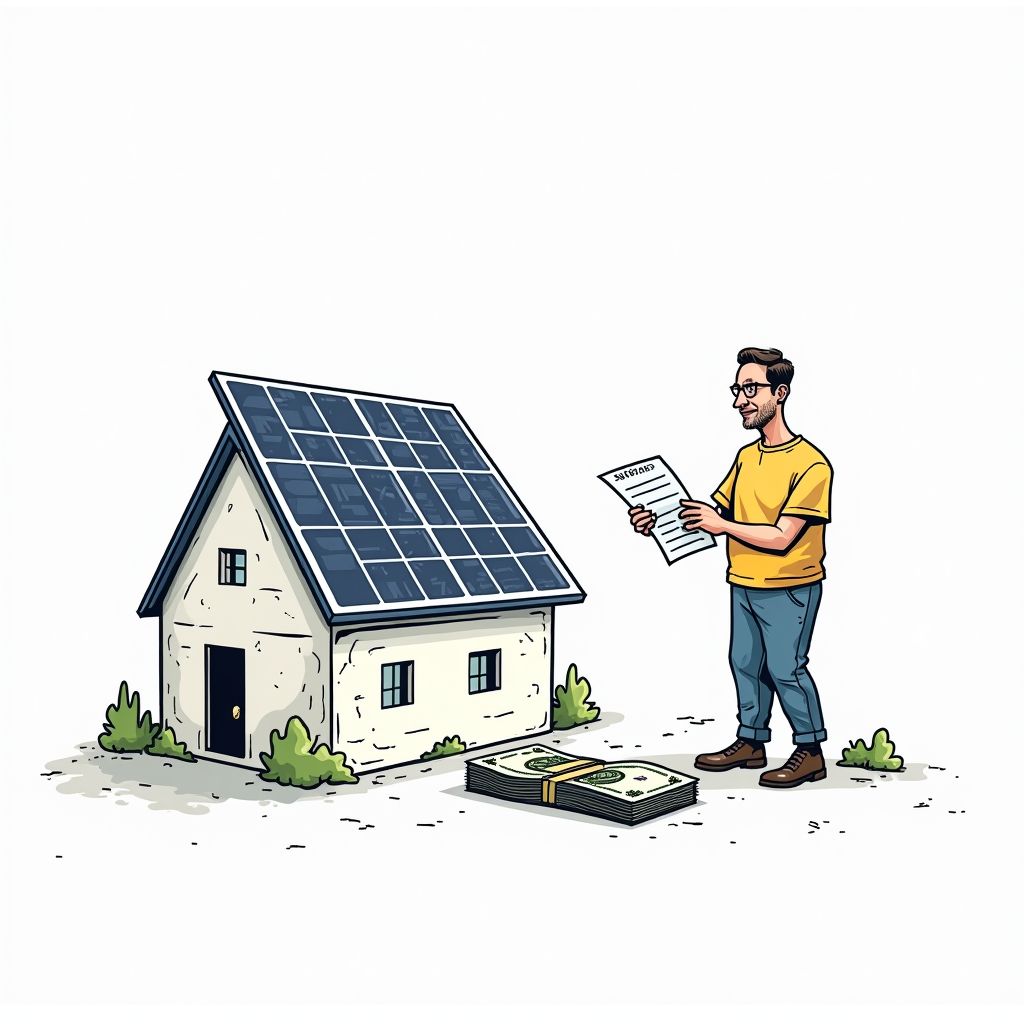
Washington, Wednesday, 25 February 2026.
With federal incentives for buying panels eliminated, the solar market has aggressively pivoted to leasing, now the exclusive method for capitalizing on government subsidies in 2026.
A Structural Shift in Solar Economics
As of February 25, 2026, the residential solar industry is navigating a forced evolution toward third-party ownership, fundamentally altering how Americans access renewable energy. This pivot is the direct result of legislation signed by President Trump in early July 2025, which eliminated federal tax incentives for direct solar purchases—specifically the Section 25D residential credit [3][5]. However, the industry has identified a critical lifeline: federal tax credits remain available for leased systems, allowing solar companies to retain ownership of the arrays and claim commercial investment incentives that are no longer accessible to individual homeowners [1][3].
The Leasing Loophole
The divergence in tax policy has created a market environment where leasing, often structured as Power Purchase Agreements (PPAs) or subscriptions, is the primary vehicle for federal subsidy utilization. While the residential purchase credit was repealed, provisions for Commercial & Industrial (C&I) solar, including transferability and direct pay, have been preserved [8]. Consequently, installers are steering customers toward these models to maintain affordability. Data from Wood Mackenzie indicates that even before the full repeal took effect, the market was reacting; in the first three quarters of 2025, over half of all new solar installations were owned by third parties rather than homeowners [1].
Industry Forced to Adapt
For many long-standing solar advocates, this shift represents a compromise of principles necessitated by economic survival. Micah Gold-Markel, owner of Solar States, a company operating since 2008, admitted that while he traditionally viewed leases as unfavorable for the consumer, the expiration of purchase credits forced his firm to embrace leasing to preserve the jobs of his 70 employees [1][3]. The strategic pivot is widespread; Zoë Gaston, a solar analyst with Wood Mackenzie, noted that numerous companies are “changing their tune” regarding leasing models as the only viable path forward for many customers [1]. Despite the repeal of residential credits, the sector remains robust in scale, with solar and storage combined accounting for 85% of new electricity capacity added in the U.S. in 2026 [8].
Consumer Risks and Financial Reality
The transition to leasing introduces complex financial variables for homeowners. Unlike ownership, which historically allowed residents to control their energy future and increase property value, leasing contracts can complicate home sales and often include price escalators that increase costs over the typical 20-year term [3]. Joy Seitz, CEO of American Solar and Roofing, has expressed strong opposition to the model, citing the potential for long-term consumer dissatisfaction and complications that arise within three to five years of signing [1]. Experts advise consumers to scrutinize buyout options and removal costs, as the bankruptcy of a leasing company can lead to service delays and encumbered property titles [3]. As of early 2026, approximately 5.8 million U.S. homes have solar installed, representing 8.2% of suitable residential properties [3].
Political Headwinds and Market Outlook
The legislative landscape remains volatile as industry proponents lobby for a reversal of the 2025 cuts. Representative Brian Fitzpatrick (R-PA) has publicly pushed to reinstate the wind and solar tax credits eliminated under the “One Big Beautiful Bill” (OBBB), arguing that the administration received “bad advice” regarding the repeal [5]. This internal Republican friction highlights the economic weight of the sector; in 2024 alone, the solar industry generated over $71 billion in private investment and employed 280,000 Americans [8]. While the residential purchase market faces a projected decline in 2026 due to the credit repeal, the leasing model serves as a stopgap, maintaining deployment levels while political debates regarding the reinstatement of the Investment Tax Credit (ITC) continue [5][8].