United States Ends Longstanding Syria Sanctions to Unlock Foreign Investment
Washington, Tuesday, 25 August 2026.
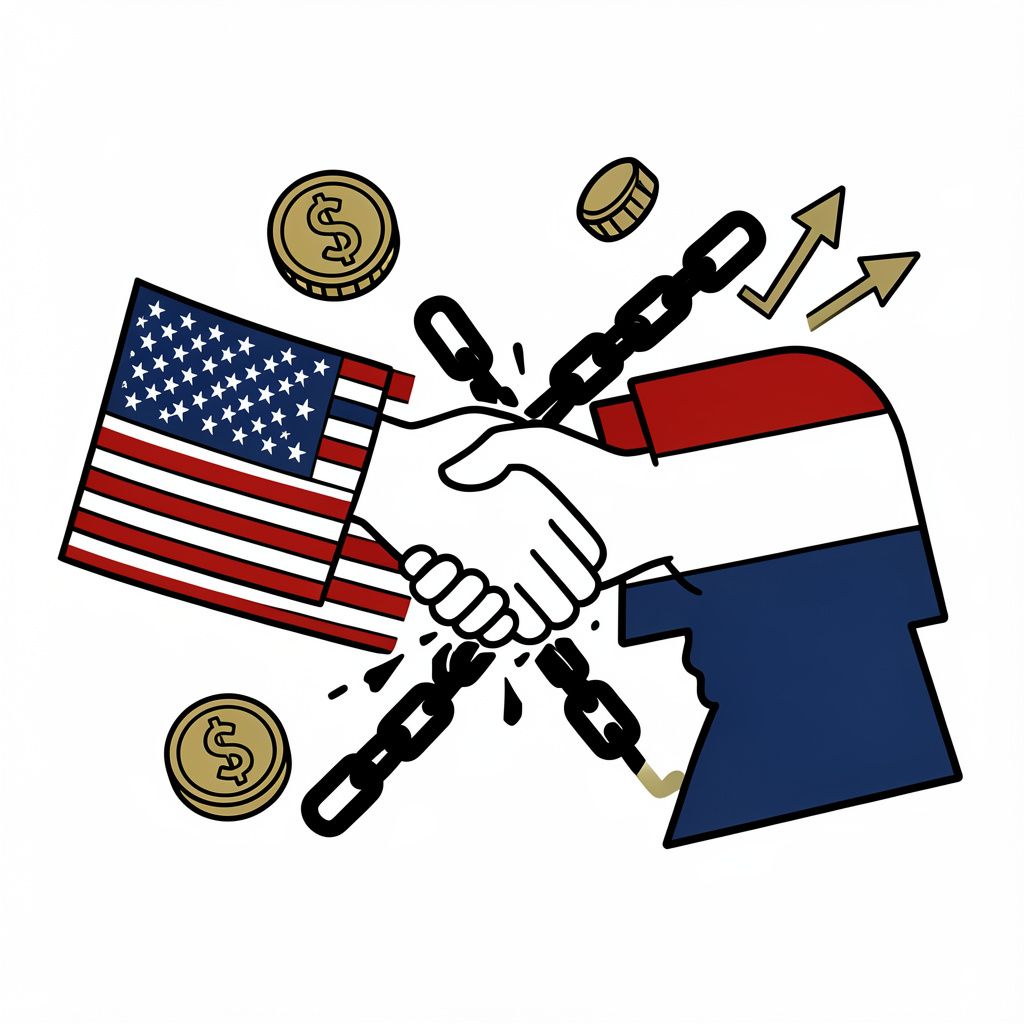
The U.S. formally removed Syria from its state sponsors of terrorism list after 47 years, clearing the primary legal barrier to private sector investment and global financial reintegration.
Formal Rescission of Terrorism Designation
On August 24, 2026, the United States formally removed Syria from its list of state sponsors of terrorism, ending a designation that had been in place since 1979 [6]. Secretary of State Marco Rubio authorized the rescission following the conclusion of a mandatory 45-day Congressional notification period [2]. This decision marks a definitive shift in U.S. foreign policy, transitioning from decades of isolation to engagement with the new Syrian administration led by President Ahmed al-Sharaa [1]. The move eliminates significant legal barriers for private sector investment and aims to promote Syria’s economic recovery and reintegration into the global economy [6].
Historical Context and Political Transition
Syria’s removal from the list concludes a period of sanctions lasting approximately 47 years, calculated as ƒ{2026 - 1979} [2]. The geopolitical landscape shifted dramatically in late 2024 when forces led by Hay’at Tahrir al-Sham (HTS) overthrew the regime of Bashar al-Assad [5]. Formerly designated as a terrorist organization, HTS was delisted by the U.S. government following commitments to distance itself from international terrorism [2]. President Donald Trump welcomed President al-Sharaa to the White House in November 2025, signaling early support for the transitional administration [1].
Security Commitments and Counterterrorism
The State Department cited significant steps taken by the Syrian government to counter terrorism as a primary justification for the policy change [6]. In November 2025, Syria formally joined the Global Coalition to Defeat ISIS and has conducted operations to disrupt networks linked to ISIS, al-Qa’ida, and Hizballah [5]. Secretary Rubio emphasized that these actions demonstrated a commitment to fully distance Syria from acts of international terrorism [2]. Additionally, the U.S. completed its full military withdrawal from the country in April 2026, marking the end of more than a decade of direct fighting against ISIS in the region [2].
Economic Implications and Remaining Sanctions
Treasury Secretary Scott Bessent stated that the action would foster additional investment to promote political and economic stability [5]. While Syria is removed from the list, three countries remain designated as state sponsors of terrorism: Cuba, North Korea, and Iran [1]. The administration hopes this economic opening will bring Syria into the U.S. orbit rather than that of Russia or China, though security risks persist [1]. Syrian Foreign Minister Asaad al-Shaibani described the decision as a historic step toward creating an environment based on transparency and mutual interests [1].