Transatlantic Trade Relations Strain as EU Weighs Response to Greenland Tariffs
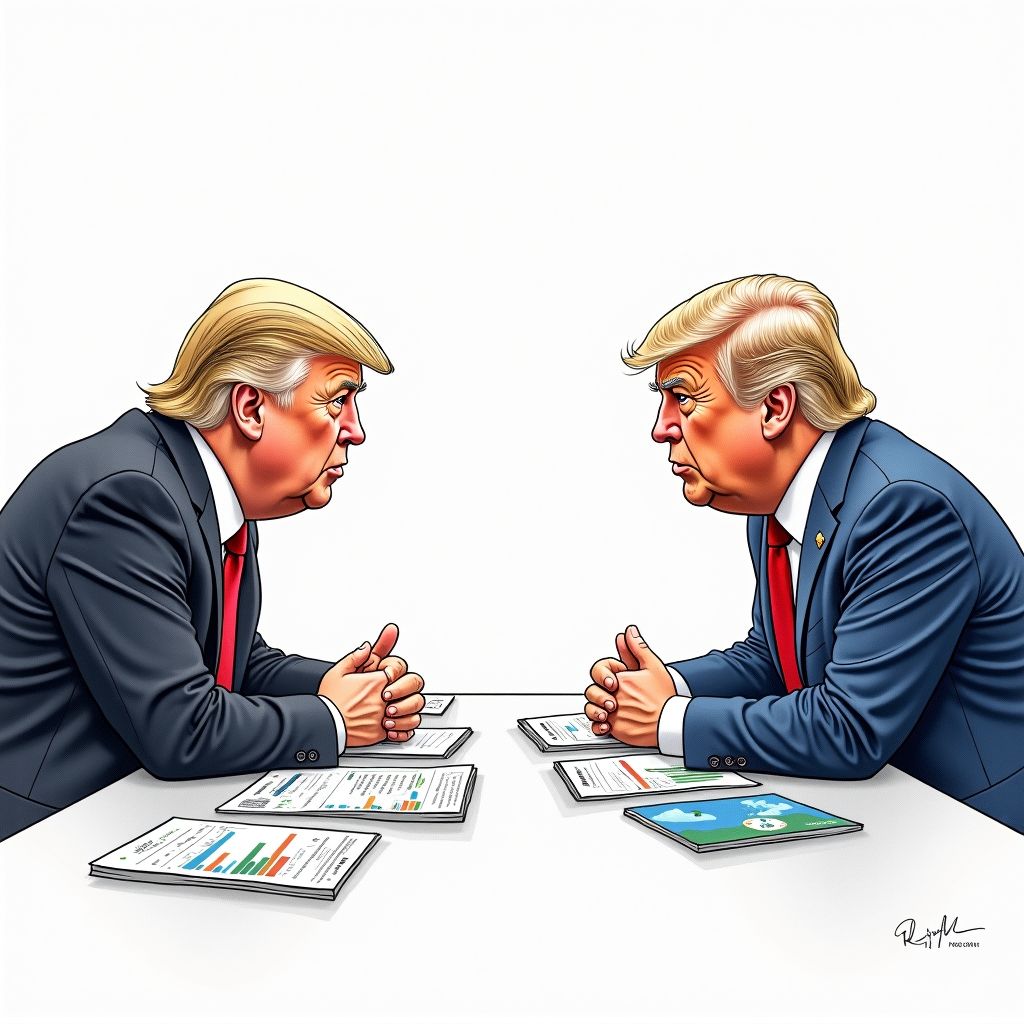
Brussels, Saturday, 17 January 2026.
President Trump has linked escalating tariffs on European allies directly to the acquisition of Greenland, forcing EU leaders to coordinate an urgent response to avert a dangerous economic spiral.
Escalation in the Arctic
On Saturday, January 17, 2026, European Council President Antonio Costa and European Commission President Ursula von der Leyen issued a joint statement condemning the proposed levies, warning that such measures risk a “dangerous downward spiral” in transatlantic relations [1][6]. The diplomatic crisis intensified following President Trump’s announcement on January 16 via Truth Social, where he declared a 10% tariff on goods from eight specific nations—Denmark, Norway, Sweden, France, Germany, the United Kingdom, the Netherlands, and Finland—effective February 1, 2026 [2][5]. These penalties are explicitly tied to the deployment of European military forces to Greenland between January 13 and 15, a move the President characterized as countries having “journeyed to Greenland, for purposes unknown” [1][5].
The Tariff Ultimatum
Under the proposed plan, the initial 10% levy serves as a preliminary measure; the administration has threatened to more than double the rate to 25% on June 1, 2026, if a deal for the “Complete and Total purchase of Greenland” is not reached [4][5]. This ultimatum targets key NATO allies, all of whom have rejected the notion of selling the semi-autonomous Danish territory [2]. British Prime Minister Keir Starmer described the application of tariffs on allies for pursuing collective security as “completely wrong,” emphasizing that Greenland’s future is a matter solely for the Greenlanders and Danes [1][5].
A Unified European Front
The European Union is moving quickly to formalize its opposition. Ambassadors from the EU’s 27 member states are scheduled to convene for an emergency meeting on January 19, 2026, to coordinate a strategy [2]. In their joint statement, Costa and von der Leyen asserted that the “pre-coordinated Danish exercise” conducted with allies was a necessary measure to strengthen Arctic security and posed no threat [6]. French President Emmanuel Macron reinforced this stance, declaring the tariff threats “unacceptable” and promising a united European response to uphold sovereignty [2]. The geopolitical tension has also sparked unrest locally; on January 10, crowds in Nuuk staged a “Stop Trump” march to protest the acquisition proposal [3].
Domestic Friction and Legal Hurdles
While the White House presses forward, domestic opposition is mounting. Recent polling indicates that fewer than 20% of Americans approve of the efforts to acquire Greenland, with only 4% believing the U.S. should attempt to buy the island [5]. Furthermore, the administration’s aggressive trade policy faces potential judicial checks; the Supreme Court is currently reviewing the President’s use of the International Emergency Economic Powers Act, the legal authority cited for these tariff threats [4]. Even within the Republican party, dissent is visible, with Senator Thom Tillis criticizing the tariffs as “bad for America’s allies” and beneficial to adversaries like Russia and China [2].
Economic Context
The imposition of these new duties would compound an already protectionist trade environment. As of late 2025, the U.S. average effective tariff rate had reached 16.8%, the highest level since 1935 [5]. Existing trade deals from last year already subject British imports to a 10% tariff and European Union imports to a 15% rate [4]. If the new Greenland-related tariffs are implemented on top of these, the cumulative economic burden on cross-border supply chains could be severe. With President Trump scheduled to attend the World Economic Forum in Davos on January 21, 2026, these tensions are expected to dominate the global economic agenda [2].
Sources
- www.dw.com
- www.cbsnews.com
- abcnews.go.com
- www.nytimes.com
- www.theguardian.com
- www.consilium.europa.eu