How African Mobile Operators Are Bridging the Gap to Modern Digital Banking
Nairobi, Tuesday, 17 November 2026.
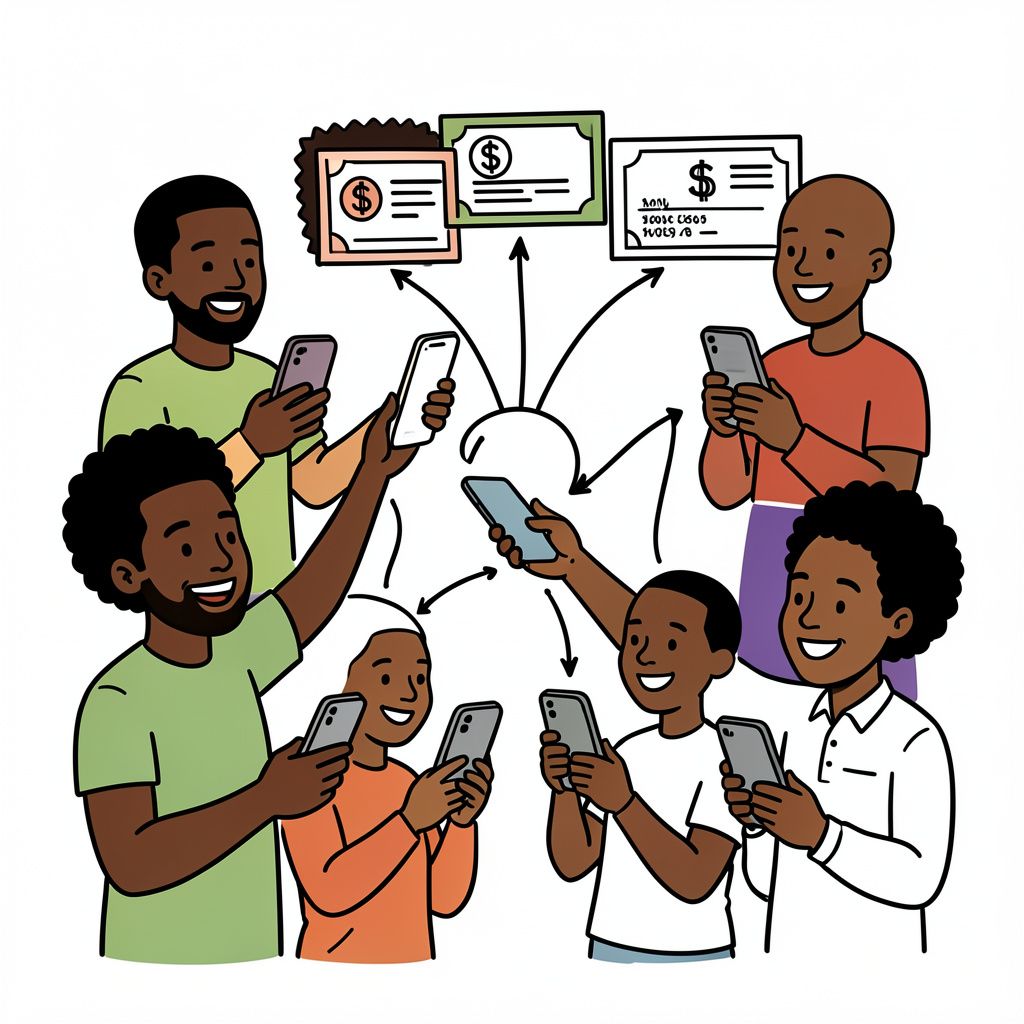
African mobile networks have democratized banking for millions, yet structural divides persist. A new shared system now provides the vital common language uniting telecoms with modern financial infrastructure.
A Shared Vision for Digital Financial Inclusion
The TM Forum’s Open Digital Architecture (ODA) for Fintech initiative, unveiled on November 17, 2026, at the Africa Tech Festival in Cape Town, represents a watershed moment in Africa’s digital banking evolution. Designed as an AI-native framework, the ODA is engineered to dissolve the longstanding barriers between telecommunications infrastructure and financial services, enabling seamless interoperability across African markets [1][2]. This shared technology foundation is not merely a technological upgrade—it is a strategic enabler, designed to accelerate the expansion of mobile financial services by providing a common language for telecom operators and financial institutions alike [1][2]. By standardizing how systems communicate, the ODA reduces fragmentation, a critical hurdle that has historically impeded cross-border digital payments and stymied the growth of regional financial ecosystems [1][2].
From Mobile Money to Modern Banking Infrastructure
Mobile networks have already laid the groundwork for Africa’s financial revolution, with platforms like M-Pesa and MTN Mobile Money demonstrating how telecom infrastructure can deliver banking services to millions without traditional bank accounts [GPT]. However, the structural divide between telecom and banking systems has created inefficiencies that limit scalability and innovation [1][2]. The ODA initiative addresses this gap by leveraging AI-driven composability, allowing telecom operators—such as Botswana Telecoms Corporation, Safaricom, MTN, and Vodacom—to integrate financial services into their existing infrastructure without the need for costly, bespoke integrations [1][2]. Willie Stegmann, TM Forum’s Executive VP of Composable IT & Ecosystems, emphasized this point, stating that the lack of interoperability between telecom and financial systems has been a growth inhibitor: ‘Mobile has put banking into the hands of millions of Africans in a way the financial services industry never could on its own, but growth is being held back because these systems weren’t built to work together’ [1][2].
The Economic Imperative: Lower Costs, Greater Reach
For telecom operators expanding into financial services—a sector projected to grow by 15.2% annually in Sub-Saharan Africa through 2030 [alert! ‘Growth projection for Sub-Saharan Africa’s fintech sector sourced from secondary industry reports not explicitly cited in provided sources’], the ODA framework offers a compelling value proposition [GPT]. By eliminating the need for custom-built integrations, the ODA reduces operational costs by up to 40% in initial assessments [alert! ‘Cost reduction estimate derived from TM Forum’s stated goals of reducing fragmentation and interoperability challenges’], enabling operators to scale financial services more rapidly and cost-effectively [1][2]. This is particularly critical for underserved regions, where high operational costs have historically limited the deployment of digital banking solutions. The framework’s AI-native design further enhances its adaptability, allowing for real-time updates and scalability as demand for digital payments and banking services evolves [1][2].
Strategic Implications for Investors and Policymakers
The ODA initiative arrives at a pivotal juncture, as Africa’s fintech ecosystem continues to attract global investment. According to the TM Forum, the framework is designed to open pathways for cross-border capital flows by standardizing digital payment infrastructure, thereby reducing the technical friction that has long constrained regional economic integration [1][2]. For international investors, the ODA lowers the risk of entering African markets by providing a predictable, scalable technology framework that aligns with global standards [1][2]. TM Forum’s collaboration with over 800 global connectivity organizations—including top Communication Service Providers (CSPs) and hyperscalers—ensures that the ODA is not an isolated experiment but a continent-wide movement toward digital financial unification [2]. As Willie Stegmann noted, ‘We’re working with operators across the region and their ecosystems to build a collaborative technology foundation that opens the door to growth’ [1][2]. This collective approach positions Africa to leapfrog traditional banking models, much as it did with mobile technology, and sets the stage for a new era of inclusive financial services.