Cornell Economist Identifies a ‘Doom Loop’ Threatening Global Stability
New York, Sunday, 22 February 2026.
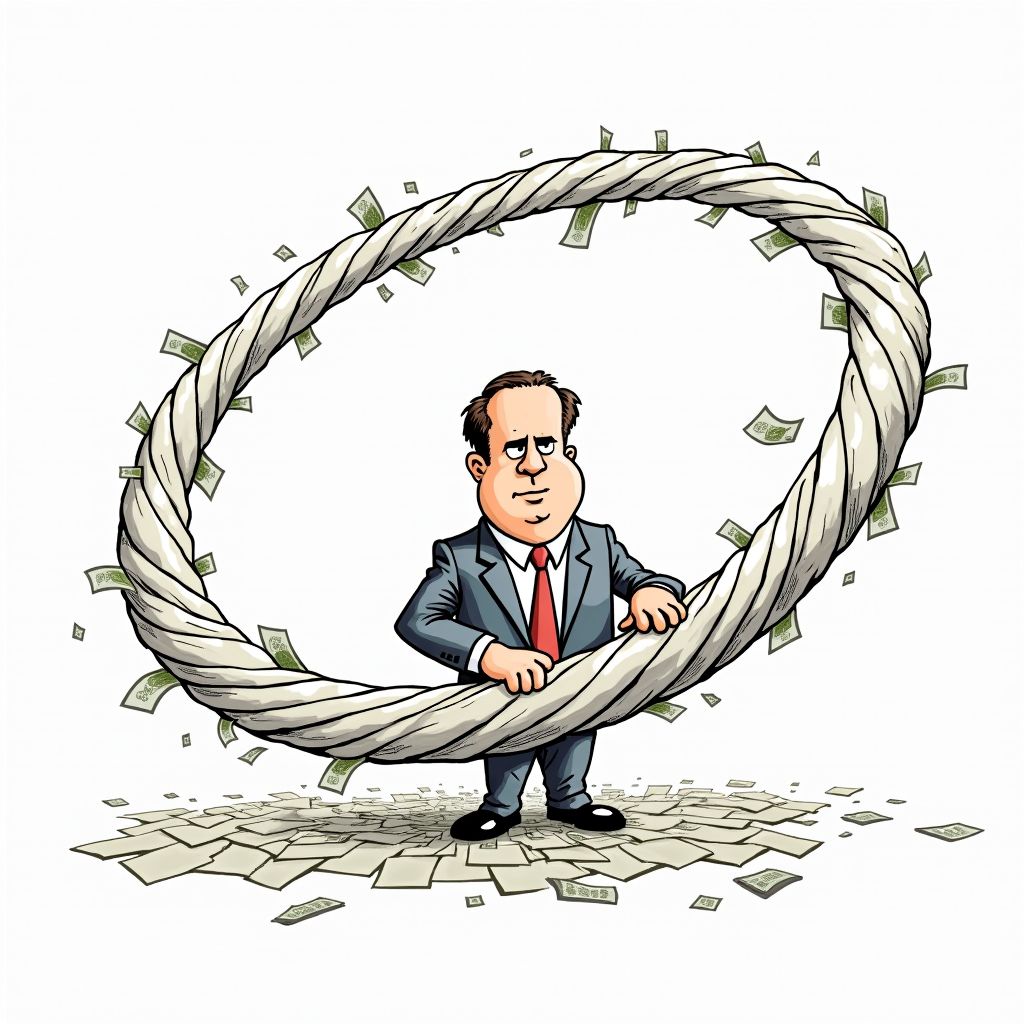
Initially fearing his thesis was “too dark,” Prasad now argues a toxic cycle of populism and geopolitics is actively dismantling the global economic order.
The Anatomy of Disorder
Eswar Prasad, the Tolani Senior Professor of Trade Policy at Cornell University and a Senior Fellow at the Brookings Institution, released his new book, The Doom Loop: Why the World Economic Order Is Spiraling into Disorder, on February 3, 2026 [1][4]. In this analysis, Prasad describes a “doom loop” where economic conditions, domestic politics, and international geopolitics negatively reinforce one another [2]. While he completed the initial draft in October 2024, the subsequent US presidential election results and the “shock waves that followed” compelled him to double down on his thesis, concluding that the global system is destabilizing even faster than anticipated [1][4]. Prasad argues that while globalization generated significant wealth, it distributed benefits unevenly, fostering deep economic discontent that opened the door for a “politics of resentment” [2][4]. This dynamic has empowered populist figures like Donald Trump, Jair Bolsonaro, and Viktor Orban to dismantle the open markets that fueled previous growth [2].
A Geopolitical Fracture
The global economy has shifted from a positive-sum game of cooperation to a zero-sum game of geopolitical rivalry, evidenced by a “crazy and chaotic” start to 2026 [4]. In January 2026 alone, the United States took aggressive unilateral actions, including the reported abduction of the president of Venezuela and renewed claims over Greenland [4]. Furthermore, the US administration has threatened tariffs on allies in the European Union, Canada, and Korea, while simultaneously withdrawing support from international bodies like the United Nations and the International Monetary Fund (IMF) [2][4]. In response to the perception that institutions like the IMF and World Bank favor richer nations, emerging markets led by China and India are accelerating the establishment of their own alternative institutions [2]. This trend signals a move away from a common set of global rules toward fragmentation, which Prasad identifies as a “recipe for instability” [2].
The Economic Fallout
The economic ramifications of this geopolitical divorce are profound. The United States now accounts for approximately 25% of global GDP, a decrease from 30% about two decades prior [4]. Meanwhile, China recorded a massive goods trade surplus of $1.2 trillion in 2025 [4]. Despite the US potentially “divorcing the rest of the world,” Prasad notes that the global trading system between other blocs continues to function, though trade and financial flows are increasingly aligning along geopolitical lines [4]. Diplomatic maneuvers underscore this shift; while the US isolates itself, Canadian Prime Minister Mark Carney and British Prime Minister Keir Starmer visited China in early February 2026, and German Chancellor Friedrich Merz is scheduled to visit Beijing later this month [4].
Future Outlook: The Dollar and AI
Looking ahead, the stability of the US dollar remains a critical point of vulnerability. Concerns are mounting regarding the Federal Reserve’s independence and increasing federal debt, exacerbated by political pressure for lower interest rates [4]. While foreign investors have continued to purchase US Treasury securities over the last 12 months, the “doom loop” suggests that the institutional framework underpinning the dollar’s dominance—such as the rule of law and checks and balances—is under significant stress [4]. Additionally, the rise of artificial intelligence threatens to further concentrate wealth, potentially intensifying the economic inequality that fuels this destructive cycle [2][4]. Prasad warns that we are currently “stuck in a very negative feedback loop” where economics and politics bring out the worst in each other [4].