How Severe Staffing Cuts Are Blocking Access to Social Security Disability Benefits
Washington, Tuesday, 2 June 2026.
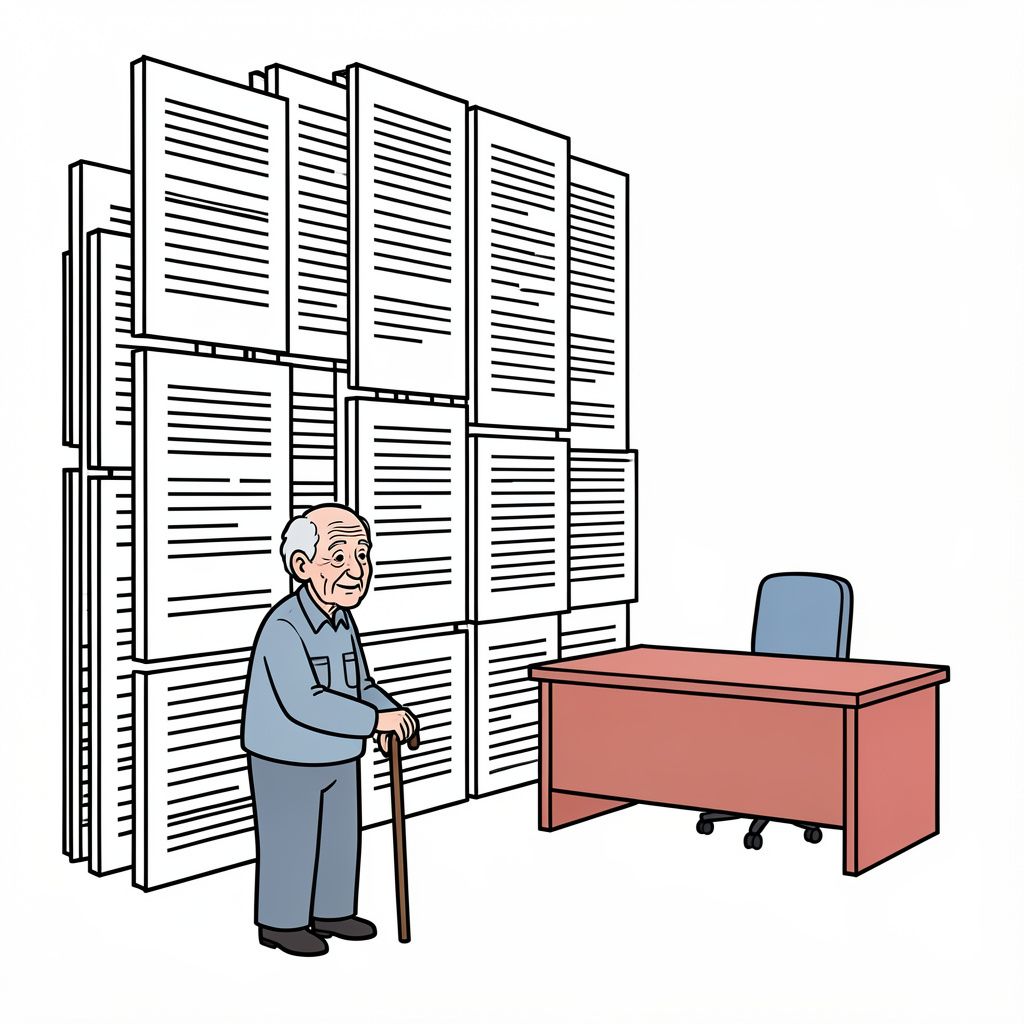
Severe staffing cuts of 13% at the Social Security Administration have created massive administrative bottlenecks, tragically leaving some terminally ill applicants to die before receiving crucial disability benefits.
A System Under Strain Following Drastic Workforce Reductions
In early 2025, during the onset of the second Trump administration, the Social Security Administration (SSA) executed the most severe staffing reduction in its history [1][2]. The federal agency eliminated over 7,100 positions, representing a reduction of more than 13% of its total workforce [1][2]. Concurrently, the administration implemented structural changes that included shuttering six of the SSA’s ten regional offices, migrating services predominantly online, and replacing human operators with artificial intelligence and automated systems on public phone lines [1][2]. These executed policies marked a definitive shift from political campaigning rhetoric to concrete administrative action, fundamentally altering how vulnerable populations interact with the federal safety net [GPT].
Policy Reversals, Transparency Reductions, and Immigration Directives
Compounding the staffing shortages were a series of rapid and occasionally erratic policy shifts implemented throughout 2025. In March 2025, the SSA abruptly announced that individuals could no longer apply for benefits over the phone, a critical lifeline for those without reliable internet access or the ability to travel [1][2]. Although this specific policy was reversed just a month later in April 2025, the confusion had already permeated the applicant pool [1][2]. Furthermore, in June 2025, the agency removed essential customer service metrics from its public website, effectively obscuring data on phone wait times and disability claim processing durations from public scrutiny [1][2].
Navigating Stringent Eligibility and the Need for Advocacy
Even without administrative delays, qualifying for SSDI requires navigating strict historical work requirements. Applicants generally need 40 work credits, with 20 of those credits earned in the last 10 years [3]. In 2026, a single work credit requires $1,890 in wages or self-employment income, meaning an individual must earn 7560 dollars annually to secure the maximum of four credits per year [3]. Because of the recency requirement, individuals who leave the workforce early—such as those following the Financial Independence, Retire Early (FIRE) movement—can lose their SSDI eligibility after slightly more than five years of unemployment [3].
Future Recommendations and Public Navigation Strategies
To address the escalating crisis, the June 1, 2026 report by Savin, Freitag, and Borus outlines several urgent recommendations for the SSA [1]. The researchers advocate for an immediate hiring initiative to adequately staff the processing of applications and appeals, robust protections for applicant data privacy, and a structural mechanism to incorporate feedback from professional benefits representatives [1][2]. Without these interventions, paralegals like Megan in the Boston region warn that the inefficiencies are forcing advocates to take on fewer cases, leaving more vulnerable individuals to navigate the labyrinthine system alone [1][2].
Sources
- cobbcountycourier.com
- insurancenewsnet.com
- www.reddit.com
- menarddisabilitylaw.com
- socialsecurityreport.org