Covert Arms Transfer Exposed: Trump Alleges Kurdish Intermediaries Kept Weapons Destined for Iranian Protesters
Washington, Sunday, 5 April 2026.
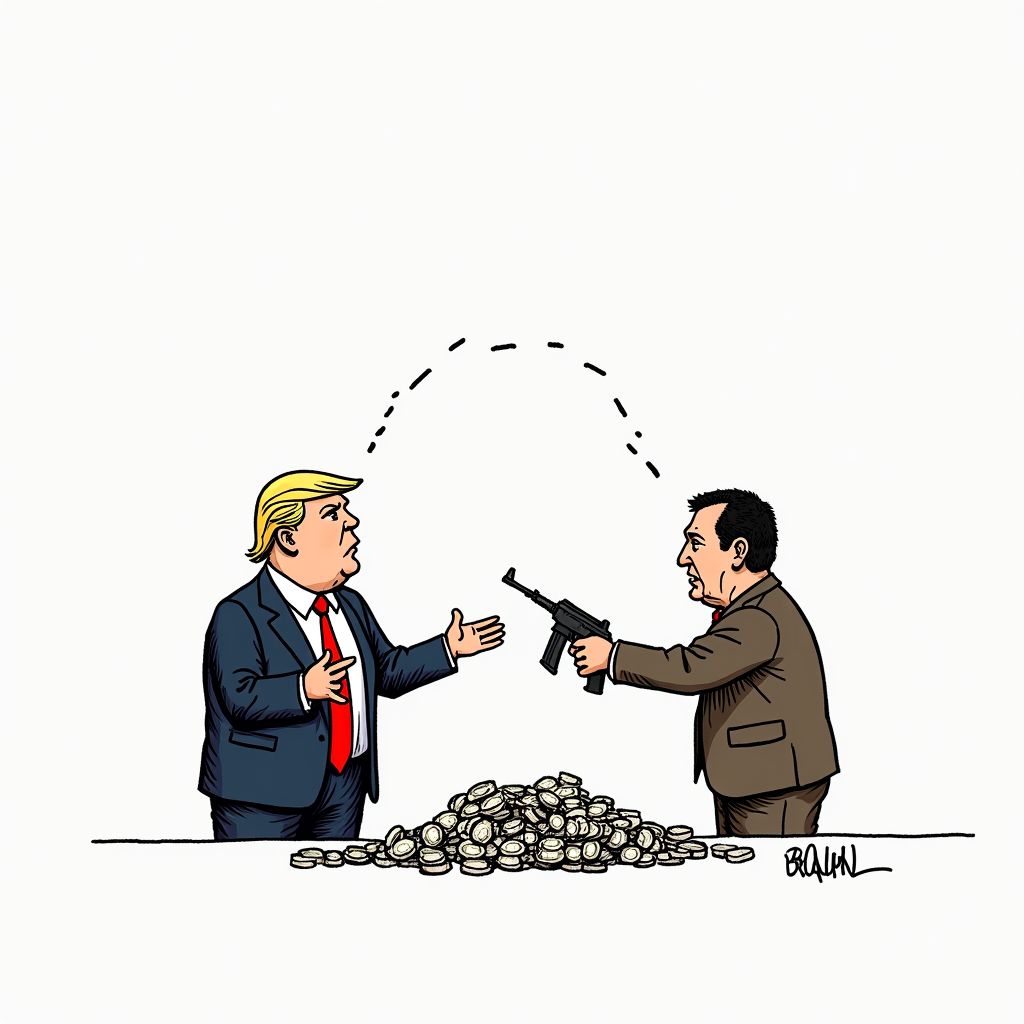
President Trump revealed a failed covert operation, alleging Kurdish intermediaries intercepted US firearms destined for Iranian protesters. This unprecedented disclosure risks escalating geopolitical tensions across the Middle East.
Covert Arms and the Kurdish Factor
According to the President’s claims, the weapons were funneled through Kurdish intermediaries in January 2026, but the arms never reached the Iranian demonstrators [2]. “We sent guns to the protesters, a lot of them. We sent to the Kurds,” the President stated, adding, “And I think the Kurds kept them” [1]. This assertion introduces a complex dynamic into an already fractured region [GPT]. The global Kurdish community numbers approximately 30 million across Turkey, Iraq, Syria, and Iran, with roughly 9 million residing within Iran’s borders [2]. Several Kurdish rebel factions are already designated as terrorist organizations by Tehran [2].
Looming Deadlines and the Threat of Escalation
Beyond the covert arms controversy, the immediate threat of military escalation hangs over global energy markets [GPT]. Over the weekend, President Trump issued a stark 48-hour ultimatum demanding that Iran reopen the Strait of Hormuz—a critical maritime chokepoint for global oil supplies [1]. In a highly charged post on Truth Social on Sunday, the President threatened severe infrastructure strikes if the strait remains closed, declaring that Tuesday, April 7, 2026, will be “Power Plant Day, and Bridge Day, all wrapped up in one, in Iran” [1][2]. He explicitly warned the Iranian leadership to open the strait or face living in “Hell” [1].
Assessing the Month-Long Conflict
These intense negotiations are occurring against the backdrop of a month-old war that has significantly degraded Iran’s military capabilities [3]. At the onset of the conflict in early March 2026, Iran launched an initial barrage of over 400 missiles, drawing from an estimated pre-war stockpile of 2,500 to 6,000 missiles [3]. However, the intensity of Iranian strikes plummeted rapidly, with missile launches decreasing by 90% within the first week of the campaign [3]. To date, Iran has expended over 1,500 missiles, leaving them with an estimated active inventory of between 1000 and 4500 missiles, an equation that does not account for an unknown number destroyed in U.S. and Israeli airstrikes [3].
Strategic Pathways and Market Implications
As the conflict enters a critical phase, the United States faces three primary strategic pathways: withdrawing, sustaining the current air campaign, or escalating to ground operations and infrastructure strikes [3]. A withdrawal risks ceding control of the Strait of Hormuz to Iran, allowing Tehran to tax maritime traffic and potentially rebuild its depleted arsenal [3]. Conversely, maintaining the air campaign leverages the profound economic damage already inflicted, potentially forcing Iran into the very deal President Trump anticipates by Monday [1][3].