US Budget Deficit Reaches Two Trillion Dollars as Interest Costs Soar
Washington, Friday, 9 October 2026.
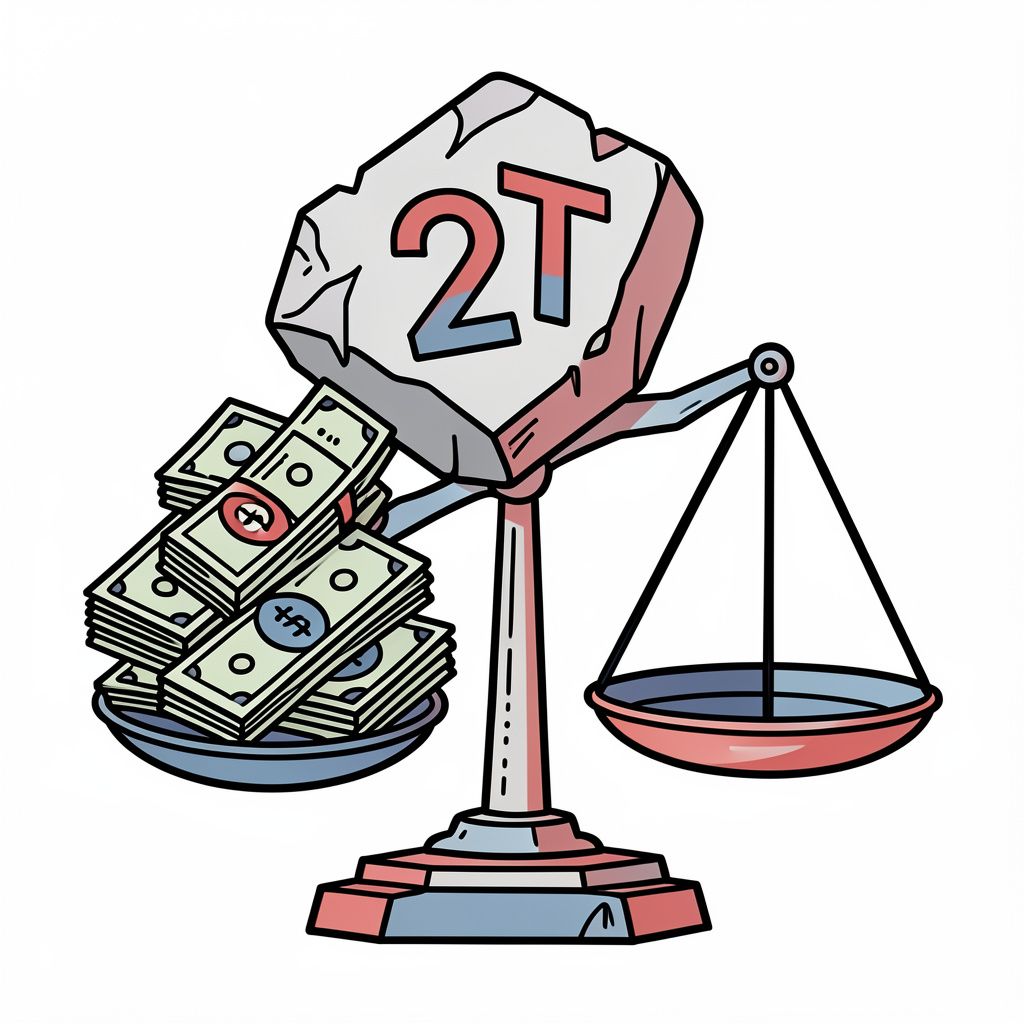
The US federal budget deficit hit two trillion dollars in fiscal year 2026, driven by record national debt and net interest payments exceeding one trillion dollars for the first time.
Surging Interest Payments and Revenue Shortfalls
The Congressional Budget Office confirmed the fiscal year 2026 deficit reached $2 trillion, a figure that includes $28 billion borrowed in September alone [2]. This represents a significant escalation from the previous year, with the gap widening by $218 billion [1]. Net interest payments on public debt exceeded $1 trillion for the first time, marking an 11% increase and establishing interest as the second-largest federal expenditure behind Social Security [1].
The widening gap between expenditure and income is stark. The federal government spent $7.4 trillion last year, while collecting only $5.4 trillion in revenue [3]. This disparity results in a primary gap of 2 trillion before accounting for interest adjustments [3]. Such spending levels are driven largely by mandatory programs, as outlays for Social Security, Medicare, and Medicaid increased due to an aging population and rising healthcare costs [1].
Tariff Refunds and Tax Policy Impacts
A notable contributor to the revenue shortfall was a 16% decline in corporate tax revenue, which fell to $382 billion [1]. This drop is attributed to provisions in recent tax legislation allowing immediate deductions for research, development, and new manufacturing investments [1]. Policy analysts note that companies are actively utilizing these provisions to reduce their taxable income [2].
Additionally, the administration issued approximately $130 billion in tariff refunds following a Supreme Court ruling on the illegality of certain global tariffs [1]. These refunds, combined with lower-than-expected tax intake, exacerbated the fiscal strain. The U.S. Treasury defines this state where spending exceeds revenue as the federal deficit, financed through the issuance of Treasury bonds and bills [5].
Market Volatility and Debt Sustainability
Financial markets have reacted to the deteriorating fiscal outlook with increased volatility. Bond market turmoil occurred in the months leading up to September 3, 2026, driven by rising national debt and expectations of higher Federal Reserve interest rates [1]. The 10-year Treasury yield closed more than 100 basis points above prior projections, signaling investor concern over debt sustainability [4].
The Congressional Budget Office analyzed scenarios where interest rates remain higher than baseline projections [6]. If rates average 50 basis points higher through 2036, deficits could grow by nearly $2 trillion over the decade [4]. This trajectory risks a debt spiral where every dollar spent on interest reduces availability for other purposes [4].
Legislative Outlook and Fiscal Targets
In response to the unsustainable path, advocacy groups are calling for immediate fiscal consolidation. The Committee for a Responsible Federal Budget suggests policymakers commit to no new borrowing and require double the savings for any new costs [2]. Achieving a deficit target of 3% of GDP is proposed as an attainable fiscal goal to restore stability [2].
Looking ahead, significant cuts to Medicaid legislated under the current tax bill are scheduled to begin in 2027 [1]. US lawmakers are expected to address these national fiscal issues in the coming year, though the political will to alter the current trajectory remains uncertain [1]. Without intervention, the national debt, which reached a record $40 trillion in August 2026, continues to compound the economic challenge [1].