Why China Is Shipping Millions of Electric Cars Overseas
Beijing, Sunday, 16 August 2026.
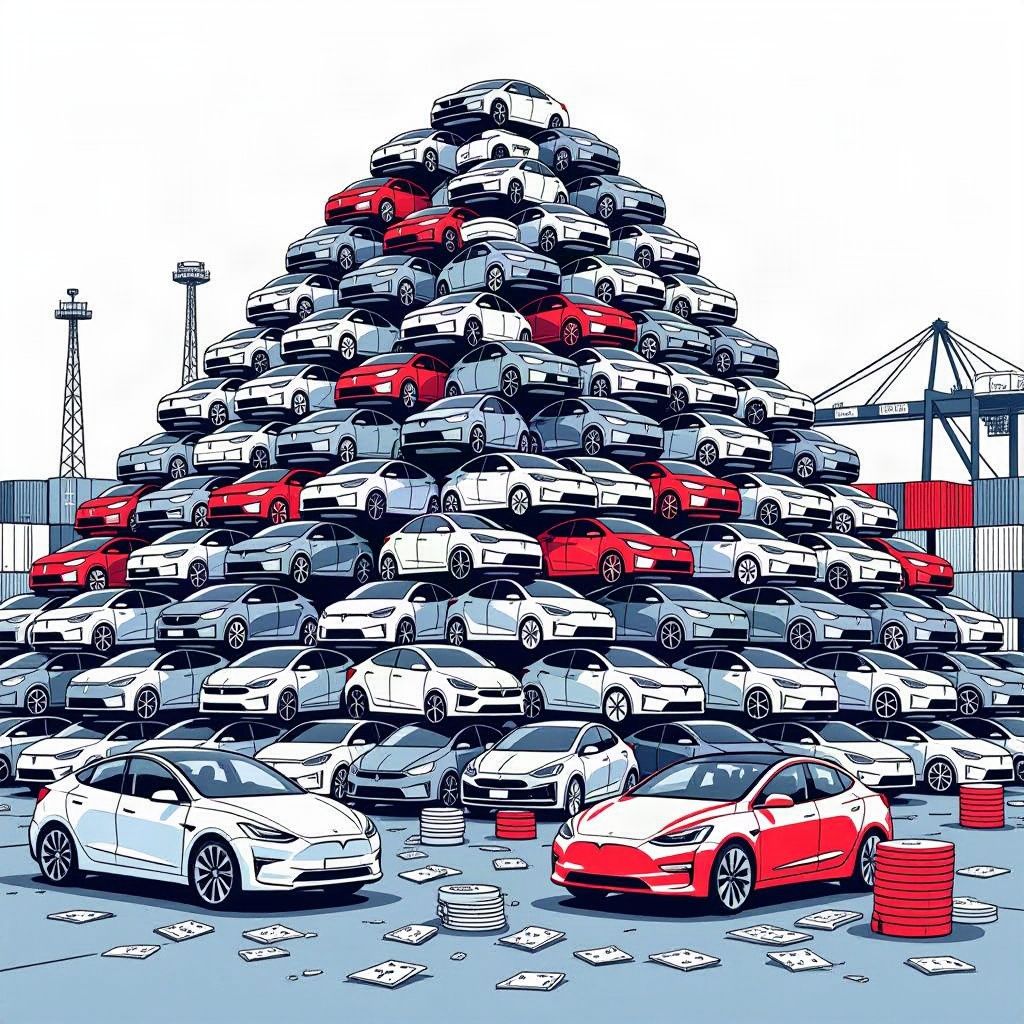
China’s export surge stems from weak domestic consumption rather than deliberate global market flooding, leaving over one million electric vehicles sitting unsold in foreign ports.
Domestic Demand Constraints
Recent analysis indicates that the surge in Chinese exports is primarily driven by weak domestic consumption rather than intentional dumping strategies [1]. Manufacturers are forced to seek revenue abroad as internal household consumption fails to absorb national industrial output [1]. This dynamic creates significant implications for global supply chains and international trade policy [1]. Volkswagen AG exemplifies this shift, announcing potential job cuts citing rising costs and competitive Chinese EV technology [1]. The company’s profit in China plummeted from $5.2 billion in 2014 to $960 million by 2025 [1]. This represents a decline of -81.538 percent over the period [1].
Scale of Trade Surplus
China’s goods trade surplus reached nearly $1.2 trillion in 2025, growing at three times the rate of global goods trade [2][4]. This level is labeled as politically and structurally unsustainable by experts [4]. The surplus reflects a macroeconomic difference between savings and investment rates within the Chinese economy [1]. Chinese automotive export volume has risen from fewer than 600,000 vehicles in 2019 to a projected 10 million vehicles in 2026 [3]. This growth trajectory highlights the scale of industrial concentration unprecedented since the U.S. post-WWII era [4]. The increase represents a massive shift in global manufacturing output distribution [5].
Global Market Impact
The International Energy Agency estimates that approximately one-third of electric vehicles exported by China in the first half of 2026 remain unsold [3]. This contributes to a total of over 1 million Chinese-made electric cars currently sitting in inventory overseas [3]. Such inventory buildup suggests production continues to exceed sustainable global demand [3]. Western governments have responded with tariffs and trade barriers, invoking concerns over overcapacity [1]. The White House accused over 40 jurisdictions of facilitating tariff avoidance for Chinese goods in August 2026 [5]. Trade restrictions on China by US-aligned countries have surged, peaking at nearly seven new restrictions per country in 2025 [5].
Structural Solutions
To reduce its trade surplus, China must boost domestic consumption or investment [1]. With returns on infrastructure and real estate diminished, the sustainable path is increasing household consumption through structural reforms [1]. This requires transferring wealth from state and corporate sectors to households [1]. Council on Foreign Relations President Michael Froman warns that if the Chinese export machine stalls, the reckoning will be most painful for China [2]. However, a material slowdown would send shock waves around the world, especially among major trading partners [2]. The surest way to avoid this is a preemptive and gradual rebalancing of the Chinese economy [2].