East Coast Storms Ground Hundreds of Flights at Boston Logan Airport
Boston, Tuesday, 17 March 2026.
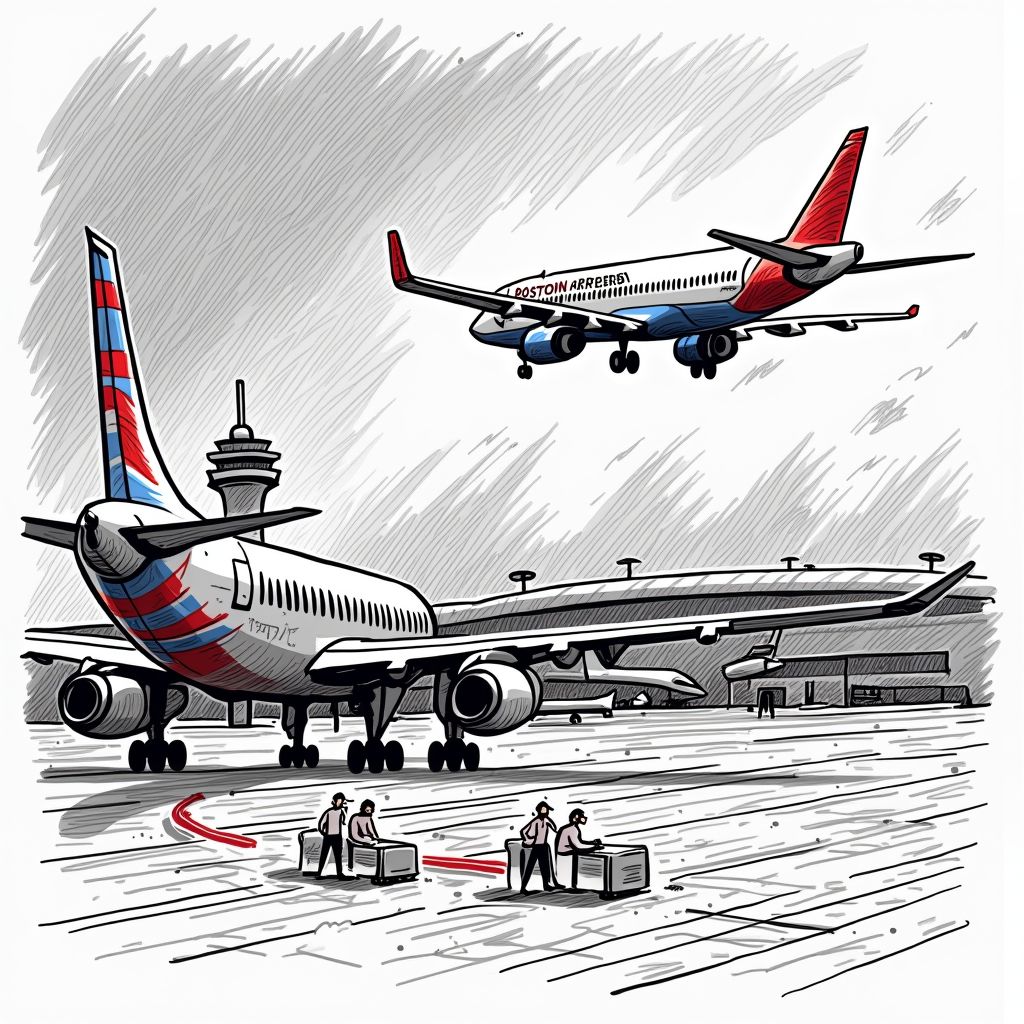
Severe East Coast storms and TSA staffing shortages grounded hundreds of flights at Boston Logan Airport, causing massive logistical disruptions and forcing one family into a 20-hour drive.
A Perfect Storm of Weather and Workforce Issues
On Monday, March 16, 2026, a severe weather system swept across the Eastern Seaboard, bringing high winds and heavy rain that wreaked havoc on domestic aviation [1][4]. The National Weather Service issued a high-wind warning valid through Tuesday morning for eastern Massachusetts and Rhode Island, forecasting sustained winds between 40.225 and 56.315 kilometers per hour [1]. The system produced powerful gusts reaching up to 104.585 kilometers per hour [1], which meteorologists noted was strong enough to down trees and power lines [1]. This meteorological event triggered over 2,000 flight cancellations nationwide [3]. At Boston’s Logan International Airport, the situation deteriorated rapidly throughout Monday; while early snapshots showed around 150 disruptions [5], by Monday evening, tracking data indicated over 270 cancellations and more than 300 delays [1] [alert! ‘Disruption totals vary significantly depending on the time of reporting across different flight tracking platforms’].
Travelers Resort to Extreme Measures
The logistical bottleneck has left thousands of passengers stranded, forcing some to adopt drastic contingency plans [3]. In one notable instance, a family of four whose flight to Florida was canceled opted to rent a van and embark on a 20-hour drive to Walt Disney World [3]. Other travelers faced more precarious situations; a group of middle school students from Orlando was forced to sleep overnight at Logan Airport [2]. The group’s chaperone noted that one student with diabetes had only enough insulin to last a couple of extra days, underscoring the hidden medical and personal risks associated with prolonged travel delays [2].
Airlines Scramble with Waivers and Refunds
In response to the operational strain, major carriers have activated robust recovery protocols, which typically require 24 to 48 hours to fully clear from an airport’s schedule [5]. JetBlue, which maintains a significant footprint at Logan, canceled approximately 240 flights systemwide through Tuesday, prioritizing crew and customer safety [4]. To mitigate the financial sting for passengers, airlines including Delta, American, Southwest, and United have issued travel waivers, allowing customers to rebook flights without change fees or fare differences within specified late-March windows [1][4].
Sources
- www.bostonglobe.com
- www.nbcboston.com
- www.wcvb.com
- www.boston.com
- statueofunity.in
- www.instagram.com