High-Stakes Investment Travis Hunter Sidelined for Jaguars' Wild Card Matchup
Jacksonville, Sunday, 11 January 2026.
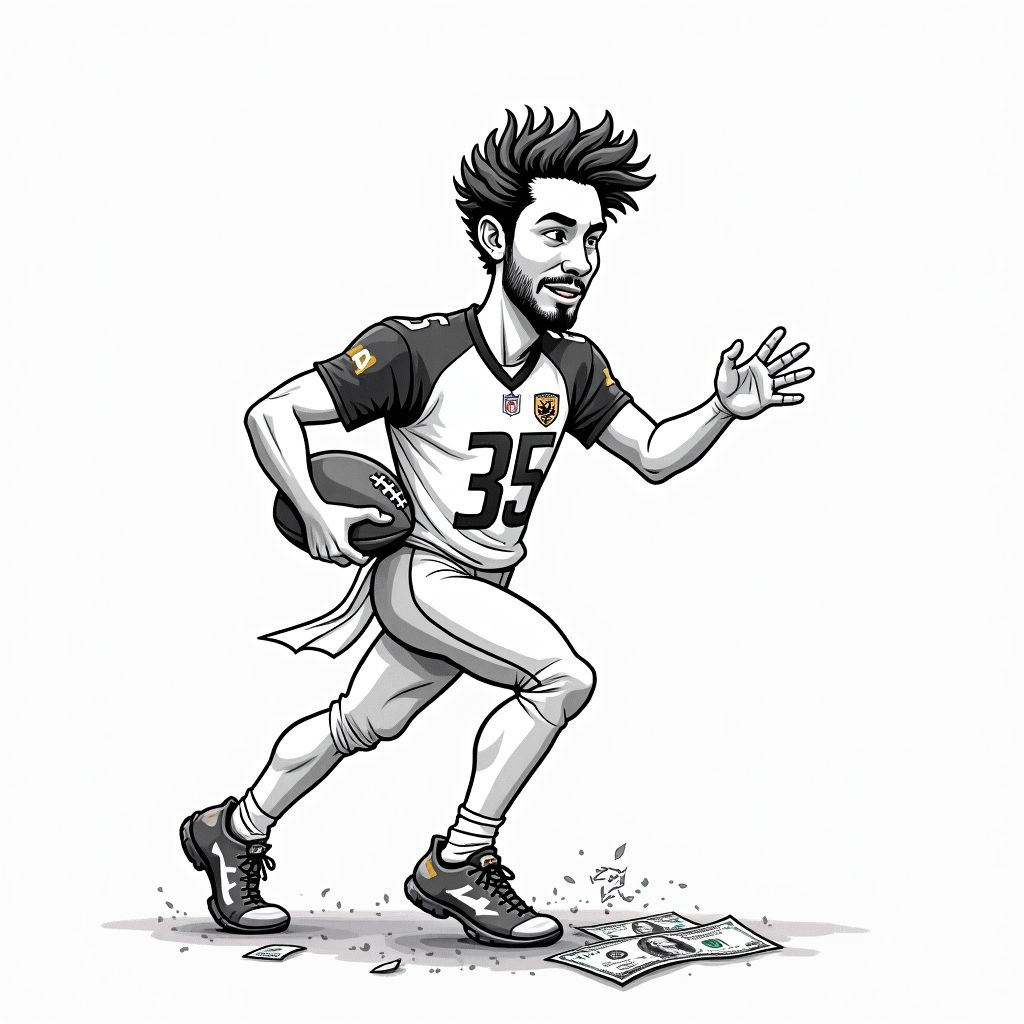
The Jacksonville Jaguars face the Buffalo Bills today without No. 2 overall pick Travis Hunter, who remains sidelined following LCL surgery. Despite surrendering two first-round picks to acquire the two-way star, the Jaguars secured an AFC South title and a 13-4 record largely in his absence. This playoff scenario highlights a complex return-on-investment narrative: while the franchise’s significant draft capital expenditure sits on injured reserve until the 2026 season, their immediate asset value has paradoxically flourished, winning eight straight games to close the regular season.
The Asset on the Sidelines
The immediate unavailability of the Jaguars’ prized rookie stems from a non-contact knee injury sustained during a defensive drill on October 30, 2025 [3][7]. Following the diagnosis of a torn lateral collateral ligament (LCL), Hunter underwent surgery on November 11, 2025, to repair the damage [1][4]. Medical evaluations confirmed that his anterior cruciate ligament (ACL) remained intact, preventing a more catastrophic devaluation of the player’s long-term physical equity [3][4]. However, the recovery protocol for the LCL procedure requires a six-month rehabilitation window, placing his projected return to football activities around late April or May 2026 [1][4]. Consequently, Hunter is officially ruled out for today’s critical Wild Card game against the Buffalo Bills [1][5].
Analyzing the Acquisition Cost
The scrutiny surrounding Hunter’s absence is intensified by the premium capital the franchise liquidated to acquire him. To secure Hunter at the No. 2 overall spot in the 2025 Draft, Jaguars General Manager James Gladstone executed a blockbuster trade with the Cleveland Browns, surrendering two first-round picks—including the No. 5 overall selection—and an additional second-round pick [2]. In return for this significant expenditure, the Jaguars received seven games of active service in Hunter’s rookie year [3]. During this limited operational window, Hunter played 67% of the team’s offensive snaps and 36% of defensive snaps, contributing 26 receptions for 298 yards and a touchdown offensively, alongside three passes defended on defense [3].
The Performance Paradox
In a twist that challenges traditional personnel valuation models, the Jaguars’ on-field product appreciated in value after their most expensive asset was removed from the lineup. Following Hunter’s placement on injured reserve, the team embarked on a winning streak, victorious in their final eight games to close the regular season with a 13-4 record and the AFC South title [2][3]. This post-injury surge has prompted analysts to re-evaluate the immediate necessity of the rookie’s dual-threat role. Marc Ross, former Vice President of Player Personnel for the New York Giants, observed that the team’s momentum suggests they “don’t miss him at all,” adding that the narrative of Hunter being a necessary savior is “not anywhere remotely close to the reality” given the team’s current hot streak [2].
Long-Term Outlook
Despite the sunk costs of the 2025 season, the franchise maintains a long-term hold position on Hunter’s potential. Management has indicated plans to continue deploying him on both sides of the ball upon his return in 2026, viewing his initial seven-game sample—where he garnered a 68.9 Impact Score—as a proof of concept rather than a failed experiment [2][3]. While he remains a spectator for the playoffs, GM Gladstone has reiterated that the investment was made for a player with the “capacity to alter the trajectory of a team,” a dividend the organization now expects to realize in the next fiscal year of the NFL [2].
Sources
- bolavip.com
- www.usatoday.com
- www.profootballnetwork.com
- sports.yahoo.com
- www.si.com
- www.reddit.com
- collegefootballnetwork.com