Why Three Pharmaceutical Giants Still Control 90 Percent of Global Insulin
New York, Friday, 5 June 2026.
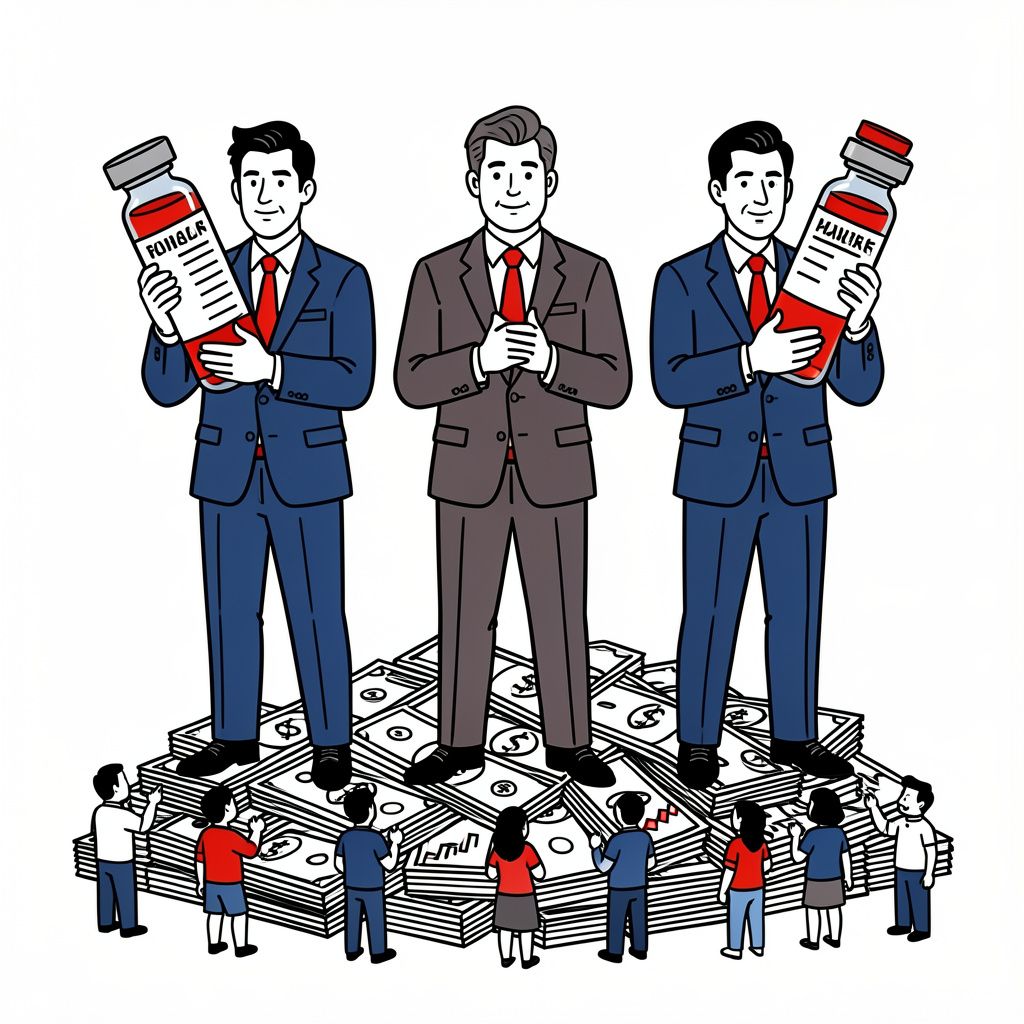
Three pharmaceutical giants still control 90 percent of the global insulin supply. Despite recent price cuts, this ongoing market dominance continues to create severe barriers to global medication access.
The Architecture of a Medical Oligopoly
In 1921, Frederick Banting sold the original insulin patent to the University of Toronto for a mere $1.00 to ensure universal access [1]. However, as of June 2026, the global landscape looks vastly different [GPT]. Three pharmaceutical titans—United States-based Eli Lilly (LLY), Denmark’s Novo Nordisk (NVO), and France’s Sanofi (SNY)—control roughly 90 percent of the $26 billion global insulin market [1][3]. This oligopoly has been sustained not by the original molecule, which has long since lost patent protection, but by a web of secondary patents surrounding analog versions, formulations, and delivery mechanisms [1].
The Human Cost and Barriers to Entry
The economic realities of this pricing structure have translated directly into severe health consequences [GPT]. Historically, high costs have forced 17 percent of insulin-dependent Americans and 29 percent of uninsured patients to dangerously ration their medication [1]. A tragic example occurred in 2017 when 26-year-old Alec Smith died from diabetic ketoacidosis after aging off his mother’s health insurance and being unable to afford his prescriptions [1]. Despite the $35.00 monthly cap introduced for Medicare enrollees via the Inflation Reduction Act—and a similar voluntary cap for commercially insured patients—a late 2024 Yale University study revealed that more than one in three surveyed patients still rationed their insulin [1].
Emerging Scientific Frontiers in Diabetes Care
While the battle over synthetic insulin pricing continues, the scientific community is actively exploring therapies that could fundamentally alter type 1 diabetes management [GPT]. In a major development detailed in the New England Journal of Medicine in 2025, the FDA approved the first-ever donor-derived pancreatic islet cell therapy for adults suffering from severe hypoglycemia [4]. By infusing healthy donor islet cells into the liver, this procedure replaces the insulin-producing cells destroyed by the immune system, allowing many clinical trial recipients to achieve insulin independence [4]. Although it currently requires lifelong immunosuppressive medications, it marks a historic transition from merely managing blood sugar to restoring the body’s natural insulin production [4].
Navigating the Future of Health Equity
For healthcare executives, investors, and policymakers, the juxtaposition of groundbreaking cellular therapies and a deeply entrenched insulin oligopoly illustrates the complex future of diabetes care [GPT]. While scientific advancements like islet cell transplants and stem cell reprogramming offer a glimpse into a world less reliant on daily insulin injections, these therapies are not yet universally accessible [2][4]. Until these curative approaches can be scaled, the health of millions globally remains tethered to a market dominated by Eli Lilly, Novo Nordisk, and Sanofi, ensuring that the tension between pharmaceutical profitability and health equity will remain a defining economic issue for years to come [1][3].