Pakistan Declares Open War as Afghan Forces Engage Jets Over Kabul
Kabul, Sunday, 1 March 2026.
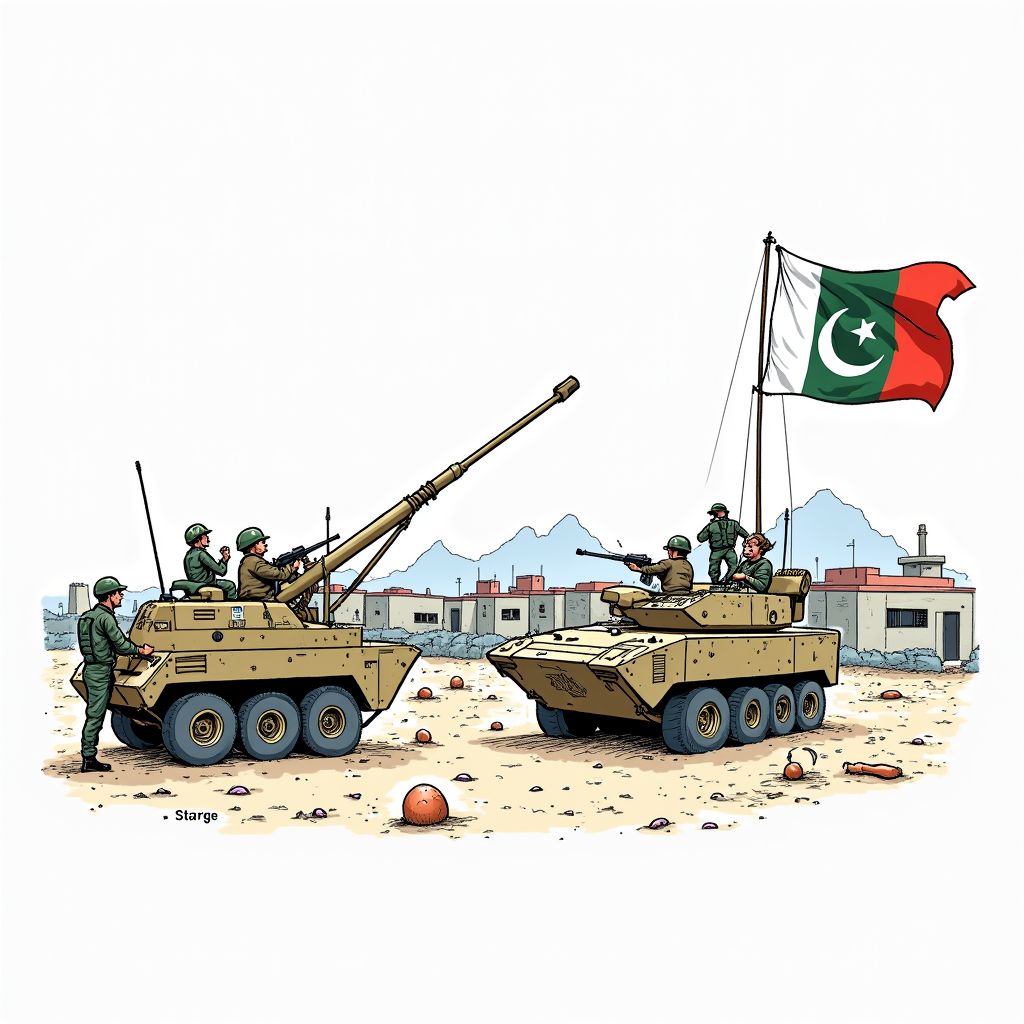
Explosions rocked Kabul Sunday as Afghan forces engaged Pakistani aircraft following Islamabad’s declaration of “open war,” marking a dangerous escalation that threatens stability across Central and South Asia.
Sunday Escalation: Kabul Under Fire
The conflict between Pakistan and Afghanistan has intensified significantly following Islamabad’s formal declaration of “open war” on Friday. For a detailed analysis of the initial declaration and the commencement of Operation “Ghazab lil Haq,” please refer to our previous coverage here. On Sunday, March 1, 2026, the situation deteriorated further as fresh explosions and heavy gunfire erupted across central Kabul [1]. The Taliban-led government confirmed that its forces were engaging Pakistani aircraft attempting a new incursion into Afghan airspace, responding with anti-aircraft fire [1]. This aerial confrontation over the capital marks a severe broadening of the theater of war, moving beyond the border skirmishes that characterized the earlier phases of the dispute.
Aerial Warfare and Conflicting Narratives
The airspace over the Durand Line has become a contested zone of high-stakes military maneuvering. On Saturday, February 28, an AFP journalist in Jalalabad reported hearing jet engines followed by two distinct explosions [1]. Afghan security forces subsequently claimed to have downed a Pakistani fighter jet and captured its pilot, a significant assertion that Islamabad has categorically denied [1]. Adding a modern dimension to this asymmetrical warfare, the Taliban have reportedly deployed drones to strike military targets inside Pakistan [3], while claiming that their air force drone units were active in the counter-offensive [2]. This evolution in tactics suggests the Taliban is leveraging asymmetric capabilities to challenge Pakistan’s conventional air superiority [4].
Regional Instability and Humanitarian Impact
The humanitarian fallout is immediate and severe, with civilians caught in the crossfire of this rapidly expanding conflict. Enamullah, a 20-year-old in Kabul, described the terror of the bombardments, noting that he had fled to the capital seeking economic survival only to witness the city “go dark” before his eyes [1]. Internationally, the United States has backed Pakistan’s right to self-defense against TTP attacks [1], while Russia has urged an immediate halt to cross-border hostilities and offered to mediate [5]. As the violence escalates, the risk to regional stability grows, with the conflict showing no signs of de-escalation as of Sunday evening.