Inside the High-Stakes Gamble to Drill for Oil in Greenland
Nuuk, Saturday, 24 October 2026.
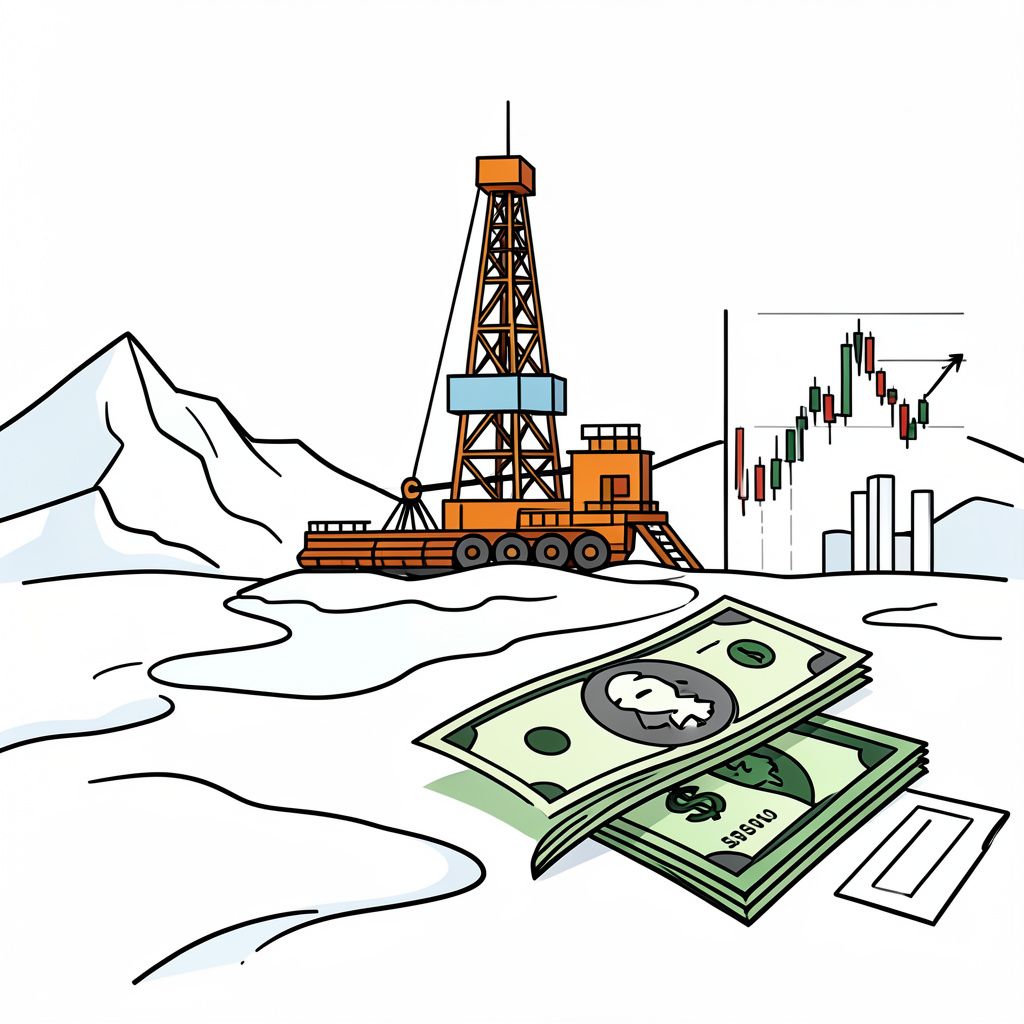
Despite high-level political backing to tap an estimated 13-billion-barrel Arctic reserve, Greenland has not approved drilling permits, leaving ambitious 2027 exploration plans on uncertain ground.
Trump’s Arctic Ambitions Collide with Greenland’s Regulatory Reality
On October 13, 2026, former U.S. President Donald Trump (Republican) took to Truth Social to declare that ‘massive oil, gas, and mineral exploration is getting ready to begin’ in Greenland [1][5]. His proclamation followed a campaign event in Wasilla, Alaska, where he addressed energy independence amid geopolitical tensions [5]. However, Greenlandic officials swiftly countered these claims. Deputy Mining Minister Jørgen Hammeken-Holm emphasized that exploration in the territory remains far from ‘massive,’ noting that any operational projects could take years to materialize [5]. This discrepancy underscores the tension between U.S. political ambitions and Greenland’s cautious regulatory framework.
The 13-Billion-Barrel Prospect: Promise vs. Peril
At the heart of this geopolitical tug-of-war lies the Jameson Land Basin in East Greenland, a region estimated to hold up to 13 billion barrels of crude oil, according to an independent engineering assessment cited by Real Narrative News [1]. The prospect has drawn the attention of Greenland Energy Company (NASDAQ: GLND), which has partnered with UK-based 80 Mile plc under a $60 million funding agreement finalized in 2024 [5][6]. Yet, the promise of this resource is tempered by harsh realities. Greenland has not issued new oil and gas licenses since 2021, citing environmental and commercial concerns [1][5]. The island’s previous 21 exploration wells failed, costing companies hundreds of millions of dollars due to the region’s extreme weather and logistical challenges [5].
Permitting Paralysis: Why 2027 Drilling Hangs in the Balance
Greenland Energy and 80 Mile plc have outlined plans to spud an exploratory well in 2027, but the timeline remains contingent on securing permits from Greenland’s self-governing authorities [1][6]. The companies filed environmental reports in mid-2026, aiming for a winter 2027 drilling window [1]. However, Greenland’s government rejected earlier proposals for winter 2026-27 drilling due to incomplete environmental and social-impact assessments [1]. The Jameson Land Basin project has faced further setbacks, including the arrival of unapproved drilling equipment in July 2026, which prompted warnings from Greenlandic authorities and caused Greenland Energy’s shares to plummet by over 44% in a single trading session [5]. As of October 2026, the permitting process remains unresolved, with no clear indication of when approvals might be granted [1][5][6].
Geopolitical Chess: U.S., Denmark, and Greenland’s Delicate Dance
The push for Arctic oil exploration is unfolding against a backdrop of shifting geopolitical alliances. In September 2026, the U.S., Denmark, and Greenland signed a security agreement that mentions minerals and economic development but does not explicitly address oil or gas rights [5]. Danish security adviser Jacob Kaarsbo described Trump’s rhetoric as ‘extremely dangerous,’ warning that it could signal an unchanged desire by the U.S. to exert control over Greenland—a territory it has long sought to acquire [5]. Meanwhile, Greenlandic representatives, including Naaja Nathanielsen, a member of the Danish parliament, suggest Trump’s October 13 post may have been motivated by electoral politics, given rising fuel prices ahead of the November 3, 2026, U.S. midterm elections [5].
Market Reactions and Economic Stakes
The uncertainty surrounding Greenland’s drilling plans has sent ripples through the financial markets. Greenland Energy Company’s stock (GLND) closed at USD 3.00 on October 23, 2026, marking a 1.64% decline from the previous session [6]. The company’s shares had already suffered a dramatic drop in late July 2026 following the arrival of unapproved drilling equipment, which raised concerns among investors about regulatory compliance [5][6]. Despite these challenges, Greenland Energy has continued to advance its environmental baseline program in Jameson Land and extend its farm-out agreement with 80 Mile plc, signaling long-term commitment to the project [6]. However, the lack of permits and regulatory hurdles casts a shadow over the feasibility of a 2027 drilling timeline [1][5].
Environmental and Indigenous Concerns: The Elephant in the Room
Greenland’s 2021 moratorium on new oil and gas licenses was driven by environmental concerns, including the risks of oil spills in fragile Arctic ecosystems and the potential disruption to Indigenous communities [1][5]. The Jameson Land Basin project has drawn particular scrutiny due to its proximity to sensitive wildlife habitats and traditional Inuit lands. While proponents argue that Arctic drilling could enhance energy security and reduce reliance on foreign oil supplies, critics warn that the economic and environmental risks far outweigh the benefits [alert! ‘No recent environmental impact assessments have been publicly released as of October 2026’].
Sources
- realnarrativenews.com
- www.foxbusiness.com
- www.facebook.com
- observerdiplomat.com
- finance.yahoo.com
- www.facebook.com