Federal Probe into Ryanair Engine Failure Raises Scrutiny Over Aviation Safety Mandates
Dublin, Friday, 14 August 2026.
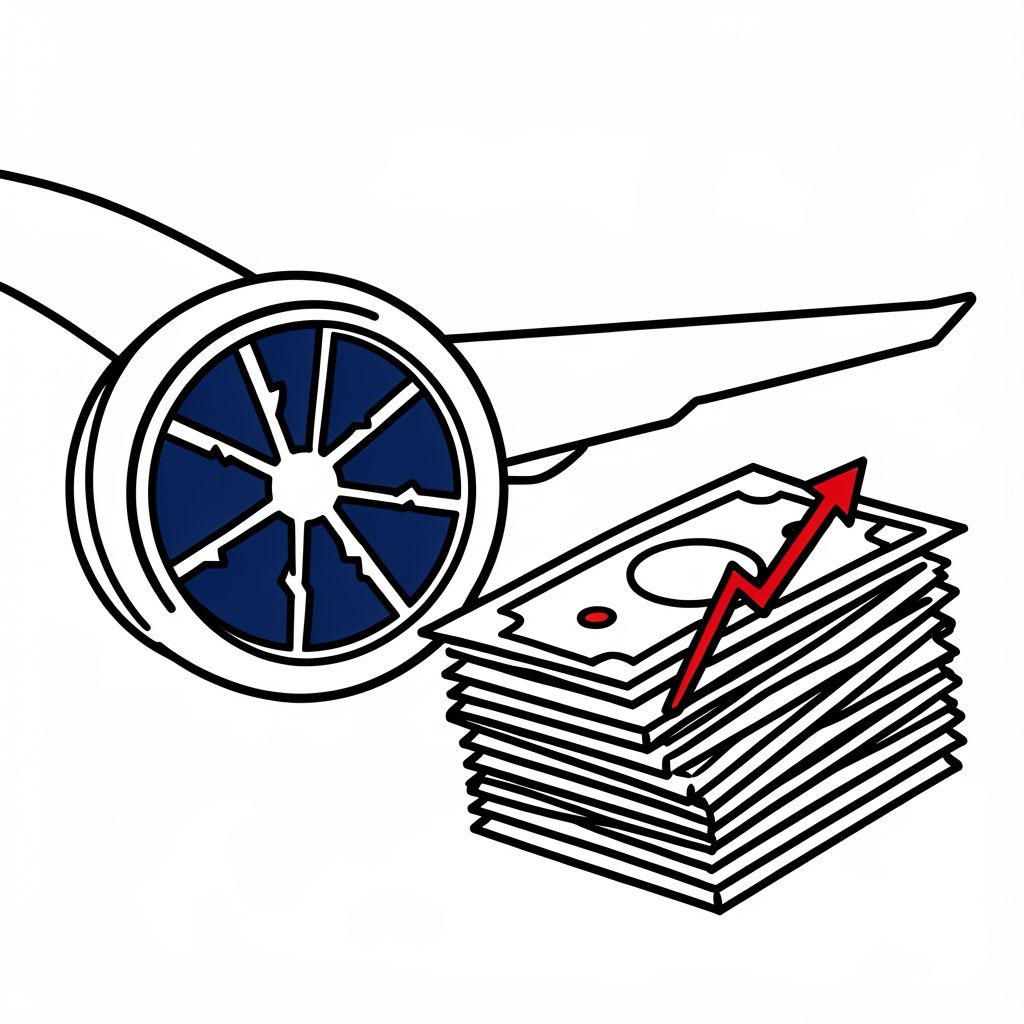
A federal investigation into a Ryanair engine failure that damaged a cabin window is pushing aviation authorities to consider stricter maintenance requirements and costly fleet-wide inspections.
Incident Timeline and Investigation Scope
A preliminary investigation report released by the National Transportation Safety Board (NTSB) on August 13, 2026, confirmed that a severed jet engine fan blade shattered a fuselage window during a Ryanair flight, causing a passenger to be partially ejected [1]. The incident occurred on July 10, 2026, involving a Boeing 737-800 operated by Malta Air, a subsidiary of Ryanair, flying from Thessaloniki, Greece, to Memmingen, Germany [2][3]. Serbian national Ljubisa Karović sustained serious injuries after his head and right shoulder were sucked into the breach before fellow passengers pulled him back inside [1][2]. Flight crew reported high vibration alerts shortly after takeoff, followed by a loud bang and cabin decompression that triggered oxygen mask deployment [1]. The NTSB was delegated the investigation in full by Greek authorities in the days following the event, marking a significant regulatory review for the aviation sector [1][2].
Maintenance Records and Mechanical Findings
Maintenance logs indicate the failed engine had undergone ultrasonic inspections in May 2026 and November 2025 with no findings of fault prior to the incident [1][2]. Despite these clearances, NTSB investigators identified bird remains on the engine’s integrated drive generator oil cooler and thrust reverser components, suggesting a bird strike may have contributed to the failure [2][3]. The preliminary report revealed the number two CFM56-7B26 engine failed due to a fan blade separation below the blade platform, with fractures consistent with fatigue [3]. Investigators noted that all remaining blades exhibited impact deformation, complicating the analysis of the initial fracture point [3]. Biological samples recovered from the engine were sent to the Smithsonian Institution Feather Identification Lab for definitive species identification [3].
Regulatory Compliance and Safety Directives
The aircraft lacked FAA-recommended reinforcements for fan and inlet cowl hardware and exhaust nozzle, which were mandated in 2025 Airworthiness Directives following two earlier Southwest Airlines blade-out failures in 2016 and 2018 [3]. Boeing 737 Next Generation operators are required to comply with these 2025 FAA Airworthiness Directives by July 31, 2028, meaning the airline was within the compliance window at the time of the accident [3]. This regulatory timeline indicates that while the aircraft met current legal requirements, the incident may accelerate pressure for earlier adoption of safety enhancements [2][3]. Industry executives and regulators are now evaluating whether fleet-wide engine inspections or stricter maintenance mandates will be required beyond existing schedules [1][2].
Corporate Communication and Investigation Protocol
The NTSB publicly reprimanded Ryanair CEO Michael O’Leary for making claims to investors about the ongoing investigation, stating he was not permitted to do so under international protocol [2]. Federal investigators emphasized that no potential factors had been excluded from the inquiry and that external parties were not permitted to speak on behalf of the investigation [2][3]. NTSB Chair Jeniffer Homendy noted that such comments risked violating the International Civil Aviation Organization’s protocol for sharing information on aircraft investigations [3]. The investigation remains ongoing as of August 14, 2026, with further technical analysis required to determine the root cause of the engine component failure [2][3].