Power Availability Supersedes Location as Primary Driver for US Data Center Expansion
New York, Friday, 6 February 2026.
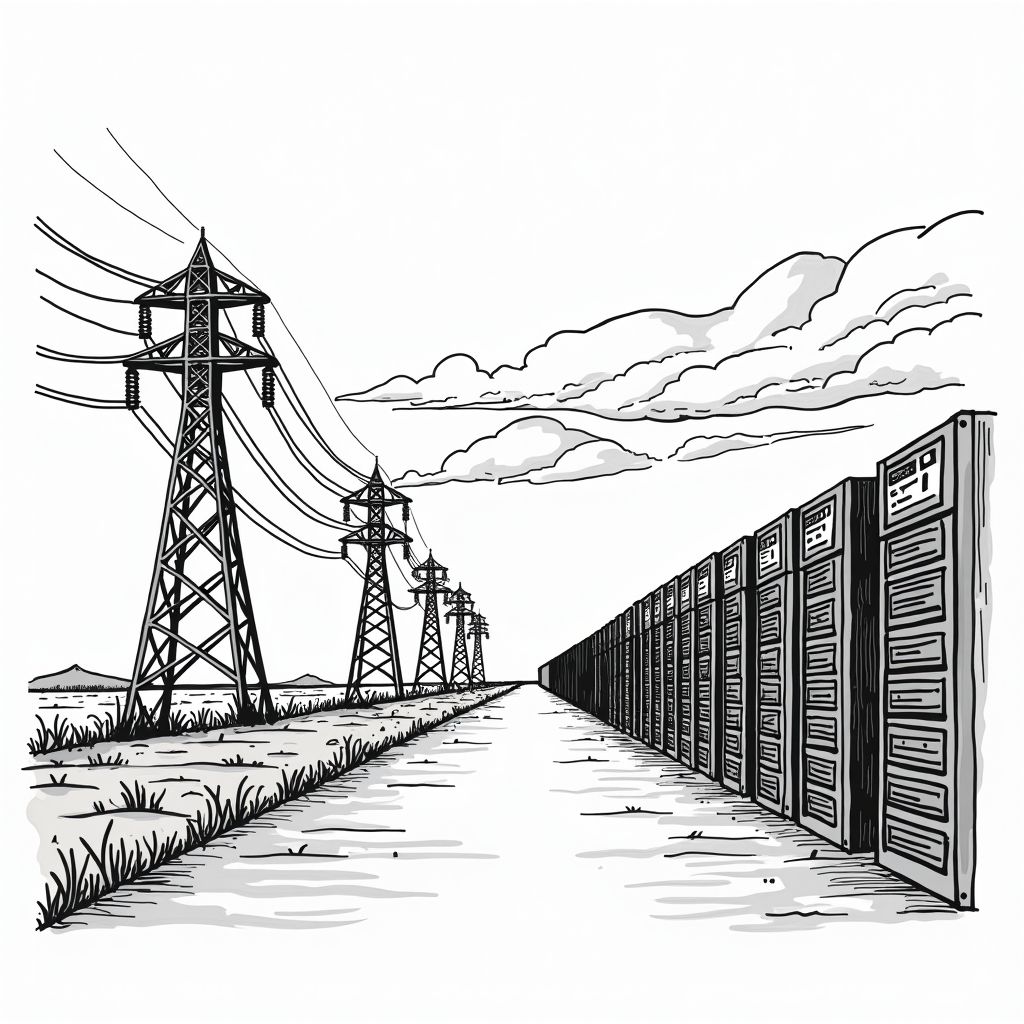
Grid constraints have officially displaced traditional location metrics as the top priority for developers, forcing a strategic migration toward secondary markets where power deliverability is guaranteed.
The Shift to Power-First Site Selection
According to the “US Data Center: State of the Market Report” released by Enerdatics on February 5, 2026, the criteria for digital infrastructure development have fundamentally changed [1]. While traditional metrics prioritized fiber latency and proximity to urban hubs, the current landscape is defined almost exclusively by power deliverability [1]. The analysis, which covers over 4,000 operating and planned facilities representing more than 240 GW of cumulative power demand, indicates that execution certainty regarding grid access is now the primary driver of value [1]. Mohit Kaul, Founder and CEO of Enerdatics, noted that the market is no longer constrained by demand, but rather by the ability to deliver power, stating that developers who align grid access with generation flexibility will scale with confidence in 2026 [1].
The Rise of Secondary Markets
This constraint is forcing a geographic decentralization away from core markets like PJM, ERCOT, and CAISO toward secondary and exurban regions where grid interconnection is more feasible [1]. A prime example of this trend is Spalding County, Georgia, which has emerged as a new frontier for Atlanta’s data center expansion [4]. As utility corridors in Northern Georgia tighten, developers are securing land in exurban counties where zoning is receptive and interconnection pathways are less congested [4]. This strategy was highlighted by the recent approval of a $3.9 billion, 190-acre data center campus in Spalding County, signaling a move toward “energy optionality” where load is timed to coincide with transmission upgrades [4]. Similarly, Microsoft recently received approval to build 15 additional data centers in Mount Pleasant, Wisconsin, further illustrating the push into regions with available capacity [4].
Infrastructure Costs and Regulatory Headwinds
The economic implications of this expansion are colliding with a capital investment “super-cycle” for US utilities. A report by Morningstar highlights that utility capital investment could total $1.4 trillion between 2025 and 2030, a figure that is double the spending of the previous decade [6]. This surge is driven by the need to upgrade transmission lines, substations, and transformers—components that are currently experiencing structural metal inflation [6]. Morningstar analysts warn that capital plans anchored in historical unit costs may underestimate future investment needs, creating risks for regulatory friction as project costs diverge from legacy assumptions [6].
The AI Factor: Redefining Load Profiles
The technical requirements of the facilities themselves are also evolving, particularly with the pivot toward Artificial Intelligence (AI) and High-Performance Computing (HPC). For instance, Bitfarms is currently converting a cryptomine in Moses Lake into a 100,000-square-foot AI data center [4]. Unlike conventional data centers, AI facilities operate at sustained high loads and generate demand spikes due to parallel computing patterns [7]. Gerhard Salge, CTO at Hitachi Energy, emphasizes that weak or congested grids are unsuited for these profiles, necessitating a holistic approach that integrates storage and grid flexibility [7]. While solar has dominated near-term procurement, the market is increasingly prioritizing round-the-clock power coverage, accelerating interest in hybrid structures and co-located generation to mitigate volatility [1].
Sources
- www.einpresswire.com
- www.einpresswire.com
- www.enerdatics.com
- www.linkedin.com
- www.linkedin.com
- megaproject.com
- megaproject.com
- news.bgov.com