Federal Financial Aid and Clean Air Waivers Keep Half of Aging US Coal Plants Running
Washington, Saturday, 31 October 2026.
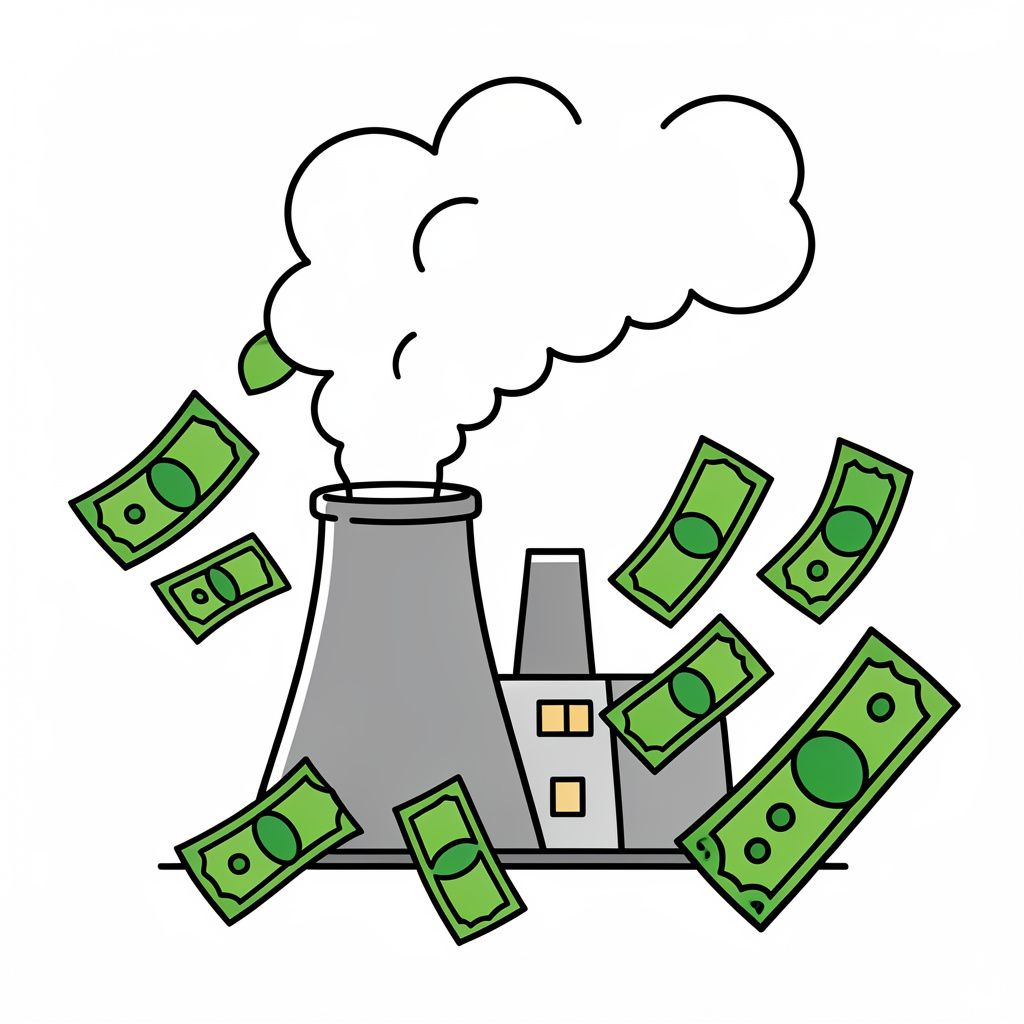
Federal interventions funneled $950 million in taxpayer subsidies and granted pollution exemptions to 90 coal facilities, shifting compliance costs onto the public while extending the lifespan of struggling fossil assets.
Policy Shift: Trump Administration’s Coal Subsidies and Exemptions
A newly released Environmental Defense Fund (EDF) analysis dated October 30, 2026, reveals that the Trump administration allocated approximately $950 million in taxpayer-funded subsidies to 24 coal-fired power plants while granting Clean Air Act regulatory exemptions to 70 facilities—collectively supporting 90 out of 184 grid-connected coal plants still operating in the United States as of 2026 [1][2]. These interventions represent a deliberate policy pivot toward shoring up aging fossil fuel infrastructure despite existing and updated environmental standards aimed at curbing toxic emissions [alert! ‘The 2015 EPA Mercury and Air Toxics Standards and their 2024 updates specifically targeted mercury and fine particulate matter (fPM) reductions’] [3]. The timing coincides with a broader regulatory rollback strategy that intensified in early 2025, including the repeal of stricter fPM standards in February 2026 [2].
Financial and Regulatory Mechanisms Behind the Lifeline
The $950 million in subsidies—funded through federal channels and redirected ratepayer charges—was distributed to extend the operational lifespan of financially strained coal plants that otherwise faced closure due to unprofitability and tightening environmental mandates [1]. Additionally, the administration established a streamlined exemption process via a dedicated email portal, enabling companies to bypass compliance requirements by invoking claims of ‘national security’ or asserting the unavailability of certain pollution control technologies [5]. According to an investigation by The New York Times, over 71 coal plants received such exemptions, with minimal documentation required to secure them [5]. This process was not merely procedural; it reflected a strategic prioritization of corporate economic interests over public health and environmental integrity [alert! ‘The exemption process explicitly invited submissions without requiring justification beyond cursory claims’] [5].
Case Studies: Montana’s Colstrip and Texas’s WA Parish Plants
The Colstrip coal plant in Montana, operated by NorthWestern Energy, exemplifies how these policies intersect with utility economics. In March 2025, company CEO Brian Bird emailed Department of Energy officials—including Administrator Lee Zeldin—requesting an exemption from the 2024 fine particulate matter standards to avoid costly efficiency upgrades projected at hundreds of millions of dollars [1]. NorthWestern argued compliance would require raising plant efficiency from 99.6% to 99.8% by 2028, a marginal improvement justifying what Bird described as a ‘ludicrous’ $500 million investment for customers [1]. Similarly, the WA Parish plant in Thompsons, Texas—owned by NRG—secured an exemption before the standards were repealed in February 2026 [2]. Rice University research estimates WA Parish causes up to 177 premature deaths annually, making its exemption particularly contentious [1][2]. These cases underscore how exemptions not only delay plant closures but also externalize health and environmental costs onto surrounding communities [2][5].
Costs to Ratepayers and Public Health Implications
The cumulative financial burden of these interventions extends beyond direct subsidies to include increased electricity rates for consumers and deferred healthcare costs linked to elevated pollution exposure. EDF estimates the total financial impact on taxpayers and ratepayers at over $1.5 billion, factoring in both direct subsidies and indirect costs of prolonged pollution [2]. Communities living within three miles of exempted facilities—numbering at least 3.3 million people—face disproportionate risks from elevated levels of fine particulate matter, mercury, and other toxic emissions [5]. Surbhi Sarang, EDF’s director and senior attorney, characterized the policy as a double penalty for Americans: ‘increasing electricity costs, increasing pollution—it’s like Americans are getting hit twice’ [1]. The administration’s own claims of having ‘saved’ over 100 coal plants this term contrast sharply with environmental advocates’ warnings of a public health crisis in the making [2][5].
Broader Regulatory and Political Context
This policy trajectory aligns with broader efforts by the Trump administration to dismantle Biden-era environmental regulations, including proposals to slash EPA enforcement capacity and revise pollution standards across multiple sectors [4]. Legal challenges have already emerged, with environmental groups suing to block the repeal of foundational regulations governing climate pollution and toxic emissions [3]. The strategic use of exemptions—particularly via the ‘national security’ loophole—highlights a systemic approach to regulatory arbitrage, where corporate interests are prioritized over statutory environmental protections [5]. As the 2026 midterm elections loom, the political implications are clear: the administration’s embrace of coal subsidies and exemptions signals a definitive break from the clean energy transition, embedding fossil fuel dependence into the nation’s energy infrastructure for years to come [alert! ‘No direct political polling data included; implication based on policy rollbacks’] [GPT].