Senate Prepares for Key Vote on Voter Citizenship Requirements
Washington, Monday, 16 March 2026.
Senate Republicans will force a vote on proof-of-citizenship election rules this week, sparking a partisan clash over legislation affecting 21 million Americans lacking accessible documentation.
The Legislative Mechanics and Political Stakes
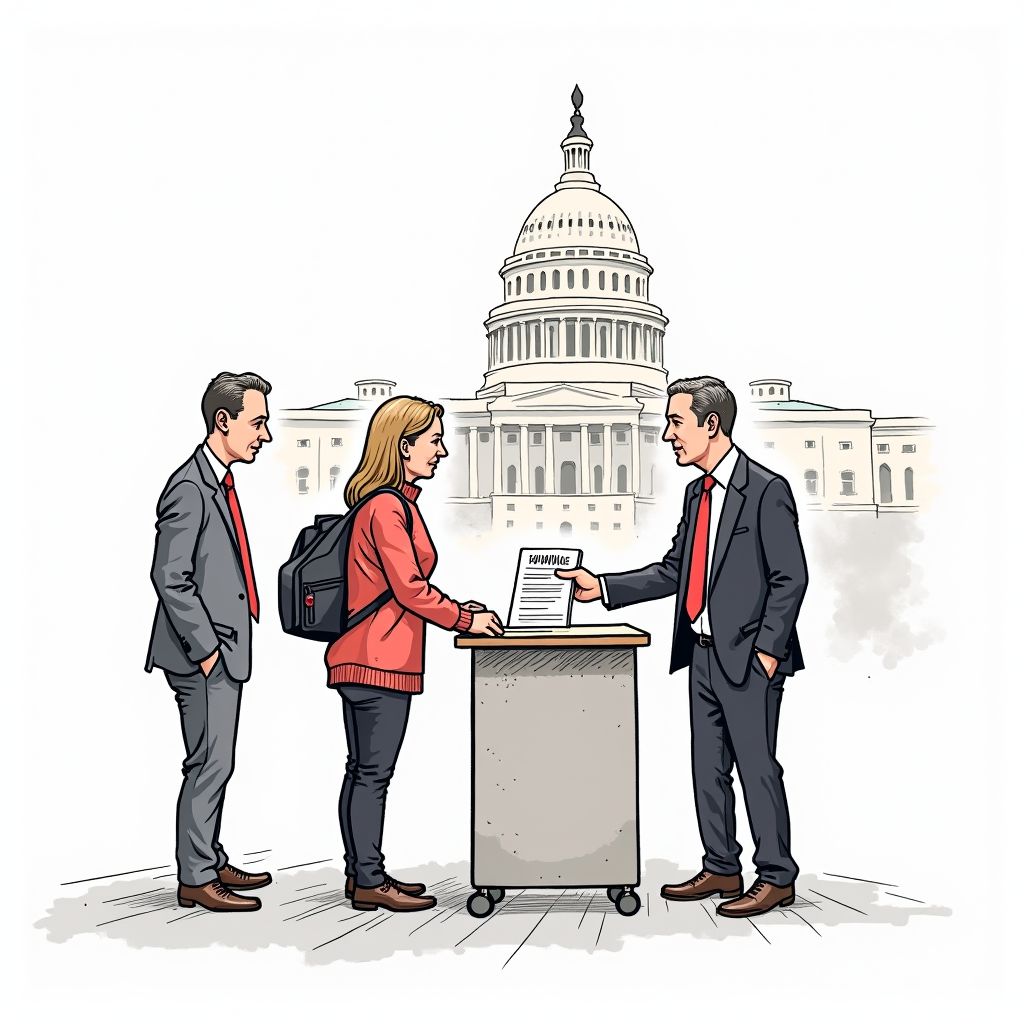
As the U.S. Senate convenes for the week of March 16, 2026, the chamber is bracing for a protracted battle over the SAVE America Act, a sweeping election overhaul bill championed by President Donald Trump [1][2][4]. The legislation, which already cleared the House mostly along party lines in February 2026, would mandate that individuals provide proof of citizenship—such as a valid U.S. passport or birth certificate—to register for federal elections [1][2][4]. Additionally, voters would be required to present a government or military photo ID that includes proof of birth and location to cast a ballot [4]. For President Trump, the bill represents a top legislative priority; on March 8, he declared on Truth Social that he would refuse to sign any other legislation until the SAVE America Act is passed [4]. He has publicly staked the Republican Party’s midterm prospects on the bill, stating that its passage will “guarantee the midterms” while warning of “big trouble” if it fails [2].
Demographic Hurdles and the Voter ID Debate
The proposed requirements have ignited a fierce debate over accessibility and the practical realities of voter documentation [GPT]. According to data from the Center for American Progress, an estimated 146 million American citizens currently do not possess a valid passport, and 69 million married women lack a birth certificate that matches their current legal name [2]. Furthermore, approximately 21 million Americans do not have easily accessible documents to prove their citizenship, and 2.6 million lack a government-issued photo ID [8]. While the U.S. Department of State issued around 27.3 million passports—including 4.5 million passport cards—during the 2025 fiscal year, critics argue this volume is insufficient to quickly close the documentation gap before the impending elections [8]. Addressing concerns about married women facing registration hurdles, White House Press Secretary Karoline Leavitt expressed confidence on March 16 that they would “figure out how to get around those requirements” [2].
A High-Stakes Showdown Ahead of the Midterms
The impending floor debate highlights a profound partisan divide that extends beyond election mechanics