Why Recent College Graduates Are Struggling to Secure Entry-Level Jobs
New York, Saturday, 18 July 2026.
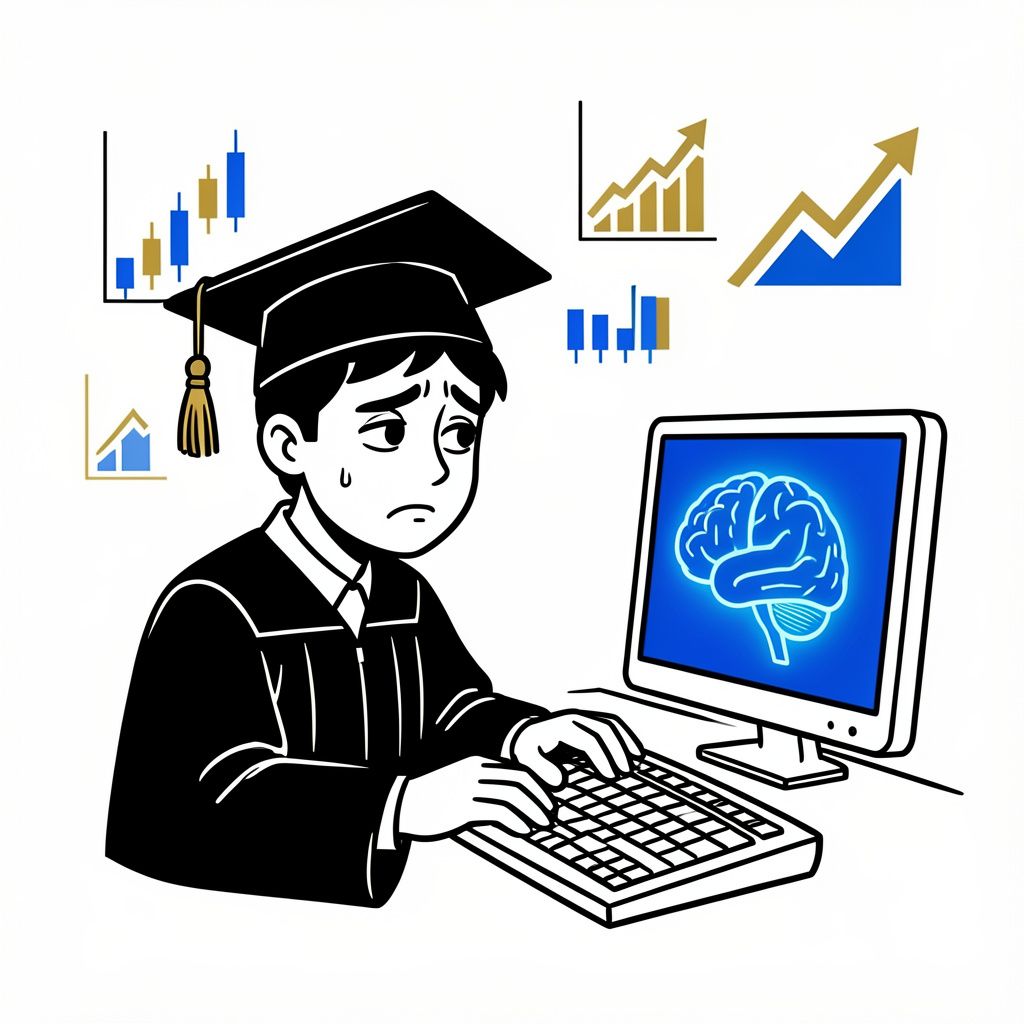
As entry-level hiring slows, recent American college graduates face rising unemployment, driven by a threefold increase in employers requiring artificial intelligence skills for starter positions.
The Reality of the ‘Low-Hire, Low-Fire’ Labor Market
Since its peak in 2023, the United States labor market has transitioned into a rigid ‘low-fire, low-hire’ phase [1]. Under these economic conditions, employers are opting to retain their existing staff while significantly pulling back on new hiring [4]. According to the Bureau of Labor Statistics (BLS) JOLTS Report, U.S. job openings fell to 6.9 million and gross hires dropped to 4.85 million in February 2026, marking the lowest levels recorded since April 2020 [2]. This stagnation is further evidenced by voluntary quits, which reached their lowest point since August 2020 as of March 2026 [2]. For new entrants attempting to break into the workforce, this environment presents a formidable barrier to entry [1].
Young Workers Bear the Brunt of the Slowdown
This cooling labor market has disproportionately impacted young workers, particularly those attempting to secure their first post-college roles. Researchers at the Federal Reserve Bank of St. Louis note that since April 2023, overall hiring has slowed, leaving new labor market entrants to bear the brunt of the softening economy [1]. St. Louis Fed data reveals that recent college graduates face a 2.2 percentage-point increase in unemployment due to the slowing labor market [1]. In comparison, workers aged 18 to 24 with only a high school diploma experienced a 1.23 percentage-point increase, while older workers saw an increase of 1.1 percentage points [1]. This means the unemployment rate increase for recent college graduates is exactly 1.1 percentage points higher than that of older workers [1].
The Steep Rise of AI Skill Requirements
Compounding the challenge of fewer open positions is a rapid and structural shift in what employers expect from entry-level candidates. A study by the Federal Reserve Bank of St. Louis attributes a 1.68 percentage-point increase in the unemployment rate of recent graduates specifically to artificial intelligence-related labor market changes [1]. This AI-driven unemployment impact is over five times higher for recent college graduates than for the broader 25-to-64 age demographic, and eight times higher than for young workers aged 18 to 24 who possess only a high school diploma [1]. St. Louis Fed researchers point out that as AI is increasingly integrated into daily corporate workflows, it raises the baseline skill requirements for entry-level roles, heavily exposing college-degree-level occupations to displacement compared to manual or trade labor [1].
The ‘Broken Ladder’ of Entry-Level Employment
The pace at which employers are demanding these advanced technical capabilities is accelerating. A National Association of Colleges and Employers (NACE) survey conducted in early 2026 revealed that more than 33% of employers now mandate AI skills for entry-level positions [1]. This represents a 300% increase—a threefold jump—in prevalence compared to just Fall 2025 [1]. Compounding this issue, unemployed job seekers face a distinct structural disadvantage. Kurt Rankin, an economist at PNC Economics, explained that because AI technologies are advancing and penetrating workplaces so rapidly, those who are currently unemployed lack direct exposure to the practical implementation of these tools, leaving them poorly positioned to compete for the limited number of open roles [4]. This dynamic has effectively disrupted the traditional early-career hiring pipeline, a phenomenon described by researchers in May 2026 as ‘The Broken Ladder’ [3].
Macroeconomic Shocks and Corporate Caution
This hiring slowdown is occurring against a backdrop of persistent macroeconomic challenges. Federal Reserve data indicates that the targeted price index rose 3.7% in the 12 months ending June 2026, which is 1.7 percentage points above the central bank’s long-term 2% inflation target [3]. Additionally, core goods prices are rising at a 5% annual pace [3]. The U.S. economy is currently navigating dual price shocks: ongoing geopolitical uncertainty in the Middle East affecting global energy and food prices, and massive capital expenditures on AI infrastructure—such as chips, software, and utilities [3]. While companies have announced over $1.5 trillion in data center investment plans, only a fraction of this spending has been realized, indicating substantial future demand and persistent upward pressure on costs [3].
Federal Reserve Policy and the Risk of Stagnation
These inflationary pressures have kept monetary policymakers highly vigilant, with some Federal Open Market Committee (FOMC) members noting that inflation risks currently outweigh employment risks [3]. Consequently, interest rates remain elevated, forcing companies to exercise extreme caution regarding expansion and payroll growth. An unnamed Federal Reserve policymaker suggested that the current low-hire environment could be a combination of longer-term structural shifts, a lingering ‘hangover’ from post-pandemic over-hiring, or the rise of remote work [3]. While the policymaker noted that the most catastrophic predictions of immediate AI-driven job displacement have not fully materialized, the structural raising of the entry barrier remains a significant headwind for new graduates [3].
Extending Unemployment and the Economic Impact
The broader economic impact of this low-hire environment is reflected in the lengthening duration of unemployment. According to the June 2026 Bureau of Labor Statistics Employment Situation Report, the national unemployment rate stands at 4.2% [4]. Although this level is historically associated with ‘full employment,’ the aggregate figures mask a deeper stagnation [4]. The average U.S. unemployment duration has stretched to 22.9 weeks [2]. Unemployed workers now face job search periods that are significantly longer than those observed in 2018, 2019, and the immediate post-pandemic recovery period [4]. This prolonged search duration is particularly damaging for recent graduates, whose lack of immediate employment history prevents them from gaining the very AI skills employers now require [4].
A High-Stakes Outlook for the Class of 2026
As of mid-July 2026, the immediate outlook for the U.S. labor market remains highly rigid. Initial jobless claims for the week ending July 11, 2026, fell slightly, reinforcing the ‘low-hire, low-fire’ pattern where companies hold onto existing staff but refuse to expand headcount [4]. This lack of labor market weakness means the Federal Reserve is unlikely to shift its monetary policy stance at its upcoming meeting on July 31, 2026, as above-target inflation remains the primary concern [3][4]. For the class of 2026, navigating this landscape will require acquiring specialized AI capabilities independently, as the traditional corporate training pathways for entry-level employees continue to shrink [1][3][4].