Trump Authorizes Direct Meat Processing to Break Four-Company Monopoly
Washington, Friday, 28 August 2026.
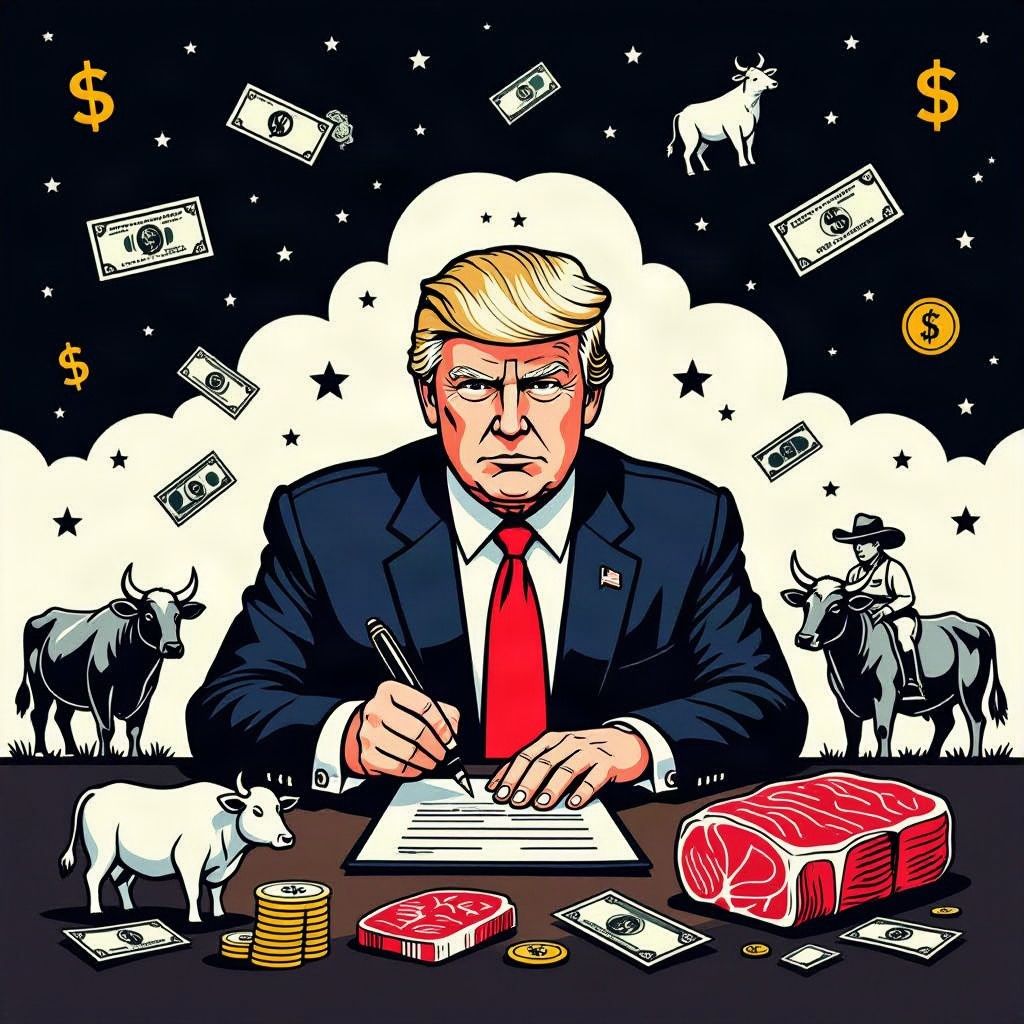
President Trump authorized legal action allowing U.S. ranchers to process their own meat, aiming to break a four-company monopoly following industry pushback over foreign beef imports.
Legal Framework and Market Concentration
On Friday, 28 August 2026, the President utilized Truth Social to declare that farmers and ranchers have always been a priority, citing significant issues with major processors [1]. The administration identifies four primary companies controlling the sector, describing the market structure as non-competitive and detrimental to producers [1]. Legal documents are being authorized to grant processing rights directly to agricultural operators, a move intended to occur quickly to dismantle the perceived monopoly [1].
Import Volume and Timeline Specifics
This regulatory shift accompanies a separate proclamation issued on 26 August 2026 regarding beef imports [3]. The plan mandates the import of 300,000 metric tons of lean beef trimmings over a 90-day period beginning 1 September 2026 [3]. The total volume is divided into three monthly tranches, calculated as 300000 metric tons [3]. These imports are required to be sold at a 25% discount from the prevailing import price to provide economic relief [2][3].
Economic Repercussions and Industry Response
Market data indicates beef prices have risen 9% year-over-year, contributing to significant consumer pressure [3]. While the White House projects a 10% supply increase, industry groups like the National Cattlemen’s Beef Association express disappointment in the approach [2]. Critics argue that selling beef at a discount creates downward pressure on domestic prices, potentially hindering herd recovery efforts [1][3]. However, broader agricultural sectors report increased costs for fertilizer and machinery linked to tariffs and geopolitical tensions [4]. Local farmers suggest consumer preference for known sourcing may buffer small operations from broader market volatility [2].