Shift to Uniform Pay Raises Threatens Retention of Top Talent
New York, Sunday, 22 February 2026.
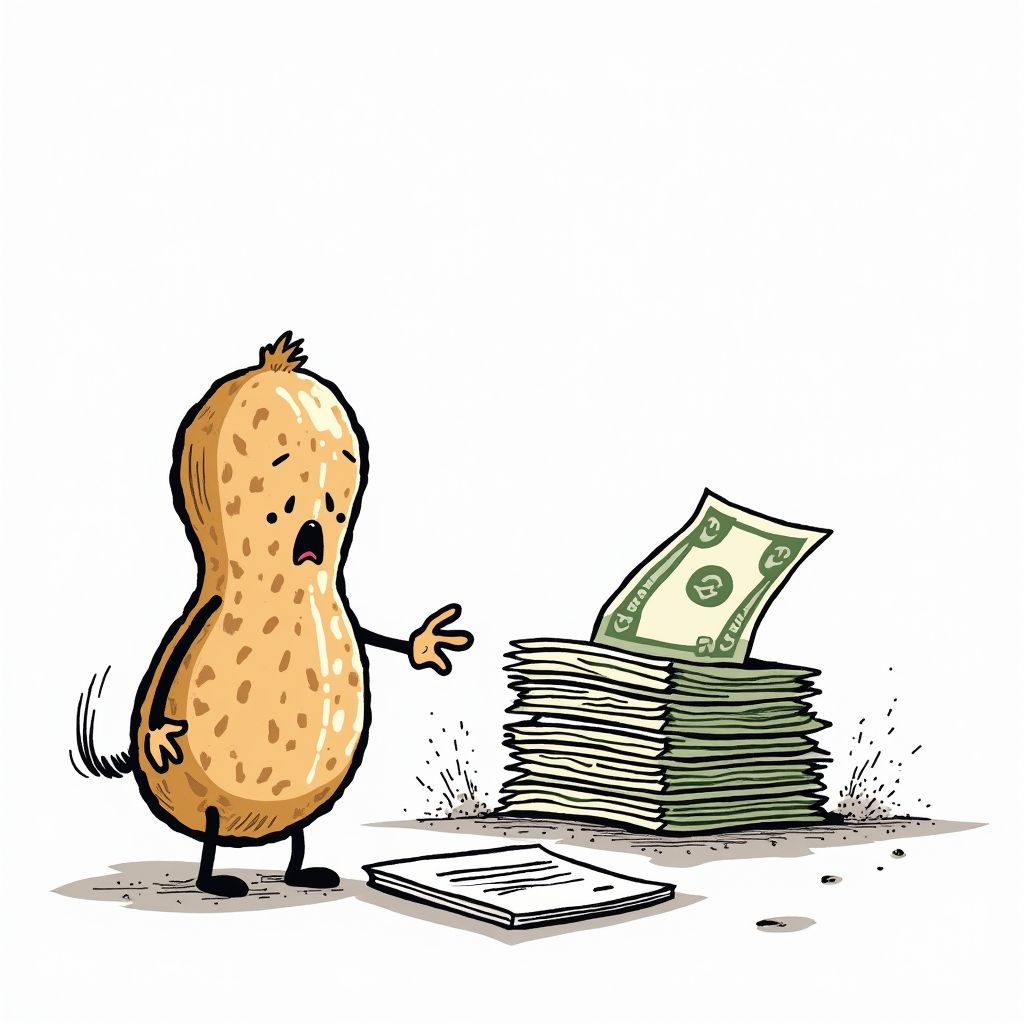
As businesses navigate financial pressures in early 2026, a significant shift in compensation strategy is emerging: the “peanut butter” pay raise. Recent data indicates that nearly 44% of employers are moving toward uniform salary increases—averaging around 3.5%—rather than performance-based rewards. While intended to control costs and ensure equity, analysts warn this approach is critically short-sighted. With projected inflation at 3%, these flat adjustments offer negligible real wage growth, effectively penalizing high achievers. Management experts highlight that failing to differentiate compensation for top talent risks triggering a wave of attrition, as exceptional employees seek competitors offering merit-based incentives. While the broader job market remains tight, the alienation of key performers could prove more costly to corporations than the savings generated by these standardized pay structures.
The Mechanics of Mediocrity
The terminology may sound benign, but the implications of “peanut butter” pay raises are reshaping the corporate landscape in early 2026. This strategy involves spreading salary increases thinly and evenly across an entire workforce, disregarding individual performance metrics [1]. According to a recent Payscale report, approximately 16% of organizations are newly planning to implement this approach this year, while another 18% are actively considering it [1]. When combined with the 9% of companies already utilizing this method, a substantial portion of the market is moving away from merit-based differentiation [1]. Data suggests that around 44% of employers currently plan to implement these uniform wage increases [3]. The average projected raise for 2026 sits at approximately 3.5%, a figure that mirrors budget allocations seen in 2025 [2][3].
The High Performer’s Dilemma
The shift toward uniform compensation strikes hardest at top-tier employees who are accustomed to being rewarded for exceeding expectations. Under traditional merit-based models, high performers could often expect raises upwards of 5%, while underperformers might receive 1% or nothing at all [2]. The “peanut butter” approach flattens this curve, often settling on a uniform 2.5% to 3.5% increase for everyone, regardless of their contribution [2]. Gene Marks, a small-business owner and commentator, argues that this methodology is fundamentally unfair, noting that high-performing employees deserve better recognition while lower performers should ideally be put on notice rather than rewarded [2].
Economic Pressures and Corporate Precedents
The driver behind this trend is largely financial caution. As of February 2026, nearly a third of businesses plan to lower their compensation-increase budgets compared to the previous year, citing potential recessionary fears and a desire for tighter cost control [3]. This follows a pattern established in 2025, where major corporations like Starbucks implemented a standard 2% raise for all corporate employees in a bid to reduce operational expenses [1]. However, this stands in stark contrast to other retention strategies seen recently, such as Walmart’s 2024 move to drastically increase store manager compensation to between $420,000 and $620,000 annually to foster a sense of ownership [3].