Vodafone Taps Amazon Satellites to Boost Connectivity in Europe and Africa
London, Tuesday, 3 March 2026.
Vodafone will utilize Amazon’s Leo constellation to bypass expensive fiber, delivering high-speed 4G and 5G backhaul to isolated communities across Europe and Africa starting in 2026.
Strategic Shift to Satellite Backhaul
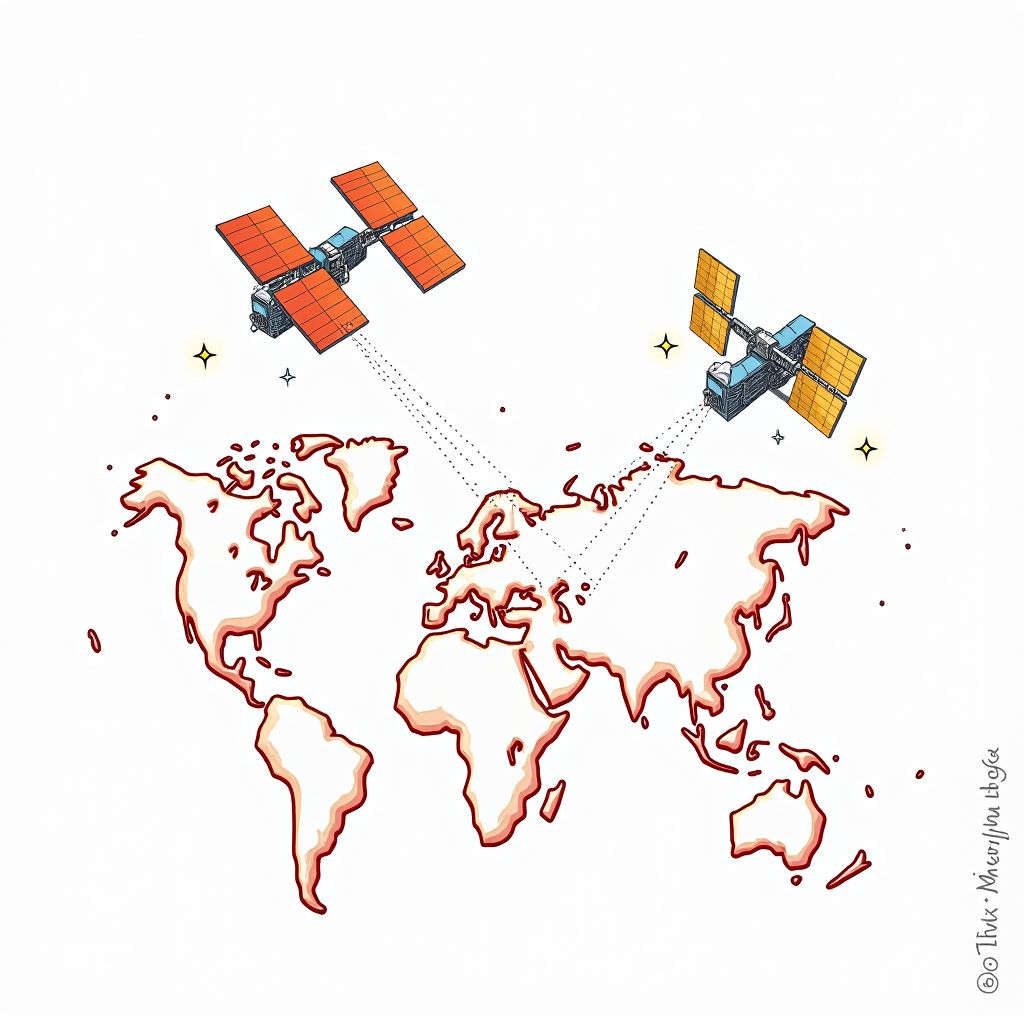
On March 2, 2026, Vodafone Group (VOD) and Amazon (AMZN) formalized a definitive agreement to integrate Amazon’s ‘Leo’ low Earth orbit (LEO) satellite constellation into Vodafone’s telecommunications infrastructure [1]. This partnership focuses on ‘backhaul’ connectivity—the critical link connecting mobile base stations to the core network—specifically targeting 4G and 5G sites in remote areas where laying traditional fiber optic cables is cost-prohibitive or logistically difficult [2][3]. By utilizing Amazon Leo, Vodafone aims to deploy high-speed connectivity to underserved regions without the extensive time and capital expenditure required for terrestrial fixed wireless or fiber links [2]. The collaboration is set to commence rollout in Germany and other European markets before expanding into Africa through Vodafone’s subsidiary, Vodacom [3].
Technical Capabilities and Network Resilience
The technical specifications of the Amazon Leo network promise to deliver substantial bandwidth to these isolated mobile sites, offering download speeds of up to 1 Gbps and upload speeds of 400 Mbps [1][3]. Beyond expanding coverage, this satellite integration serves a vital role in network resilience. Vodafone intends to utilize this satellite link as a redundancy measure for emergency services, ensuring connectivity remains intact even if terrestrial fiber links are severed by natural disasters such as flooding [2]. Unlike traditional geostationary satellites that orbit at high altitudes, Amazon Leo’s LEO satellites operate closer to Earth, which significantly reduces latency, making them suitable for real-time applications like cloud services and video calls [3]. As of March 2, 2026, the Amazon Leo constellation comprises over 200 satellites, with a recent launch of 32 satellites occurring on February 12, 2026 [4].
Accelerating Digital Inclusion in Africa
A significant portion of this initiative targets the African continent, aligning with Vodacom’s ‘Vision 2030’ strategy. The group aims to increase its customer base to 260 million and achieve a smartphone penetration rate of 75% by 2030 [1][2]. Shameel Joosub, CEO of Vodacom Group, emphasized that this partnership allows for the swift deployment of connectivity in isolated areas, effectively narrowing the digital divide [5]. The first mobile sites under this agreement are expected to go live in 2026, marking a tangible step toward these long-term goals [2]. This move is particularly critical for expanding access to financial services, which Vodafone currently provides to approximately 94 million customers across seven African nations [1].
The Competitive Landscape of Space-Based Connectivity
This agreement arrives amidst a flurry of activity in the satellite telecommunications sector in early 2026. While Vodafone utilizes Amazon Leo for infrastructure backhaul, the market for direct-to-device connectivity is also heating up. For instance, Virgin Media O2 launched its ‘O2 Satellite’ service powered by Starlink on February 24, 2026, offering direct connectivity for £3 per month [4][6]. Similarly, Vodafone and AST SpaceMobile launched ‘Satellite Connect Europe’ on February 28, 2026, targeting European mobile network operators [4]. While Amazon Leo—formerly known as Project Kuiper—continues to build out its planned constellation of over 3,000 satellites, this enterprise-focused partnership with Vodafone highlights a distinct commercial strategy compared to consumer-facing direct-to-cell services [4].
Sources
- www.vodafone.com
- www.telecomtv.com
- africa.businessinsider.com
- www.theregister.com
- www.linkedin.com
- www.linkedin.com