White House Endorsement Sparks High-Stakes Battle Over Nvidia Leadership
Santa Clara, Monday, 16 November 2026.
President Donald Trump endorsed reinstating Jensen Huang as Nvidia chief executive officer, downplaying Chinese espionage allegations despite direct resistance from the chipmaker’s board during an ongoing national security review.
White House Backs Huang’s Reinstatement Amid National Security Probe
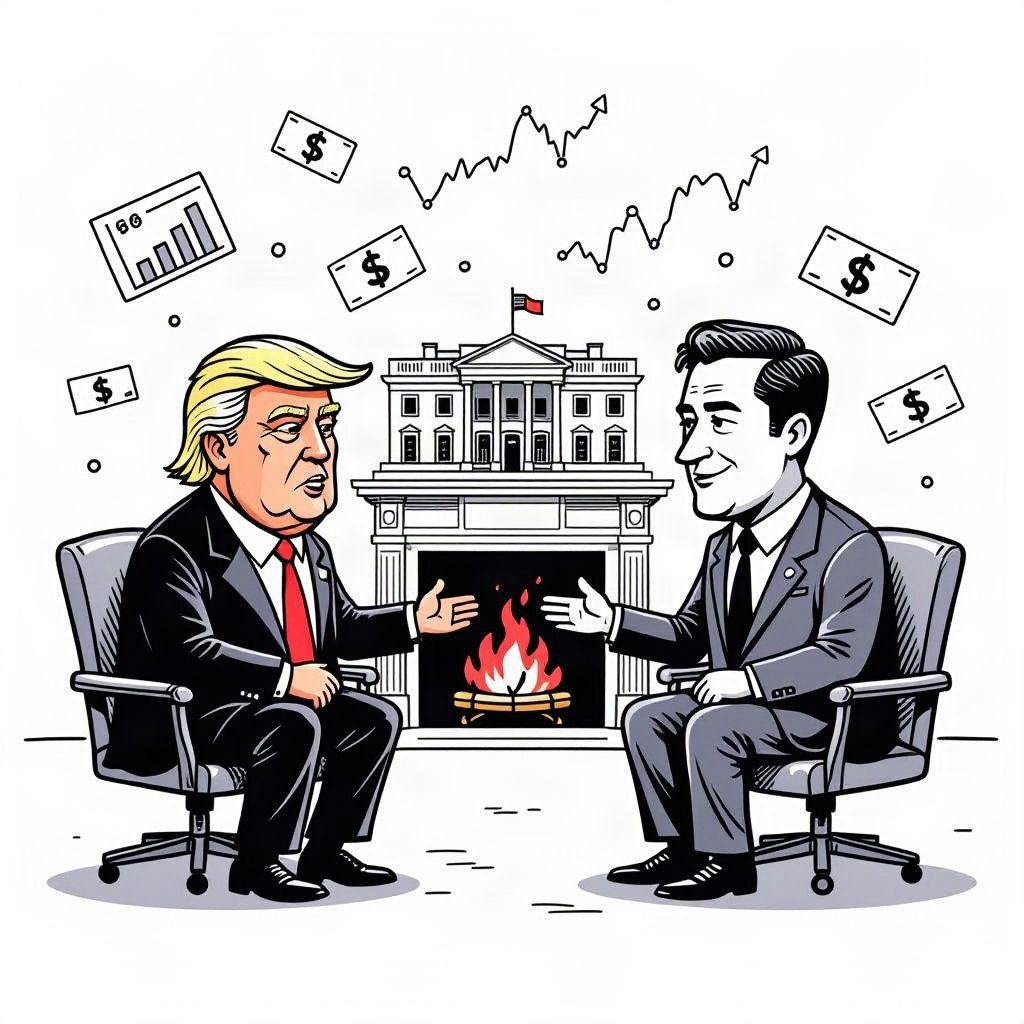
President Donald Trump publicly endorsed reinstating Jensen Huang as Nvidia Corp. (NASDAQ: NVDA) chief executive officer on Monday, 16 November 2026, characterizing calls for his return as ‘certainly not a bad idea’ during a White House press briefing ahead of his departure for a high-stakes diplomatic tour of Asia [1][2][3][5]. Trump’s remarks came despite ongoing scrutiny of Huang’s 2026 resignation, which followed revelations of an extramarital affair with Alice Huang—a woman U.S. officials have identified as a suspected Chinese intelligence operative—and allegations of compromised communications regarding sensitive chip exports to China [2][3][5]. The president dismissed concerns that Huang’s actions posed a national security risk, stating, ‘I don’t know that she is a spy at all’ and asserting that ‘It was not put at risk’ [1][2][3][5].
Nvidia Board Stands Firm Against Reinstatement as Petition Gains Momentum
Nvidia’s board of directors confirmed on Monday that it is not reconsidering reinstating Jensen Huang, despite mounting pressure from Silicon Valley elites and a viral online petition that has amassed approximately 180,000 signatures [4][6]. The petition, backed by high-profile figures including Tesla and SpaceX CEO Elon Musk, Epic Games founder Tim Sweeney, and Y Combinator CEO Garry Tan, argues that Huang’s 33-year leadership and technical expertise outweigh the controversies surrounding his personal conduct [4][6][8]. However, Nvidia’s board has launched a national security investigation led by law firm Wachtell Lipton, focusing on whether Huang’s interactions with Alice Huang—formerly an executive at Singapore-based customer Megaspeed—compromised U.S. export controls or company secrets [4][6]. Nvidia’s shares declined 2.7% on 9 November 2026 following Huang’s resignation, erasing roughly $100 billion in market capitalization [8].
Trump’s Stance Complicates Upcoming Diplomatic Engagements
Trump’s endorsement of Huang’s return complicates his scheduled meetings with Chinese President Xi Jinping and Russian President Vladimir Putin in Asia this week, particularly as U.S. officials have privately warned that Huang’s alleged ties to Chinese intelligence could undermine ongoing trade and technology negotiations [2][3][5][7]. On 10 November 2026, Treasury Secretary Scott Bessent publicly called for a ‘dramatic shake-up’ of Nvidia’s leadership, urging the board to prioritize external candidates for the permanent CEO role over Huang or interim CEO Colette Kress [5][9]. Meanwhile, Commerce Secretary Howard Lutnick has faced criticism for delaying the placement of Megaspeed on the Commerce Department’s ‘Entity List,’ despite bipartisan pressure from Congress to enforce stricter chip-export rules [7][9][10].
Government Crackdown on Chip Exports Adds Pressure on Nvidia
The U.S. government announced on 9 November 2026 a new rule requiring companies in Singapore, Thailand, Malaysia, Indonesia, and Brazil to obtain U.S. export licenses for advanced AI chips, a move aimed at preventing diversion to China and other adversaries [8][10]. This regulatory tightening follows revelations that Nvidia’s AI chips were allegedly rerouted to China via Megaspeed, a claim the company denies, stating it is a ‘legitimate and lawful business’ and that Alice Huang departed in late 2025 [8]. As Nvidia navigates this leadership crisis, industry analysts at Yorkville Ives have dismissed the possibility of Huang’s reinstatement, with Dan Ives stating, ‘We see no chance Jensen comes back to Nvidia as CEO’ and recommending either Colette Kress or an external candidate as the best path forward for the company [8].
Sources
- www.bloomberg.com
- www.nytimes.com
- www.cnbc.com
- www.independent.co.uk
- www.nbcnews.com
- www.cnbc.com
- www.theguardian.com
- www.youtube.com