McConaughey Trademarks 'Alright, Alright, Alright' to Combat AI Misuse
Los Angeles, Thursday, 15 January 2026.
Securing eight trademarks including his iconic catchphrase, McConaughey establishes a first-of-its-kind legal perimeter to litigate against unauthorized AI-generated deepfakes and voice clones.
Securing the Brand: A Federal Strategy
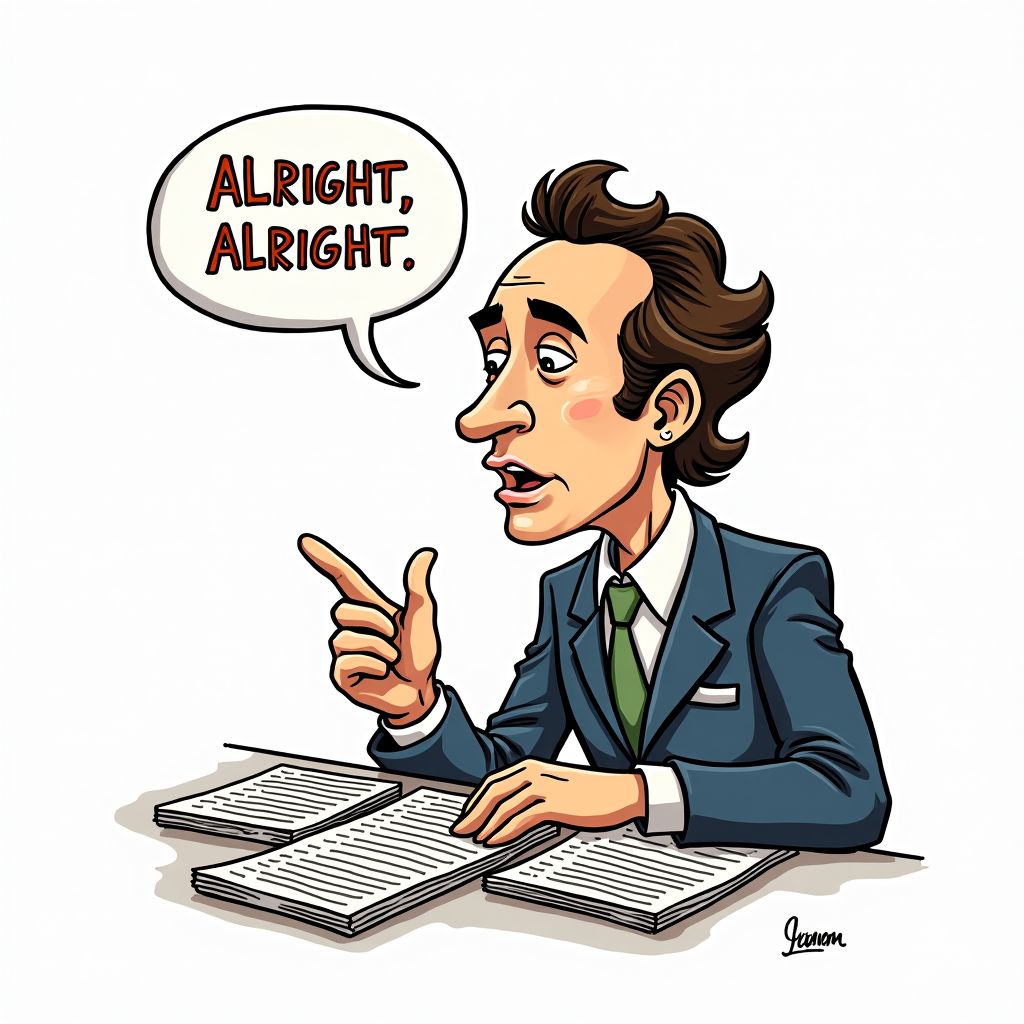
In a decisive move to safeguard his intellectual property, Matthew McConaughey has successfully secured eight trademarks from the U.S. Patent and Trademark Office (USPTO) as of early 2026 [2][3]. The approvals, finalized between December 2025 and January 2026, cover a diverse range of assets including his likeness, voice, and the iconic catchphrase “Alright, alright, alright” [1][5]. The specific trademarks are granular in their protection, covering audio of the catchphrase from the 1993 film Dazed and Confused, a seven-second video clip of the actor on a porch, a three-second clip of him before a Christmas tree, and audio of his mantra, “Just keep livin’, right? I mean, what are we gonna do?” [1][5]. These assets are now registered to J.K. Livin Brands Inc., formally cementing the actor’s ownership over his most recognizable traits [5].
Constructing a Federal Shield
The legal strategy, orchestrated by the law firm Yorn Levine, is designed to bypass the limitations of state-level publicity rights by establishing standing in U.S. federal courts [1][5]. While state laws currently offer some protection against the unauthorized commercial use of an actor’s image, McConaughey’s team argues that federal trademarks provide a more robust tool to halt AI-generated deepfakes or unauthorized simulations, even those that may not be explicitly selling a product [1][3]. Jonathan Pollack, an attorney for the actor, noted that in a landscape where industries are scrambling to address AI misuse, these trademarks serve as a mechanism to “stop someone in their tracks” [1]. This approach creates what McConaughey describes as a “clear perimeter around ownership,” ensuring that consent and attribution become the standard for any digital replication of his identity [4][8].
The Business of Consent
Crucially, this legal maneuvering is not a rejection of artificial intelligence but rather a method to control its monetization. McConaughey is an active participant in the AI economy, serving as an investor in the voice-cloning company ElevenLabs [1][8]. In late 2025, he partnered with the startup to produce a Spanish-language version of his newsletter, “Lyrics of Livin’,” utilizing an authorized AI replica of his voice [2][5]. Furthermore, the actor maintains a lucrative relationship with Salesforce, reportedly earning over $10 million annually, where he stars in advertisements for their Agentforce AI products [4]. This duality highlights a sophisticated market position: leveraging intellectual property laws to monetize authorized AI partnerships while litigating against uncompensated infringement.
Setting a New Precedent
McConaughey’s proactive stance arrives during a legislative void, as Congress has yet to enact a comprehensive federal framework governing AI replicas and rights of publicity [7]. While other celebrities like Paris Hilton and Taylor Swift have utilized trademarks for merchandise or phrases—Hilton trademarked “That’s hot” in 2007 and Swift has filed for various lyrics—McConaughey’s application of trademark law specifically to combat AI voice and likeness theft represents a novel legal test [5]. With the “Alright, alright, alright” line now protected 33 years after its debut, legal experts suggest this strategy could force a shift in how public figures protect their livelihoods while awaiting clearer federal regulation [5][7].
Sources
- variety.com
- www.engadget.com
- www.wdbj7.com
- www.kron4.com
- nypost.com
- www.reddit.com
- www.linkedin.com
- www.statesman.com