Global Electricity Demand Surge Signals Urgent Need for Grid Expansion
Paris, Friday, 6 February 2026.
As global electricity demand surges to add the equivalent of two European Unions by 2030, the IEA warns grid investment must increase by 50% to maintain reliability.
The Dawn of the “Age of Electricity”
The International Energy Agency (IEA) has issued a stark assessment of the global energy landscape in its “Electricity 2026” report, released this week. As of February 6, 2026, the agency forecasts that global electricity demand will expand by more than 3.5% annually through 2030 [1][3]. To put this surge into perspective, the total increase in consumption over the next four years is expected to be equivalent to adding the current electricity demand of more than two European Unions to the global grid [1]. This growth rate is significantly outpacing broader economic indicators; electricity demand is now projected to grow at least 2.5 times faster than overall energy demand [1][3]. While emerging economies remain the primary engines of this expansion, advanced economies are seeing a resurgence in demand growth after a decade and a half of stagnation, driven by the rapid scaling of data centers, artificial intelligence (AI), electric vehicles (EVs), and air conditioning systems [3][7].
Shifting the Generation Mix
To meet this voracious appetite for power, the global generation mix is undergoing a rapid transformation. By 2030, low-emission sources—specifically renewables and nuclear power—are projected to generate 50% of the world’s electricity [1][3]. This represents a significant market shift, rising from a 42% share in 2026, an increase of 8 percentage points over the forecast period [1][7]. We are already witnessing historical milestones in this transition; in 2025, electricity generation from renewable sources virtually reached parity with coal-fired generation [1][3]. Furthermore, while natural gas output is expected to grow to support this transition, coal-fired generation is forecast to decline, returning to 2021 levels by the end of the decade [3][5]. Consequently, the IEA anticipates that global carbon dioxide (CO₂) emissions from the power sector will remain roughly flat through 2030, despite the massive increase in demand [1][7].
The Grid Investment Bottleneck
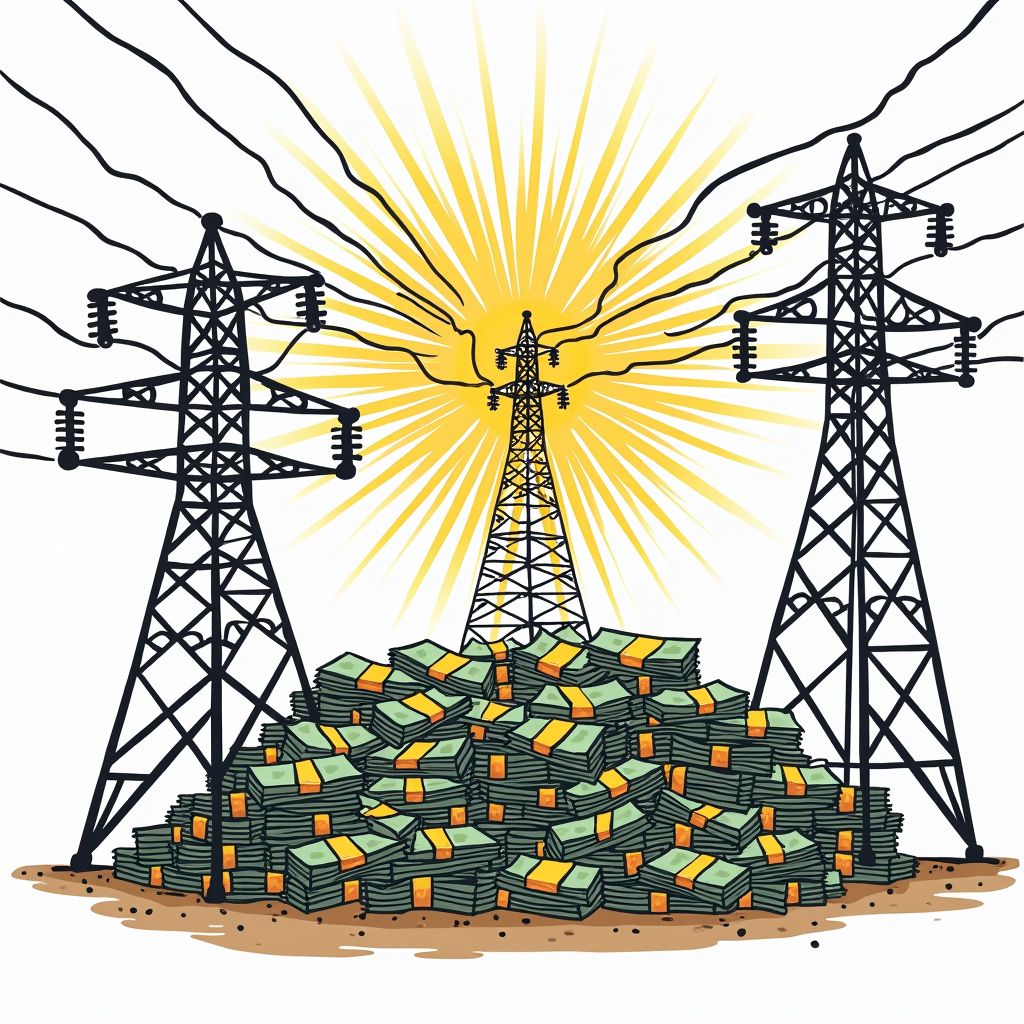
However, the capacity to generate clean energy is outpacing the infrastructure required to deliver it. The IEA warns that grid reliability is under pressure, with more than 2,500 gigawatts (GW) of renewable energy, storage, and data center projects currently stalled in connection queues worldwide [1][7]. This backlog represents a critical bottleneck for the energy transition. To address this, the agency states that annual investment in power grids must rise by 50% by 2030 to keep pace with demand and ensure security of supply [3][7]. There is a pathway to alleviate some of this pressure immediately; the report suggests that by deploying grid-enhancing technologies and implementing regulatory reforms, up to 1,600 GW of the currently queued projects could be integrated in the near term [1][3]. Utility-scale battery storage is also playing an increasingly vital role in providing flexibility, with sharp rises in installations across major markets including California, Texas, Germany, and the United Kingdom [1][3].
Economic Implications for Consumers
Beyond the infrastructure challenges, the report highlights growing concerns regarding affordability for end-users. Since 2019, household electricity prices in many nations have risen faster than incomes, placing strain on consumers [1][3]. As we look toward 2030, the economic reality is that while the cost of renewable generation continues to fall, the necessary capital expenditure for grid modernization and resilience against extreme weather and cyberthreats will be substantial [3]. For policymakers and utility leaders, the immediate priority is clear: unlocking the regulatory logjams holding back grid connections while mobilizing the capital required to build a network capable of handling the electrified economy of the future [5][7].
Sources
- www.iea.org
- carbon-pulse.com
- renews.biz
- www.tradingview.com
- www.linkedin.com
- www.marketscreener.com
- electrek.co