Opposition Leader Demands Freedom for Hundreds of Venezuelan Detainees
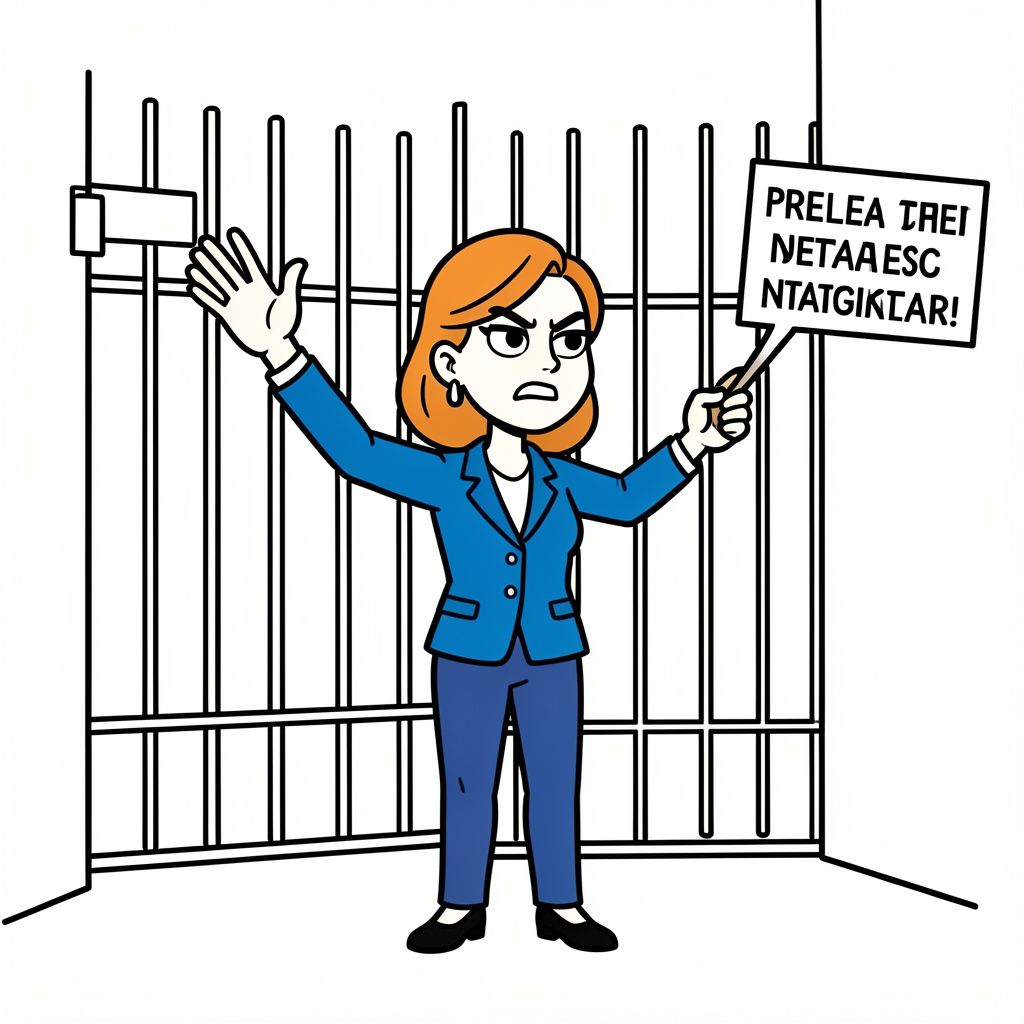
Caracas, Saturday, 7 November 2026.
Returning from exile, Nobel laureate María Corina Machado rallied outside El Rodeo I prison, demanding the release of over 300 political detainees amid ongoing transition tensions.
Machado’s High-Profile Rally Amplifies Pressure on Venezuela’s Interim Government
On Friday, 6 November 2026, Venezuelan opposition leader María Corina Machado staged a high-profile rally outside El Rodeo I detention center near Caracas, where she joined family members of political detainees for a sixth consecutive day of protests [2][7]. The demonstration underscores the escalating domestic pressure on interim President Delcy Rodríguez’s administration, which continues to govern despite the expiration of its legally mandated term in July 2026 [2]. Machado’s return from exile on 25 October 2026 has galvanized opposition factions, but the government’s control over security institutions and ongoing detentions remain unchecked [4][5]. While Rodríguez’s interim government has released hundreds of political prisoners under an amnesty law, Foro Penal estimates that over 300 individuals remain arbitrarily detained, including cases dating back to the 2015–2026 crackdown on dissent [2][4][7].
Escalating Unrest Threatens Venezuela’s Fragile Transition
The protest at El Rodeo I follows a pattern of sustained civil disobedience, with families maintaining vigils for over 300 consecutive days to demand the release of their relatives [7]. Machado’s public reading of the names of more than 400 political prisoners—representing an aggregate 1,756 years of imprisonment—has drawn international attention to the regime’s alleged human rights abuses [7]. The interim government’s failure to hold credible elections or dismantle the remnants of Nicolás Maduro’s security apparatus has deepened public skepticism about its commitment to democratic transition [4][5]. Alfredo Romero, executive director of Foro Penal, noted that while Rodríguez’s administration has engaged in U.S.-backed talks, systemic impunity persists, with many perpetrators of past abuses still in positions of power [4][5].
International Reactions and Geopolitical Implications
Machado’s activism has drawn both domestic support and international scrutiny. Supporters, including relatives of detainees, have rallied behind her calls for justice, with slogans such as ‘Freedom for all political prisoners’ echoing outside the prison gates [2][7]. However, her past affiliations—including alliances with foreign political groups and controversial statements—have sparked debate about her broader political agenda [3]. Critics argue that her approach risks exacerbating geopolitical tensions, particularly given Venezuela’s role as a key oil supplier to global markets [GPT][alert! ‘Machado’s foreign policy stances remain contentious, with limited consensus on their geopolitical impact’]. The U.S. State Department has framed Machado’s return as a potential catalyst for reconciliation talks, though no formal negotiations have been announced as of this date [2].
Human Cost and Long-Term Consequences
The crisis has exacted a devastating human toll, with Foro Penal documenting at least 23 deaths of political prisoners in regime custody since 2015 [7]. Cases such as that of Yanire Calderón’s brother-in-law—sentenced to 30 years for involvement in a 2019 coup attempt and imprisoned for over six years—highlight the regime’s harsh tactics [2]. Machado’s visit has provided symbolic relief to families, but the structural challenges to Venezuela’s democratic recovery remain daunting [4][5]. Analysts warn that without comprehensive electoral reforms and the dismantling of authoritarian institutions, the country risks sliding back into instability, with ripple effects on regional energy security and global supply chains [GPT].
Sources
- www.local10.com
- www.yahoo.com
- www.cair.com
- americasquarterly.org
- www.as-coa.org
- www.facebook.com
- www.ventevenezuela.org
- www.instagram.com