Saudi Arabia Strikes Yemen Port and Issues Ultimatum to UAE Over Arms Shipment
Riyadh, Tuesday, 30 December 2025.
Riyadh bombed a UAE weapons shipment with disabled tracking devices in Yemen, issuing a 24-hour ultimatum for Emirati forces to leave, threatening Red Sea stability and OPEC unity.
Escalation in the Gulf: A Fracture in the Alliance
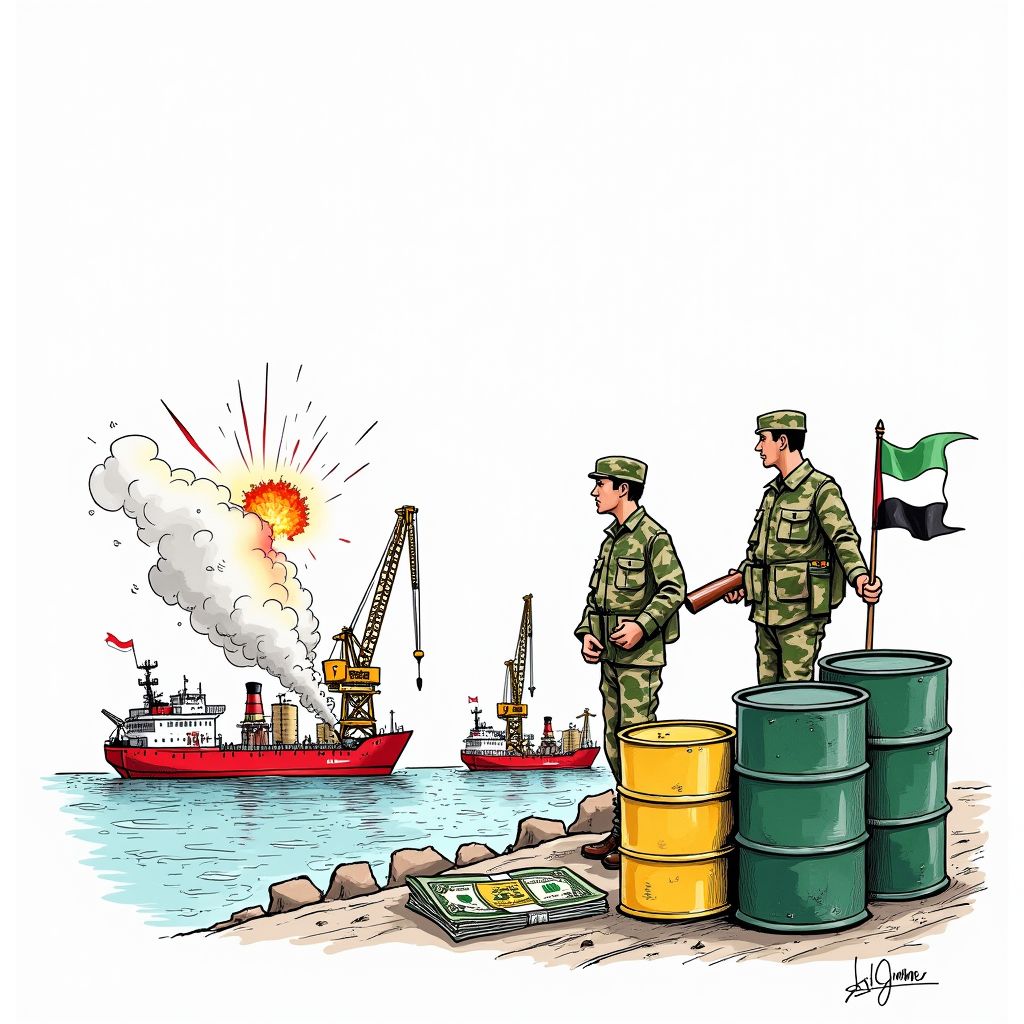
In a decisive military maneuver that exposes a deepening rift between two Gulf powerhouses, Saudi Arabia conducted a targeted airstrike on the Yemeni port city of Mukalla overnight on Monday, December 29, 2025 [3][8]. The operation specifically targeted a weapons shipment allegedly originating from the United Arab Emirates intended for the Southern Transitional Council (STC), a separatist group that has recently challenged Saudi-backed authority in the region [3][4]. Riyadh characterized the strike as a necessary measure to protect national security, declaring it a “red line” that had been crossed by its nominal ally [4]. The attack, which Saudi military officials claim resulted in no collateral damage, struck the dock where cargo from two vessels was being unloaded [4][8].
The Logistics of the Shadow Shipment
The catalyst for this military intervention was the arrival of two ships, including a vessel identified as the Greenland, which docked in Mukalla on Sunday, December 28, 2025 [3][8]. Intelligence reports indicate that the Greenland had previously been stationed in the UAE port of Fujairah as recently as December 22, 2025—a transit period of exactly 6 days [3][8]. According to the Saudi Press Agency, the crews of these vessels had disabled their tracking devices to evade detection while transporting a significant cache of combat vehicles and weapons [3][8]. The Saudi-led coalition stated that the delivery constituted an “imminent threat” to stability, necessitating the limited airstrike to neutralize the equipment before it could be fully deployed by separatist forces [8].
Ultimatums and Diplomatic Fallout
The political repercussions were immediate and severe. Following the strike, Yemen’s Presidential Leadership Council, led by Rashad al-Alimi, issued a directive ordering all Emirati forces to evacuate Yemen within 24 hours, a deadline set to expire today, December 30, 2025 [3][8]. Furthermore, al-Alimi announced the cancellation of a defense pact with the UAE and declared a state of emergency, effectively ending cooperation with Abu Dhabi [4][8]. To enforce this diplomatic break, the government imposed a 72-hour ban on all border crossings, as well as airport and seaport entries, exempting only those explicitly authorized by Saudi Arabia [3][4]. The Saudi Foreign Ministry supported these measures, formally labeling the UAE’s recent actions in the region as “extremely dangerous” [3][8].
Strategic Control of Southern Yemen
This kinetic engagement follows weeks of rising tensions centered on the resource-rich governorate of Hadramout. Earlier this month, the UAE-backed STC seized control of large swathes of territory in Hadramout and Mahra, pushing out the National Shield Forces, a military unit aligned with Saudi Arabia [2][3]. The STC, which has been flying the flag of the former South Yemen state, has increasingly sought self-rule, complicating the coalition’s primary objective of combating the Iran-backed Houthis in the north [2][4]. Saudi Defense Minister Prince Khalid bin Salman had previously urged the STC on December 28 to withdraw from these camps and de-escalate, a diplomatic overture that appears to have been ignored prior to the shipment’s arrival [6].
Global Reactions and Future Stability
The international community is watching this intra-coalition conflict with alarm, particularly given the strategic importance of the Red Sea shipping lanes. U.S. Secretary of State Marco Rubio expressed concern over the events in southeastern Yemen, urging “restraint and continued diplomacy” to avoid a broader destabilization [2][5]. Analysts suggest that while the airstrike curtails the immediate flow of heavy weaponry to the separatists—especially as Saudi Arabia maintains control over the airspace—the political fallout may reshape the region’s security architecture [3][8]. With the 24-hour evacuation deadline looming, the risk of further confrontation between Saudi and Emirati proxies remains high, threatening to unravel the anti-Houthi alliance completely [4].
Sources
- apnews.com
- abcnews.go.com
- apnews.com
- www.reuters.com
- www.france24.com
- www.instagram.com
- x.com
- www.middletownpress.com