Texas AG Ken Paxton Under Fire for Shockingly Lenient Child Abuse Plea Deal
Austin, Saturday, 20 June 2026.
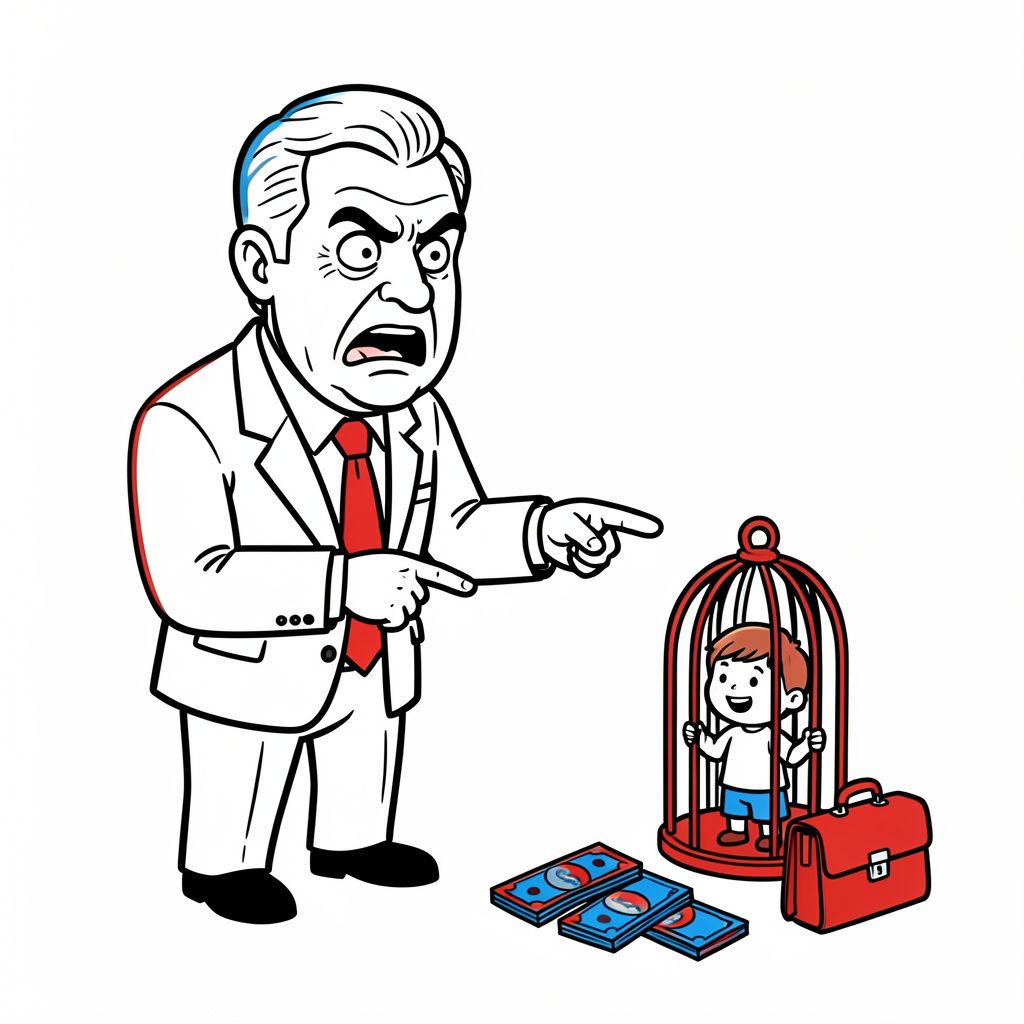
A Texas senator demands transparency after Attorney General Ken Paxton’s office negotiated a plea deal allowing a convicted child abuser to serve just 29 days in jail—sparking outrage and accusations of a cover-up. The case threatens Paxton’s re-election and could reshape child protection laws in Texas.
The Shocking Plea Deal That Sparked Outrage
On 25 May 2026, Adam Hoffman walked out of the McLennan County Jail in Waco, Texas, after serving just 29 days of a 60-day sentence for child sexual abuse charges. The leniency of his punishment—reduced from first-degree felony charges to Class A misdemeanors—has ignited a political firestorm, with Texas State Senator James Talarico (Democrat) leading the charge against Attorney General Ken Paxton (Republican) for what he calls a ‘cover-up’ and an ‘Epstein-style sweetheart deal’ [1][2]. Hoffman, a former Waco attorney and political operative, was originally charged with continuous sexual abuse of a child, a first-degree felony that carries a potential sentence of 25 years to life in prison [1]. The case took a dramatic turn when Paxton’s office, which took over prosecution after the local district attorney recused himself, negotiated a plea deal that allowed Hoffman to avoid prison time and sex offender registration in Texas [1][3].
A Timeline of Controversy
The case against Hoffman began in early 2025, when allegations surfaced that he had sexually abused a minor over a period of years. The McLennan County District Attorney’s Office initially filed first-degree felony charges but recused itself in late 2025 due to a conflict of interest, handing the case over to Paxton’s office [1]. In April 2026, after a mistrial in the original case, Paxton’s team offered Hoffman a plea deal that reduced the charges to indecent assault and displaying harmful materials to a minor, both Class A misdemeanors [1]. The deal included a 60-day jail sentence, but Hoffman was released after 29 days for good behavior, a reduction of 51.667% from his original sentence [1]. Notably, Hoffman was not required to register as a sex offender in Texas, though Nebraska authorities later mandated registration after he moved to Papillion [1]. The victim’s mother described the deal as ‘corrupt,’ while local activists in Waco staged protests in spring 2026, demanding accountability [1][2].
Political Fallout and Calls for Transparency
The plea deal has become a flashpoint in Texas politics, with Talarico using the controversy to challenge Paxton’s fitness for office as the 2026 election cycle heats up. On 16 June 2026, Talarico held a press conference at the McLennan County Courthouse, where he accused Paxton of prioritizing political connections over justice. ‘Ken Paxton had the chance to protect a child. Instead, he protected a predator,’ Talarico declared, comparing the deal to those negotiated by Jeffrey Epstein’s legal team [1][2]. Talarico has demanded the immediate release of all internal documents, emails, and text messages related to the plea deal, dubbing them the ‘Hoffman Files’ [1][3]. Paxton’s office has defended the deal, with Assistant Attorneys General Brenda Cantu and Dorian Cotlar stating that the decision was made ‘entirely in the best interest of the child involved,’ as the victim refused to testify in a second trial [1]. However, critics argue that the deal was unusually lenient, particularly given the severity of the original charges [1][2].
Broader Implications for Texas Politics and Child Protection Laws
The controversy comes at a precarious time for Paxton, who is already facing multiple legal challenges, including a long-standing securities fraud case and allegations of abuse of office [GPT]. The Hoffman case has added fuel to the fire, with even some Republicans expressing concern. During the 2026 Republican primary, Senator John Cornyn suggested that Paxton may have done Hoffman ‘a favor,’ highlighting divisions within the party [2]. The scandal has also reignited debates over child protection laws in Texas, with lawmakers and advocates calling for stricter penalties and greater transparency in cases involving minors [alert! ‘No specific legislative proposals have been introduced as of 20 June 2026’]. Talarico has framed the issue as a bipartisan concern, stating, ‘If there’s anything that all Texans can agree on, it’s that no one, not even the attorney general of Texas, should be able to cover up crimes against children’ [1][2]. As the November 2026 elections approach, the fallout from the Hoffman case could shape the political landscape, influencing voter perceptions of Paxton’s leadership and the state’s commitment to protecting vulnerable populations [1][2][3].