Starmer Pursues Pragmatic Trade Reset in Beijing Amid Global Uncertainty
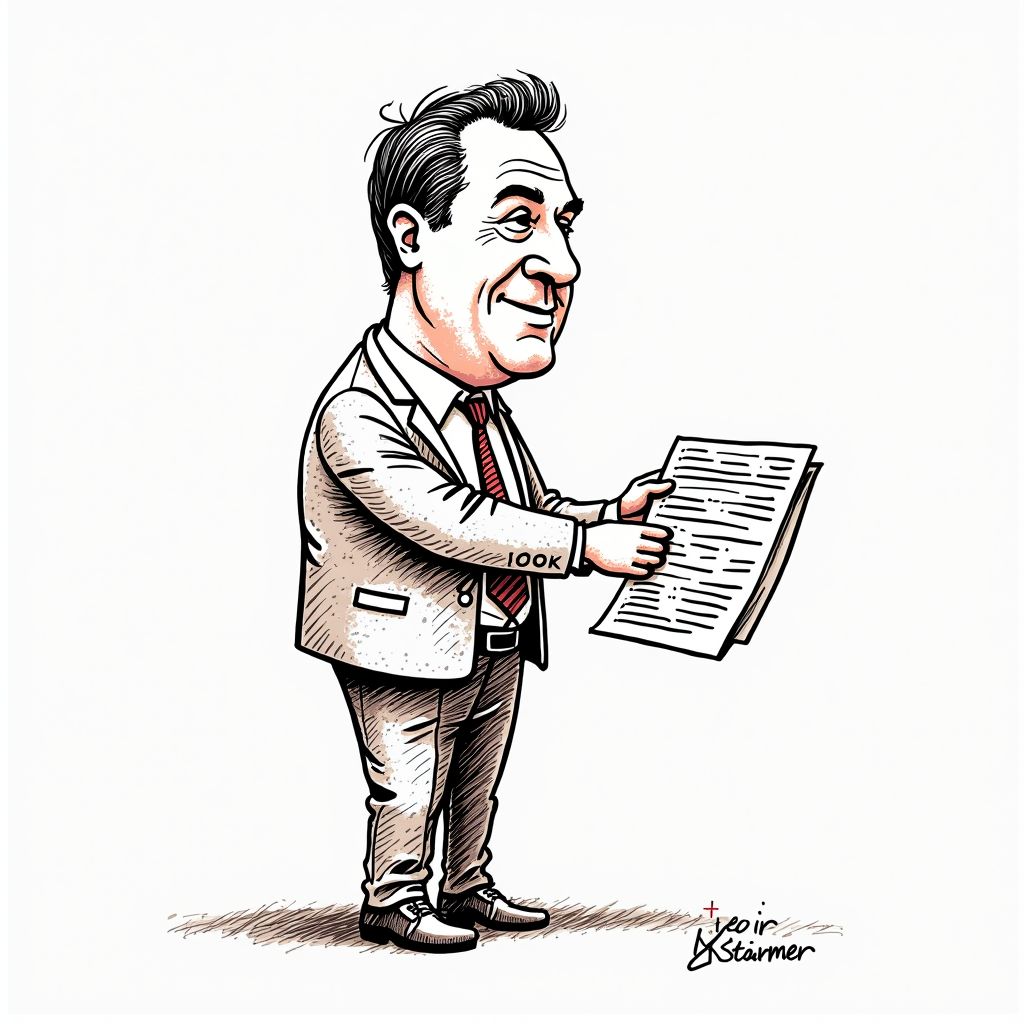
Beijing, Wednesday, 28 January 2026.
Starmer lands in Beijing to recalibrate trade ties as US unpredictability grows. Prioritizing economic pragmatism, the UK engages its third-largest trading partner, marking the first leadership visit since 2018.
A Pragmatic Pivot Amidst Geopolitical Shifts
British Prime Minister Keir Starmer arrived in Beijing on Tuesday, January 27, 2026, launching the first visit by a UK leader to China since Theresa May’s trip in 2018 [5][8]. Accompanied by a delegation of approximately 60 business and cultural leaders—including representatives from HSBC, GSK, and Jaguar Land Rover—Starmer’s mission is explicitly focused on repairing frayed diplomatic ties and expanding commercial opportunities [2][5]. Describing himself as a “British pragmatist applying common sense,” the Prime Minister is attempting to navigate a complex path: deepening economic engagement with the world’s second-largest economy while managing security concerns and maintaining the “special relationship” with the United States [3][8]. This diplomatic initiative comes as the UK seeks to stabilize its economic outlook, with trade relations with China currently supporting 370,000 British jobs [3][7].
Economic Asymmetries and Market Realities
The economic backdrop for this visit is defined by China’s continued, albeit shifting, dominance in global trade. Despite facing deflationary pressures, China’s economy grew by 5% in 2025, and the nation recorded a record trade surplus of $1.2 trillion last year [1]. For the UK, the trade relationship remains heavily skewed. In 2025, China exported $85.1 billion in goods to the UK while importing only $18.6 billion, resulting in a bilateral trade deficit of 66.5 billion [8]. Starmer’s government aims to narrow this gap by opening markets for British services and industries, leveraging China’s status as the UK’s third-largest trading partner [3][7].
The Trump Factor
Starmer’s outreach to Beijing occurs against a backdrop of heightened unpredictability from Washington, one year into Donald Trump’s presidency. Following Trump’s return to the White House in January 2025, trade tensions escalated sharply, with US tariffs on Chinese goods rising to over 100% in April 2025 before a partial reversal [1]. This protectionist stance has had tangible effects; Chinese shipments to the US fell by 20% in 2025, prompting Beijing to pivot toward other markets, including a 25.8% increase in exports to Africa and an 8.4% rise to the EU [1]. Analysts suggest that as the US becomes “less predictable,” Beijing is positioning itself as a stable alternative for global partners [1]. However, the risks of defying US foreign policy are evident; President Trump recently threatened a 100% tariff on Canada if Prime Minister Mark Carney proceeded with a trade deal with China [3].
Balancing Security with Commerce
Domestically, Starmer faces significant criticism regarding the timing and nature of the visit. Shadow Foreign Secretary Priti Patel has accused the Prime Minister of “bending over backwards to appease Beijing,” citing the government’s approval of a new Chinese “mega-embassy” in London on January 20, 2026, just days before the trip [2][3]. Security concerns remain a friction point; in December 2025, the Foreign Office disclosed a cyber-attack from the previous October, suspected to be the work of a Chinese group known as Storm 1849 [4]. Furthermore, the visit follows the conviction of British citizen Jimmy Lai in Hong Kong under Beijing’s national security law less than two months ago [8]. Starmer has insisted that engagement does not mean “turning a blind eye” to these challenges, promising to remain “clear-eyed” on national security [3][7].
Future Engagements
Looking ahead, the Prime Minister is scheduled to meet with President Xi Jinping and Premier Li Qiang in Beijing on Thursday, January 29, 2026 [2][7]. The outcome of these meetings will be scrutinized to see if the UK can secure tangible economic benefits without compromising its strategic alliances. Following his engagements in Beijing and Shanghai, Starmer will travel to Tokyo to meet Japanese Prime Minister Sanae Takaichi, further emphasizing the UK’s focus on the Indo-Pacific region [2][7]. Meanwhile, US President Donald Trump is expected to make his own visit to China in April 2026 [2][8].
Sources
- www.reuters.com
- www.bbc.com
- news.sky.com
- www.theguardian.com
- www.reuters.com
- www.politico.eu
- www.theguardian.com
- apnews.com