Kansas Megachurch Pastor Adam Hamilton Enters 2026 Senate Race
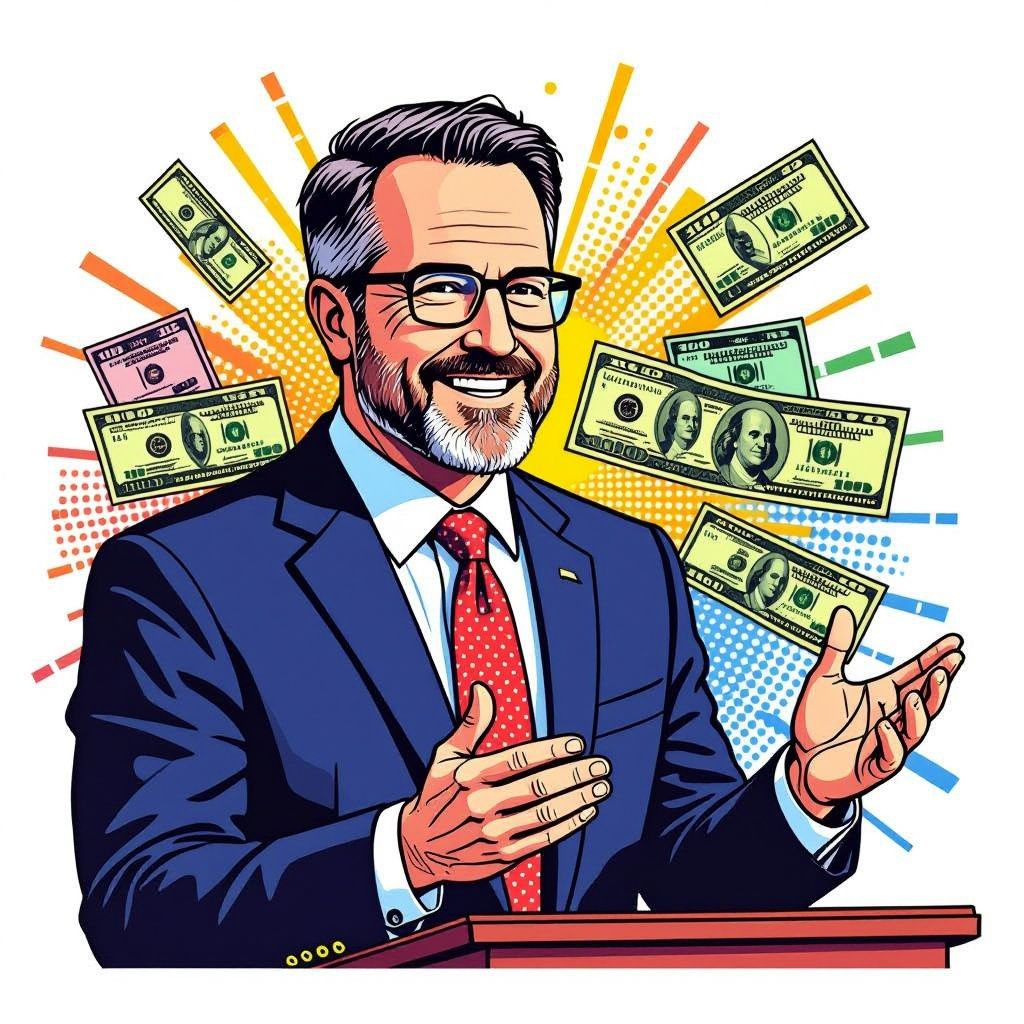
Leawood, Friday, 1 May 2026.
Leading the nation’s largest Methodist megachurch, Adam Hamilton launched a 2026 Democratic Senate bid in Kansas, a highly contested race that could significantly impact future economic and tax legislation.
The Strategic Shift from Pulpit to Politics
On Wednesday, April 29, 2026, the 61-year-old Reverend Adam Hamilton formally launched his campaign for the United States Senate at Harmon Park in Prairie Village, Kansas [2][3]. Coinciding with the launch of his campaign website, the announcement marked the end of an 18-community statewide listening tour that concluded on April 18 at a brewery in Lenexa [1][2][3]. Initially exploring an independent run in February 2026, Hamilton ultimately registered as a Democrat, concluding that the two-party system offered the only viable pathway to Congress [1][3]. He aims to navigate the partisan divide by positioning himself as an “independently-minded Democrat” dedicated to leading from the center and building bridges across the aisle [1][2].
Economic Pragmatism and the Centrist Playbook
The pastor’s platform leans heavily into pragmatic economic issues, targeting the rising cost of living, tariffs, government shutdowns, and the pressing need for accessible healthcare in rural Kansas [2]. By describing himself as a “liberal conservative and a conservative liberal,” Hamilton is attempting to replicate the electoral formula utilized by Democratic Governor Laura Kelly, who secured gubernatorial victories in 2018 and 2022 by courting unaffiliated voters and disaffected Republicans [3]. He is heavily reliant on Johnson County, an economically vital region that has notably voted against Donald Trump in the past two presidential election cycles [3].
Regulatory Scrutiny and General Election Stakes
The transition from religious leadership to partisan politics has immediately attracted regulatory scrutiny. Around April 24, 2026, Robert Fillion, the executive director of the Kansas Republican Party, filed a complaint with the Federal Election Commission (FEC) [2]. Fillion alleged that Hamilton improperly utilized church resources to communicate his political ambitions, dismissing Hamilton’s earlier independent exploration as a “political marketing strategy to mask a radical left agenda” [2][3]. While church officials maintain the communications were strictly informational regarding his future at the church, the situation highlights a complex regulatory environment [2]. Although a July 8, 2025, IRS policy change permitted houses of worship to endorse candidates without forfeiting their tax-exempt status, the FEC continues to enforce bans on direct political participation by nonprofit entities [2].