Amazon Accelerates AI Strategy with $12 Billion Data Center and Nuclear Power Push
Baton Rouge, Thursday, 5 March 2026.
Amazon commits $12 billion to Louisiana infrastructure while advancing nuclear-powered campuses in Texas, highlighting the critical shift toward high-density energy sources for next-generation AI.
Investing in High-Density Power and Infrastructure
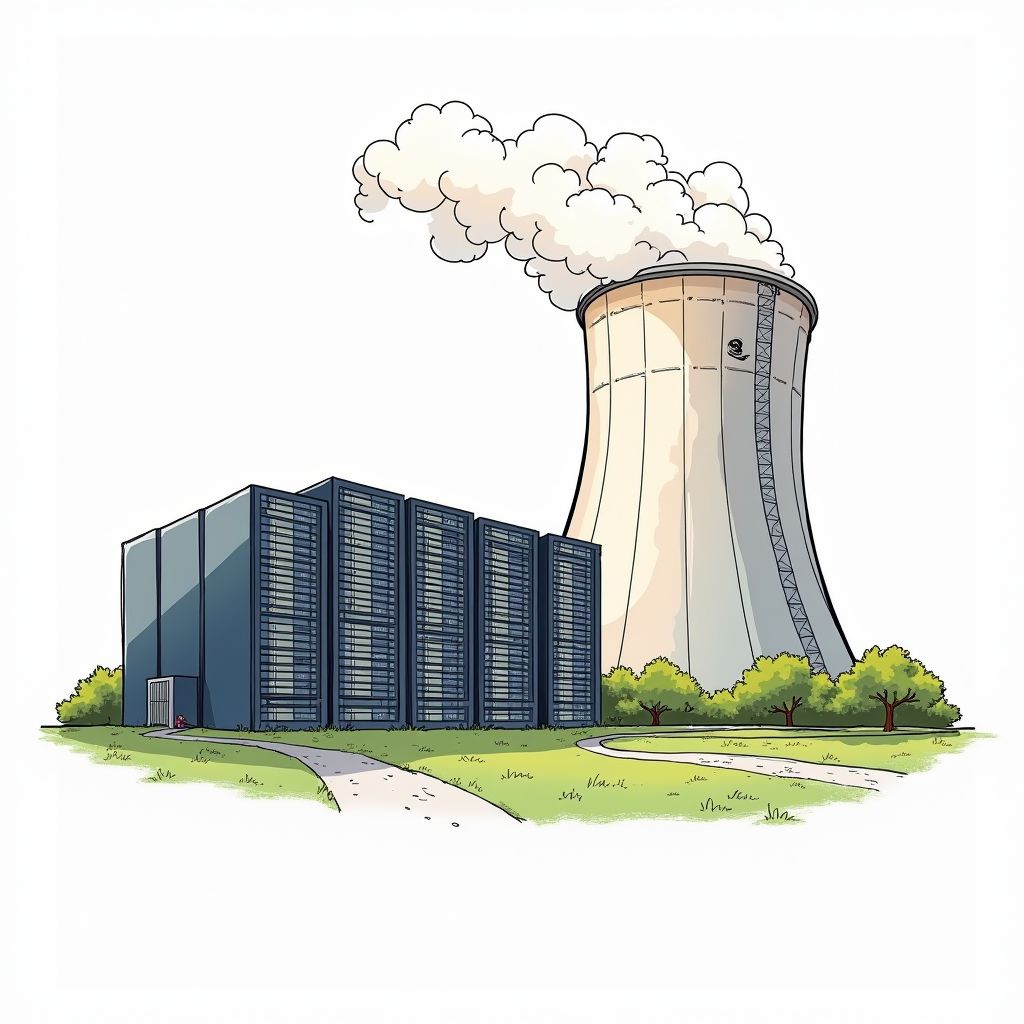
As of March 5, 2026, Amazon’s aggressive capital deployment strategy has materialized in a significant $12 billion investment dedicated to new data center campuses in Louisiana, with STACK Infrastructure appointed to lead the development and construction [1]. This move signals a decisive effort to expand capacity beyond traditional hubs, yet the company’s concurrent activities in Texas reveal a deeper strategic pivot toward energy resilience. To support the immense power demands of AI workloads, Amazon is planning a campus featuring up to 18 buildings situated near the Comanche Peak Nuclear Power Plant in Somervell County, Texas [1]. Further cementing this nuclear-focused strategy, the company is advancing “Project Spectrum” in Hood County, a massive 21-building campus spanning 1,265 acres that will be powered by Luminant using energy derived directly from the Comanche Peak facility [1].
Strategic Acquisitions in Virginia
While exploring new energy frontiers in the South, Amazon continues to fortify its presence in established digital corridors. In a significant real estate transaction finalized recently, the tech giant purchased 49.37 hectares of the George Washington University Virginia Science and Technology Campus for $427 million [1][3]. This acquisition underscores the high premium placed on land within prime data center zones, though immediate development is not expected; the university is slated to continue operations on the site for up to five years before Amazon may commence redevelopment [1]. This lease-back arrangement suggests a long-term horizon for Amazon’s capacity planning in the region, prioritizing land banking over immediate construction.
The Broader Hyperscale Landscape
Amazon’s expansion occurs against a backdrop of intense industry-wide activity recorded throughout February 2026, as competitors race to secure land and power. Google has confirmed its Pine Island project in Minnesota and announced the Wilbarger data center campus in Texas, which is part of a larger $40 billion statewide investment strategy extending through 2027 [1]. Concurrently, satellite imagery from March 2, 2026, indicates active site clearing for CoreWeave’s planned 2 GW Project Horizon campus near Fort Stockton, Texas [1]. Additionally, Atlas Development announced Project Ruby in Columbus, Georgia, a $5 billion campus designed to deliver 600 MW of capacity across four buildings [1].
Regulatory Headwinds and Market Realities
Despite the surge in capital allocation, the sector faces growing regulatory friction that can derail substantial projects. The volatility of local permitting was highlighted recently when TigerDC withdrew Project Spero from Spartanburg County, South Carolina, after the county council voted against the project’s payment-in-lieu-of-taxes (PILOT) agreement [1]. Similarly, Project Jarvis, a proposed 1 GW campus in Florida covering approximately 485.62 hectares, is being withdrawn and faces potential legislative hurdles [1]. These cancellations serve as a stark reminder that while capital availability remains high, local policy and community acceptance are becoming critical bottlenecks in the deployment of AI infrastructure.