Australia Introduces World-First Clean Energy Rules for Tech Data Centers
Sydney, Saturday, 18 July 2026.
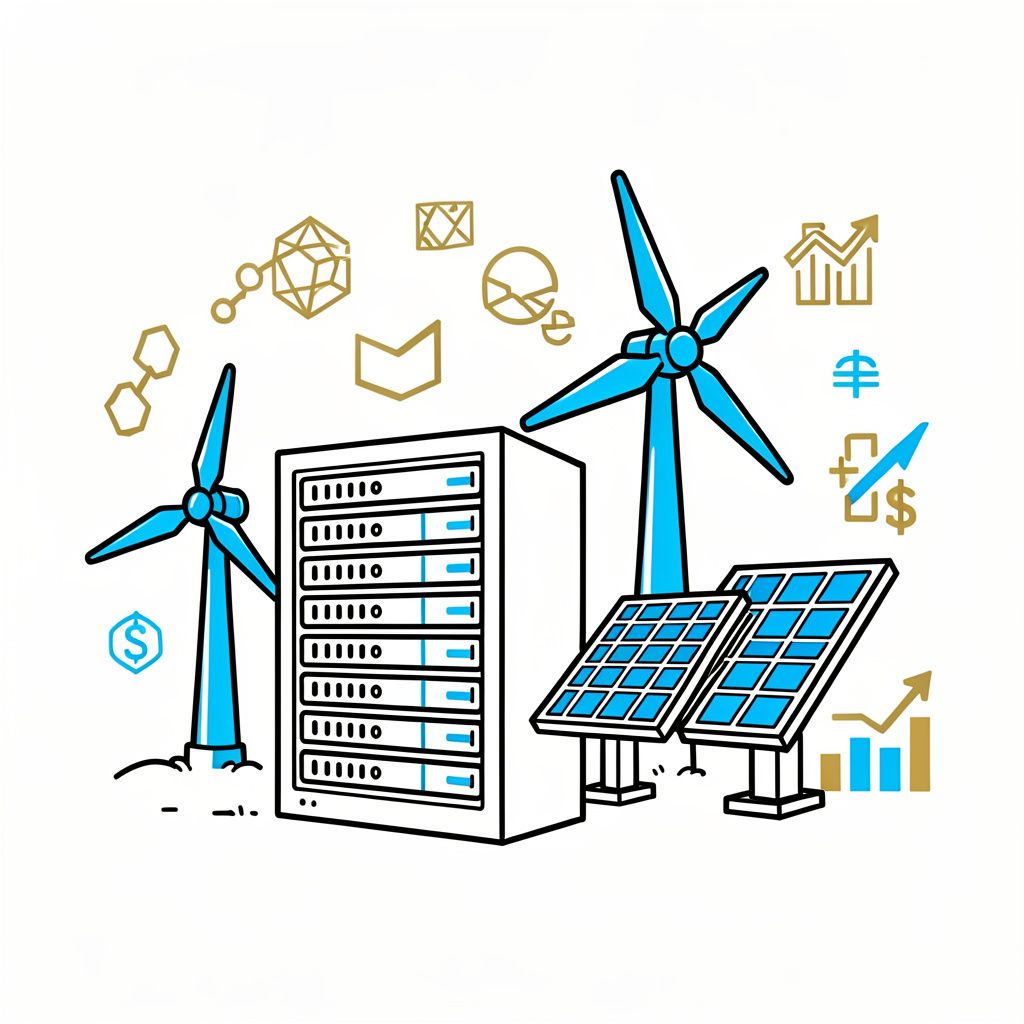
Australia has announced a world-first regulatory framework requiring large-scale AI data centers to generate more renewable energy than they consume, protecting the grid and consumer power prices.
A Pioneering Mandate for Energy Self-Sufficiency
On July 15, 2026, Australian Prime Minister Anthony Albanese announced a landmark national regulatory framework at the University of Sydney, designed to legally bind the next generation of large-scale AI data centers to become “net-generators” of electricity [1][4]. Under this upcoming mandate, which the government intends to legislate by early 2027, data centers must underwrite new renewable energy projects and cover their full grid connection costs [1][4]. The framework, officially dubbed the “Australian Standards for A.I.” during a subsequent announcement on July 16, 2026, seeks to ensure that these energy-hungry facilities contribute at least as much clean energy back to the national grid as they consume [2][4].
Balancing Grid Resilience and Local Community Concerns
Australia’s aggressive stance is built upon its history as a global leader in rooftop solar PV adoption, which was fostered by strong federal and state policies [1][5]. However, the unprecedented growth of AI data centers has introduced localized challenges that extend beyond grid capacity [3]. On July 15, 2026, an investigation by 7NEWS Spotlight highlighted the social friction emerging from this rapid development, noting that residents living closest to these facilities face ongoing disruptions and noise without receiving any financial compensation [3]. Belinda Dennett, CEO of Data Centres Australia, confirmed that affected neighbors currently receive no compensation for these doorstep disturbances [3].
Water Efficiency and Intellectual Property Protections
The “Australian Standards for A.I.” framework is not limited to electricity generation; it also introduces strict mandates for water conservation [2][4]. Because Australia is the driest populated continent on Earth, the new regulations will require data centers to minimize their water use, maximize energy efficiency, and pay for any additional water infrastructure they require [4]. Additionally, the policy addresses intellectual property protections, ensuring that Australian creators—including writers, artists, and reporters—retain control and receive fair value when their work is utilized for training AI models, with Albanese declaring that “anything less is theft” [2].
Technological Solutions and the Road to 2027
As the government drafts the specific legislation ahead of the early 2027 target, technological innovations within Australia are already offering potential pathways to alleviate the energy crisis [4]. In March 2026, researchers at the University of Sydney’s Sydney Nano Hub, led by Professor Xiaoke Yi, announced a major breakthrough: an ultra-compact, nano-photonic AI chip [4]. This chip utilizes light particles (photons) rather than traditional electrons to perform neural network calculations on a picosecond timescale [4]. According to Professor Yi, this photonics-based approach re-imagines chip design to provide faster, more energy-efficient, and ultra-compact AI accelerators, directly addressing the physical energy constraints currently hindering AI development [4].