Boeing Wins First Major Chinese Jet Order in Nearly a Decade
Guangzhou, Wednesday, 25 November 2026.
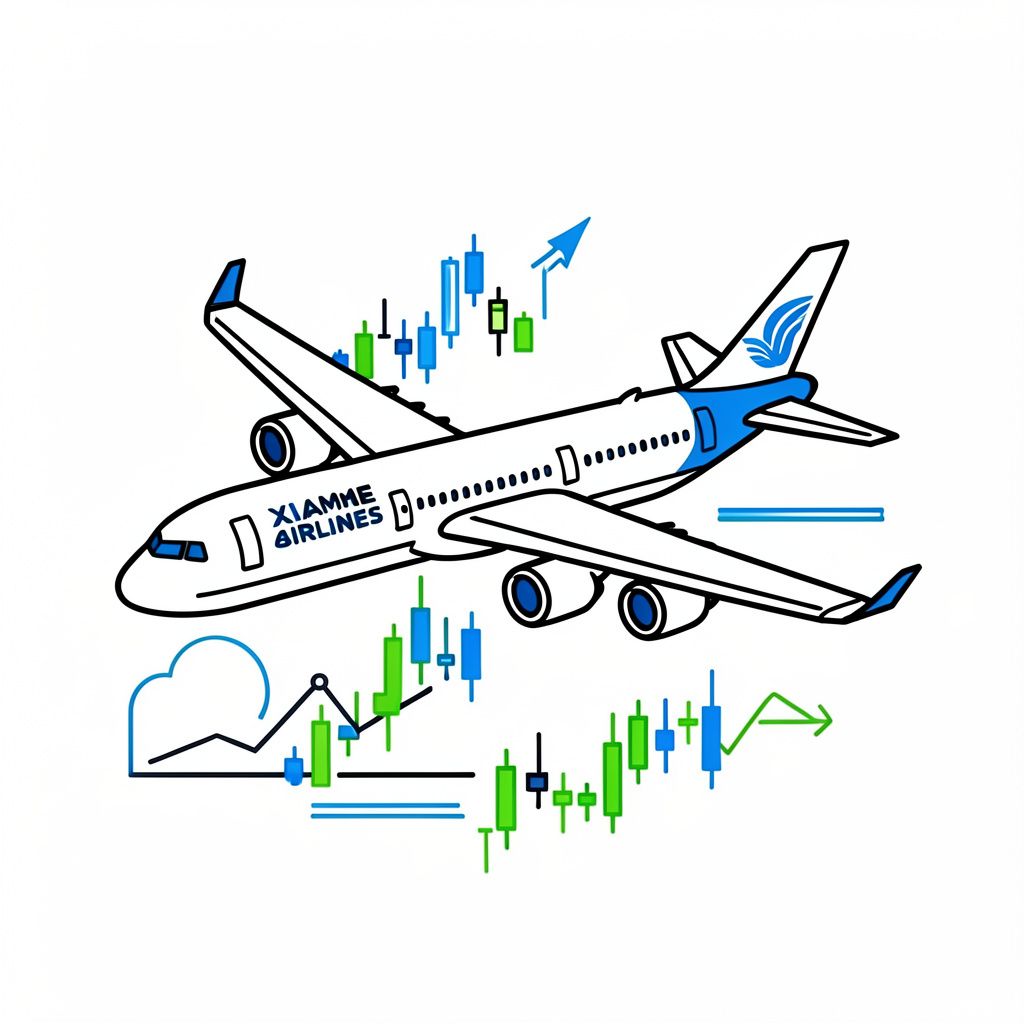
Xiamen Airlines finalized a $7.4 billion agreement for 50 Boeing 737-8 aircraft, signaling a pivotal breakthrough in US-China aerospace trade after years of regulatory freezes and mounting geopolitical tensions.
A Decade of Frozen Skies: Boeing’s Struggle in China
The $7.4 billion order for 50 Boeing 737-8 aircraft from Xiamen Airlines—finalized on 24 November 2026—marks a dramatic reversal in Boeing’s (NYSE: BA) fortunes in the Chinese aviation market, which has been largely closed to the U.S. manufacturer for nearly a decade [1][5][8]. This freeze was punctuated by a 2025 ban on new Boeing deliveries to Chinese carriers amid escalating trade tensions between Washington and Beijing [3][10]. The last major Boeing order from China occurred in 2017, and since then, Chinese airlines have increasingly turned to Airbus, with Xiamen Airlines itself taking delivery of its first Airbus A321neo in April 2023, ending a four-decade-long all-Boeing fleet [3][5][10].
Geopolitical Thaw: Trade Truces and High-Stakes Summits
The breakthrough comes against a backdrop of fragile diplomatic progress. A summit between U.S. President Donald Trump and Chinese leader Xi Jinping in Shenzhen during the week of 16 November 2026—just days before the order was announced—laid the groundwork for renewed cooperation [3][10]. During that meeting, the leaders discussed commitments to purchase 200 jets from U.S. manufacturers, a pledge that Xiamen Airlines’ order partially fulfills [3][8]. Analysts suggest the agreement reflects Beijing’s willingness to ease restrictions on Boeing as part of broader trade truce negotiations, which also involve pauses on export curbs for critical minerals like gallium, germanium, and antimony [3][10]. These minerals are vital for semiconductor and aerospace manufacturing, and their temporary suspension—originally set to expire on 27 November 2026—has been extended as part of the truce [3][10].
Fleet Modernization and Strategic Expansion in Fujian
For Xiamen Airlines, the Boeing 737-8 order is not merely a fleet upgrade but a strategic investment in regional connectivity and infrastructure. The airline, a subsidiary of China Southern Airlines, plans to deploy the aircraft to support operations at the newly opened Xiamen Xiang’an International Airport, which began operations in late 2025 [1][5][8]. The 50 jets, valued at a combined $7.4 billion list price, will be delivered in batches between 2031 and 2034, subject to final approval from China Southern’s shareholders and Chinese aviation authorities [1][5][8][9]. While the actual purchase price remains undisclosed, industry insiders confirm Boeing has offered significant discounts off the list price, a common practice in large commercial aircraft transactions to secure long-term contracts [1][8][9].
Boeing’s Supply Chain Lifeline and Industry Implications
The order provides a critical boost to Boeing’s commercial airplanes division, which has faced production delays, certification challenges, and a backlog of over $715 billion in orders as of mid-2026 [7][GPT]. The Xiamen Airlines deal reinforces demand for the 737-8, the backbone of Boeing’s narrowbody portfolio, amid ongoing production constraints on the 737 MAX program [7][GPT]. While the long-term revenue from this order is not expected to materially impact Boeing’s near-term financial performance—given delivery dates are nearly five years away—the deal strengthens Boeing’s narrative of operational recovery and debt reduction [7][GPT]. Analysts note that the order underscores sustained post-pandemic capacity growth in Asian carrier networks, particularly as airlines in the region expand domestic and regional routes [7][GPT].
A Fragile Thaw: Risks and Uncertainties Ahead
Despite the optimism surrounding the agreement, significant risks remain. The order is contingent on regulatory and shareholder approvals, and past geopolitical flare-ups—such as the 2025 delivery ban—have demonstrated how quickly trade relations can deteriorate [1][3][5]. U.S. Trade Representative Jamieson Greer has indicated that the Section 301 review into manufacturing overcapacity, which could result in additional tariffs, is expected to conclude by the end of 2026 [3][10]. Any adverse findings in this review could reignite tensions and jeopardize future orders [3][10]. Furthermore, while the mineral export truce has been extended, its expiration on 27 November 2026 leaves little margin for error, with other truce components set to lapse in January 2027 [3][10]. For Boeing, the true test will be converting long-term orders into profitable, timely deliveries while navigating an increasingly complex geopolitical landscape [7][GPT].
Sources
- www.aljazeera.com
- aviationweek.com
- www.briefs.co
- finance.yahoo.com
- x.com
- www.bloomberg.com
- www.reddit.com
- qz.com
- www.briefs.co
- www.bloomberg.com