Tariff Relief on Canadian Goods Eases Pressure on American Agriculture
Washington, Saturday, 24 October 2026.
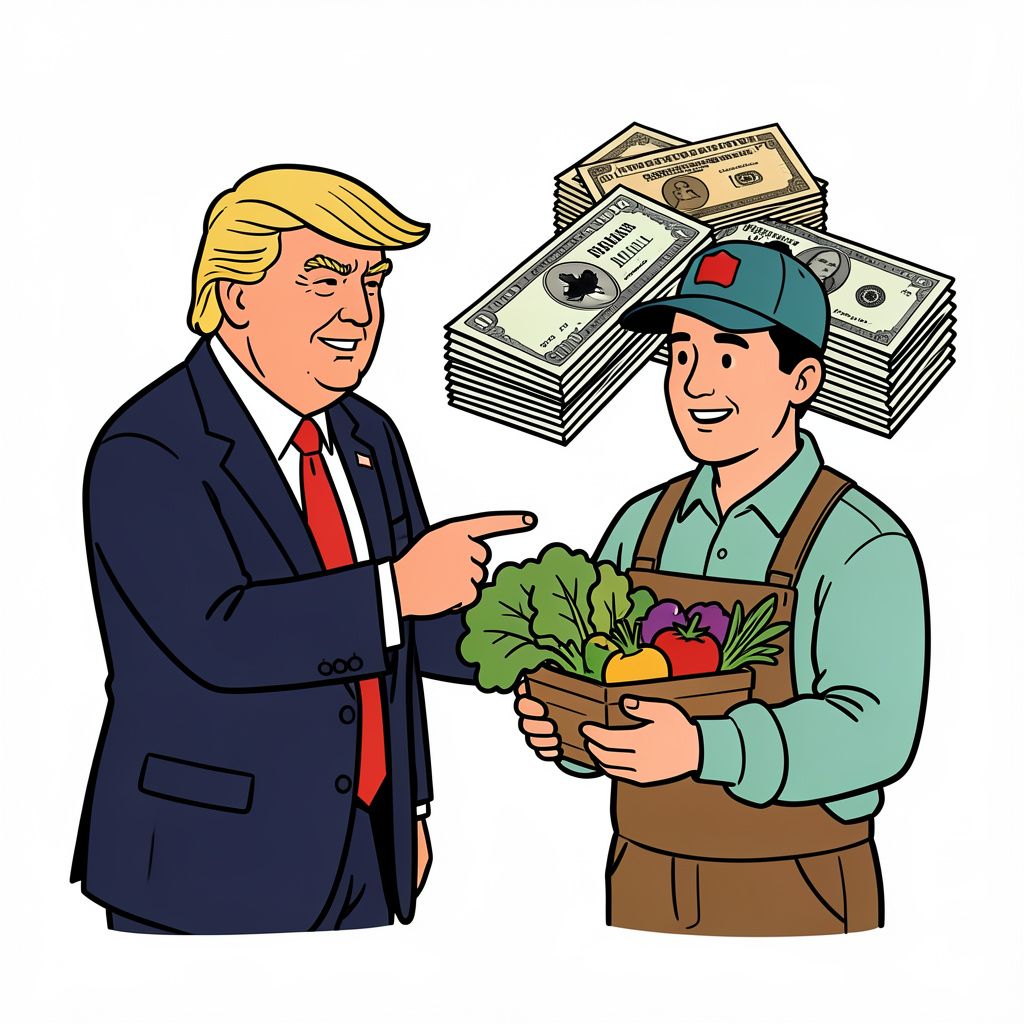
President Trump eliminated 50% tariffs on select Canadian agricultural imports to aid Maine growers before the midterms, while shifting those heavy duties onto everyday goods like carpets and valves.
A Strategic Pivot in U.S.-Canada Trade Relations
On Friday, 17 October 2026, President Donald Trump signed a proclamation under Section 338 of the Tariff Act of 1930 to modify tariffs on Canadian imports, marking a strategic shift in U.S.-Canada trade policy [5]. The action, effective 30 October 2026, eliminates 50% tariffs on select Canadian goods—including corrugated boxes, crates, plastic sacks, refrigeration equipment, and seaweed—while simultaneously imposing 50% duties on new categories such as shampoo, vinyl flooring, coffins, carpets, and window-unit air conditioners [1][5]. This move follows a period of escalating trade tensions, during which Canada imposed retaliatory tariffs on approximately $20 billion of U.S. exports after trade negotiations collapsed in August 2026 [3][5].
Maine’s Agricultural Sector Receives Targeted Relief
The tariff adjustments are particularly significant for Maine’s agricultural industry, which relies heavily on Canadian imports for packaging, machinery, and specialized equipment. Republican Senator Susan Collins, facing a competitive reelection campaign in a tight Senate race, announced that the exemptions would provide critical relief to blueberry, potato, apple, and seaweed producers—key sectors in Maine’s economy [1][4][6]. Collins stated that many Maine farmers and growers depend on Canadian products that are either unavailable domestically or prohibitively expensive to source elsewhere [1][6]. The senator’s office confirmed that exemptions were secured for items such as corrugated paper, plastic boxes, packing machinery, and seaweed, which are vital to the state’s agricultural supply chains [1][6].
Political Calculus: Tariffs as a Campaign Tool
The timing of the tariff relief has raised questions about its political motivations, given that Senator Collins is locked in a contentious reelection battle against Democratic challenger Troy Jackson. Collins framed the exemptions as a necessary intervention to support Maine’s rural and coastal communities, emphasizing Canada’s role as the U.S.’s largest trading partner [1][4]. However, Jackson criticized the move as insufficient, arguing that the relief is a belated Band-Aid for a trade war that has already driven up costs for Mainers [1][4][6]. He highlighted that the exemptions—such as the removal of road salt from tariff lists—do little to address broader economic pressures, stating, ‘We can’t eat road salt’ [1][4][6].
Broader Economic Implications and Future Trade Dynamics
The Trump administration’s tariff adjustments are part of a broader effort to counter Canada’s ‘discriminatory treatment’ of U.S. commerce, as outlined in a White House fact sheet [5]. The policy shift comes amid a wave of new investments in U.S. manufacturing, with over $21 trillion in investments since Trump’s return to office, including commitments from General Motors, UCB, and Japan for facilities in Michigan, Georgia, and New York [5]. While the tariff changes are set to take effect on 30 October 2026, analysts warn that the long-term impact on trade relations remains uncertain [3][5]. Canadian Prime Minister Mark Carney has indicated that Canada is open to a deal but remains prepared to wait, stating that a mutually beneficial agreement could be reached ‘this afternoon’ if the U.S. were willing [3].