NBA Adopts Tournament Model as USA Squads Battle Team World in All-Star Overhaul
New York, Monday, 16 February 2026.
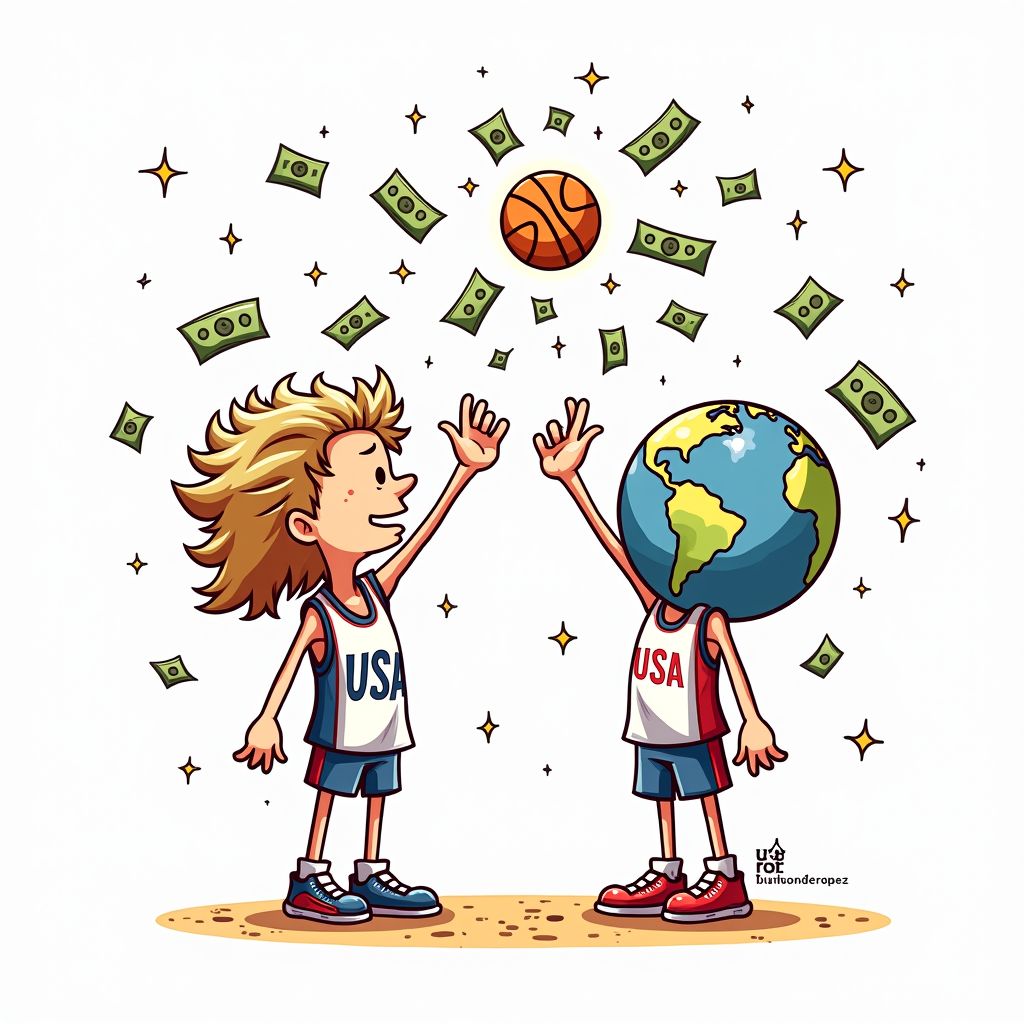
The NBA’s 2026 All-Star refresh splits talent into three competing squads in a high-stakes round-robin tournament, incentivizing players with a massive $1.8 million prize pool to reinvigorate competitive intensity.
A Structural Pivot: The Economics of Competition
In an effort to revitalize its mid-season showcase, the NBA implemented a radical departure from tradition on Sunday, February 15, 2026, at the Intuit Dome in Los Angeles [1]. The league abandoned the standard four-quarter exhibition in favor of a three-team mini-tournament, a move designed to replace apathy with urgency through significant financial incentives. The 2026 All-Star Game featured a total prize pool of $1.8 million, structured to reward competitive effort explicitly [1]. Players on the championship-winning team are guaranteed $125,000 each, while members of the second-place squad earn $50,000, and the third-place finishers receive $25,000 [1]. This payout structure creates a substantial 100000 dollar gap between the winners and the last-place finishers, theoretically ensuring that stakes remain high throughout the round-robin play.
Global Talent vs. Domestic Depth
The format overhaul specifically targets the league’s evolving demographics by pitting domestic talent against international stars. The 25 selected All-Stars were divided into three distinct rosters: Team World, comprising nine international players, and two American squads designated as USA Stars and USA Stripes [1]. This configuration acknowledges the global expansion of the sport, with Team World featuring headliners like Nikola Jokic, Luka Doncic, and Victor Wembanyama [2]. Conversely, the depth of American talent required two separate teams to accommodate stars such as LeBron James, Kevin Durant, and Stephen Curry on Team Stripes, and younger standouts like Anthony Edwards and Scottie Barnes on Team Stars [2]. The coaching duties mirrored this division, with J.B. Bickerstaff leading USA Stars, Mitch Johnson managing USA Stripes, and Darko Rajaković helming Team World [1][6].
Tournament Mechanics and Early Results
The event’s structure consists of four 12-minute games: three round-robin matchups followed by a championship final between the two teams with the best records [1][7]. To mitigate potential deadlocks, the league established that point differential would serve as the primary tiebreaker if all three teams finished with a 1-1 record after the initial phase [1][7]. The new system faced its first test immediately on Sunday, delivering the intended competitive intensity. In the opening contest, Team USA Stars defeated Team World in overtime with a final score of 37-35 [3]. The game was decided by a winning 3-pointer from Scottie Barnes, validating the league’s hope for a more contest-driven product [3]. Following this opener, the schedule dictated that the winner (USA Stars) would face Team USA Stripes in the second game, while the loser (Team World) would play Stripes in the third [2][7].
Broadcasting and Historical Context
This 75th edition of the All-Star Game also marked a significant media transition, with NBC returning as a broadcaster for the event, a role the network held regularly between 1990 and 2002 [6]. The broadcast team featured Noah Eagle, who at 29 became the youngest commentator in All-Star history, alongside analysts Reggie Miller and Jamal Crawford [6]. The league’s aggressive format changes follow several previous attempts to fix the game’s competitive balance, including the draft format used from 2018 to 2023 and the “Elam Ending” target score system introduced in 2020 [6]. While the 2025 attempt at a four-team tournament reportedly “fell flat,” the 2026 iteration’s focus on the authentic rivalry between international and American players appears to have generated immediate on-court friction, evidenced by Anthony Edwards’ comments regarding the physical tone set by Victor Wembanyama during the opener [1][3].
Sources
- www.cbssports.com
- ca.sports.yahoo.com
- www.nytimes.com
- www.sportsnet.ca
- www.youtube.com
- www.nytimes.com
- ftw.usatoday.com
- www.youtube.com