Federal Judge Refuses to Dismiss Lawsuit Over $1.8 Billion Government Settlement Fund
Alexandria, Friday, 18 September 2026.
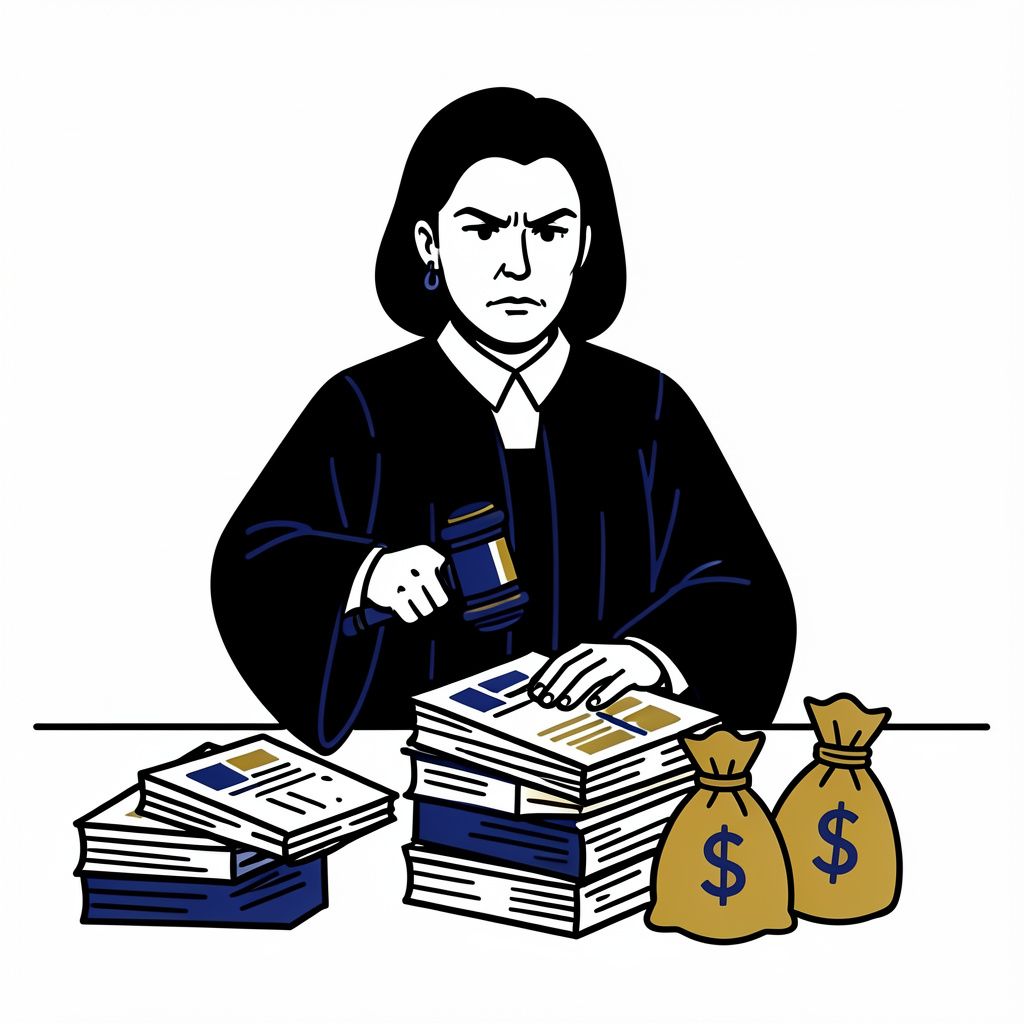
U.S. District Judge Leonie Brinkema rejected government efforts to dismiss a lawsuit over a controversial $1.8 billion settlement fund, ruling the legal dispute remains active despite administration claims.
Judicial Review Continues Despite Administration Claims
On 17 September 2026, U.S. District Judge Leonie Brinkema denied the government’s request to dismiss a lawsuit challenging the proposed $1.8 billion “anti-weaponization fund” [1][3]. Although federal officials asserted that plans for the settlement fund have been abandoned, Judge Brinkema noted that public statements from administration figures indicate ongoing efforts to pursue the underlying objectives, leaving the legal dispute active [1][6]. The judge characterized the issues as “still alive and kicking,” rejecting the argument that the case is moot despite assurances from the Justice Department that the fund is terminated [1][3]. This ruling maintains the court’s injunction blocking the fund’s implementation until further notice, preserving the plaintiffs’ ability to challenge the mechanism [3][5].
Origins and Bipartisan Criticism of the Settlement
The controversy originated in May 2026, when Democracy Forward filed suit in Alexandria, Virginia, to halt the fund which stemmed from President Donald Trump’s lawsuit against the IRS regarding tax return leaks [1][3]. The proposed program targeted compensation for individuals pardoned by Trump related to the 6 January 2021 attack on the U.S. Capitol, though it faced bipartisan criticism over potential eligibility for Capitol rioters [3][5]. In June 2026, Judge Brinkema issued an order blocking the fund’s implementation, citing concerns over the diversion of taxpayer money to benefit political allies [3][5]. The lawsuit includes diverse plaintiffs such as a fired prosecutor, an acquitted college professor, the watchdog group Common Cause, the city of New Haven, Connecticut, and the National Abortion Federation [3][7].
Legal Arguments on Mootness and Commitment
Justice Department attorney Andrew Block argued that the case is moot and “unripe,” citing little public evidence of planned action related to the fund following an order by Attorney General Todd Blanche on 2 August 2026 [2][3]. However, plaintiffs argue the government’s rescission notice utilizes present-tense language that fails to provide a sworn commitment under penalty of perjury that a similar fund will not be revived [7]. Democracy Forward attorney Pooja Boisture indicated that the administration would likely pursue the fund, either in its current or a revised form, if the court’s order is lifted [1][3]. Plaintiffs’ attorneys described the scheme as an unprecedented attempt to manipulate the legal process to achieve benefits that could not be obtained lawfully [3][7].
Oversight Concerns and Future Implications
Judge Brinkema suggested a court-appointed neutral overseer could allay concerns that the Justice Department might use a longstanding U.S. fund to revive plans to compensate supporters [5]. The judge noted that indications officials are considering using the Judgment Fund to compensate participants in the Capitol insurrection undermined arguments that the lawsuit is moot [2]. Additionally, there are concerns that part of the deal to settle Trump’s lawsuit in Florida violated a federal law barring the president from initiating or terminating an IRS audit [2]. The administration faces a deadline to turn over records about how the settlement of the president’s lawsuit was crafted as the legal fight continues [2][6].
Sources
- www.alexandriabrief.com
- www.politico.com
- www.pressdemocrat.com
- www.facebook.com
- news.bloombergtax.com
- www.washingtonpost.com
- www.rawstory.com
- www.facebook.com