Japan's Population Drops Below 120 Million for the First Time in Four Decades
Tokyo, Wednesday, 29 July 2026.
Japan’s native population shrank by a record 917,000 in 2025 to 119.7 million. Despite foreign residents surpassing four million for the first time, severe labor shortages persist.
Record Population Decline
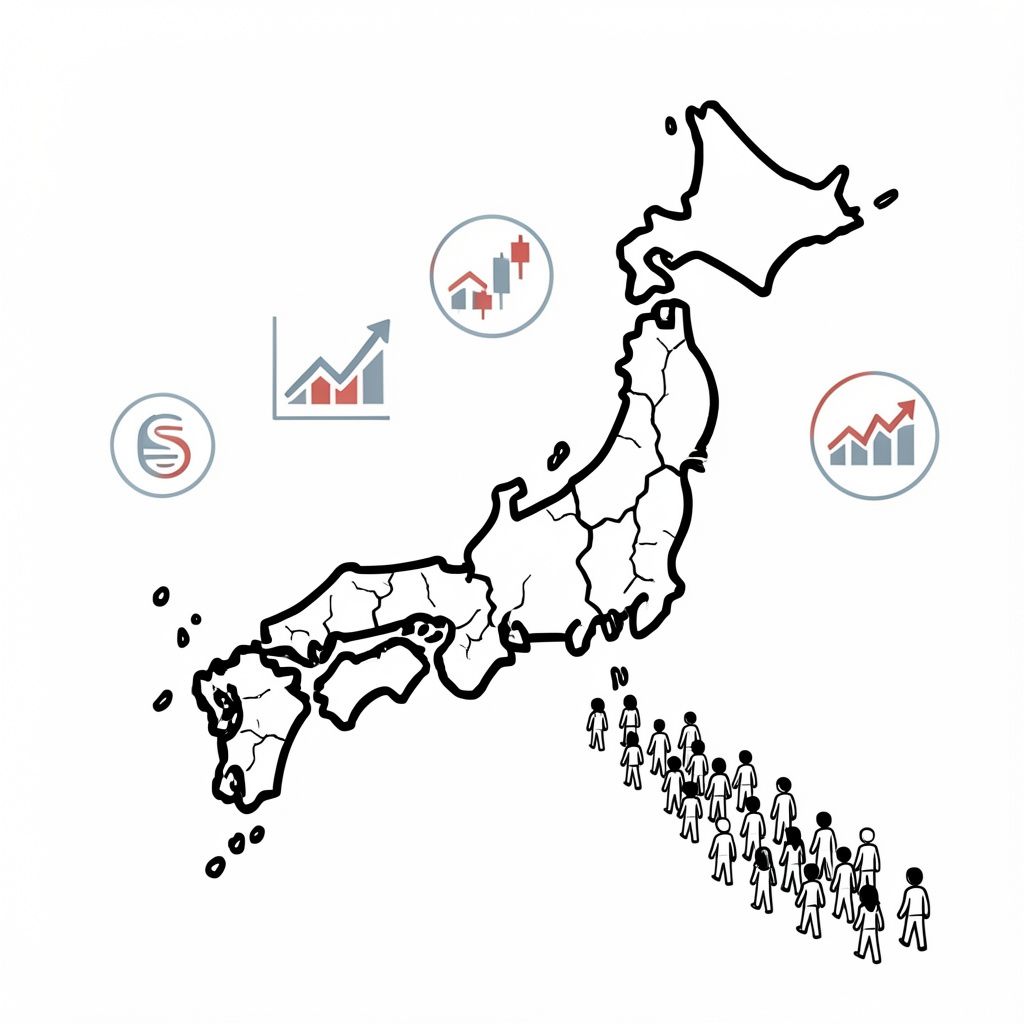
Japan’s native population shrank by a record 917,000 in 2025 to 119.7 million, marking the first time the figure has fallen below this threshold in 42 years [1][2]. Despite foreign residents surpassing four million for the first time, severe labor shortages persist across key industries [1]. The Ministry of Internal Affairs and Communications released the data on 29 July 2026, confirming the Japanese national population stood at 119,736,483 as of 1 January 2026 [2][4]. This represents a decline of 916,744 people from the previous year, the largest decrease in both number and rate since the survey began in 1968 [2][3].
Vital Statistics and Natural Decrease
The demographic contraction is driven primarily by a record natural decrease, where deaths significantly outpace births [3]. Japan recorded approximately 670,000 births during the year, the lowest on record, while deaths stood at about 1.59 million [1][4]. The resulting natural decrease amounted to 923,008 people, the largest since the survey’s inception [2]. The percentage decrease in the Japanese population was 0.76%, calculated based on the decline relative to the prior year’s population 0.76 [3][4]. Government efforts to encourage higher birth rates have yet to reverse this trend, highlighting the structural nature of the crisis [1].
Labor Market and Foreign Residents
In contrast to the decline in Japanese nationals, the number of foreign residents climbed by 354,000 to a record 4,031,159 [1][3]. The ministry has been compiling data on foreign residents since 2013, and this increase marks the fourth straight year of growth [1]. Approximately 86.17% of foreign residents were of working age, providing a critical buffer for the shrinking workforce [1][2]. The working-age population (15–64 years old) accounts for 59.97% of the total population, with the number of Japanese working-age individuals declining while foreign working-age individuals rose to 3,473,517 [2]. As the country grapples with a shrinking workforce, it has been gradually easing restrictions to attract more foreign workers [1].
Regional Disparities and Urban Concentration
Geographic distribution of the population shows stark contrasts, with Tokyo being the only prefecture to register an increase in its Japanese population, rising by 0.09% [1][4]. Including foreign residents, total population growth was recorded only in the prefectures of Tokyo, Chiba, and Osaka [1][2]. Conversely, 46 prefectures saw a decline in their Japanese population, with Akita recording the highest decrease rate at 1.95% [3][4]. The total population, including foreign residents, stood at 123,767,642 as of 1 January 2026, down by around 563,000 from the previous year [1][3]. This urban concentration continues a long-term trend where economic opportunities cluster in major metropolitan areas.
Economic and Fiscal Implications
For global executives and policymakers, Japan’s deepening demographic crisis serves as a critical case study for managing structural labor market deficits and fiscal pressures in a rapidly aging developed economy [1]. The shrinking and aging population poses significant challenges to economic growth, consumption, and the sustainability of social security systems [GPT]. Nationwide households increased by 459,146 to 61,747,140, while the average number of persons per household fell to 2.00, continuing a long-term trend of household size reduction alongside population decline [2]. These shifts necessitate adjustments in housing, infrastructure, and service delivery models to accommodate smaller, older households.
Conclusion
The milestone of falling below 120 million nationals underscores the urgency for comprehensive policy responses addressing low birth rates and labor shortages [1][2]. While foreign residents provide a temporary缓解 (relief) in labor supply, the structural trend of population decline remains entrenched [3]. Future economic stability will depend on balancing immigration policies, productivity enhancements through technology, and social support systems for an aging citizenry [GPT]. The data released on 29 July 2026 confirms that without significant intervention, the demographic headwinds will continue to shape Japan’s economic landscape for the foreseeable future [2][4].