Supreme Court Rejects Challenge to California Medical Training Mandate
Washington, Monday, 16 November 2026.
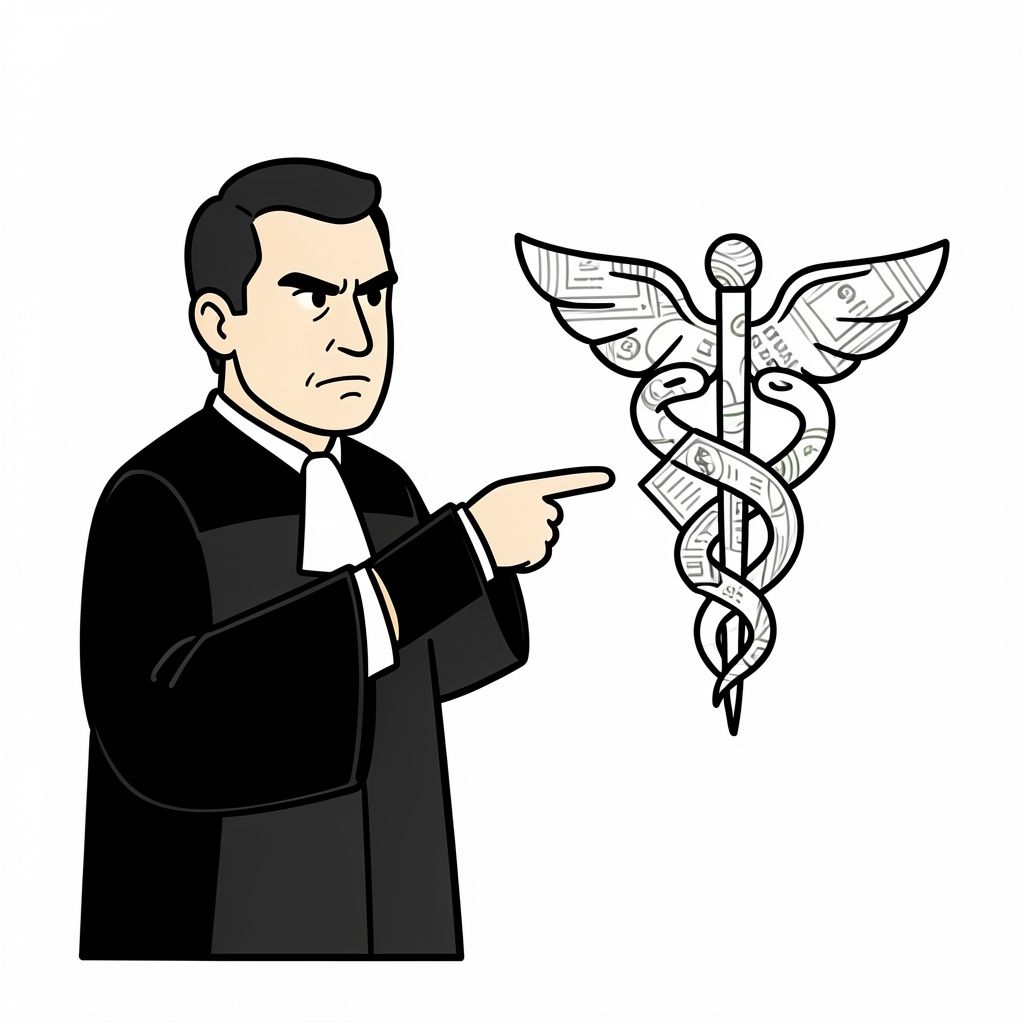
Justice Clarence Thomas warned that states can compel private speech after the Supreme Court left California’s implicit bias training mandate intact, classifying private medical instruction as regulated government speech.
A Landmark Rejection and Its Implications for Free Speech
On Monday, 16 November 2026, the U.S. Supreme Court declined to hear Khatibi v. Yip, a case challenging California’s mandate requiring implicit bias training for physicians as part of their continuing medical education (CME). The decision leaves intact a Ninth Circuit ruling that classified such training as government speech, thereby exempting it from First Amendment scrutiny. Justice Clarence Thomas, joined by Justices Samuel Alito and Neil Gorsuch, dissented, arguing that the Court’s refusal to intervene effectively empowers states to compel private speech under the guise of regulation. Thomas warned that this approach could extend beyond medical education, potentially affecting other licensed professions such as lawyers and educators, where state mandates might similarly require the endorsement of government-favored viewpoints [1][2][3][5][7].
The Legal Backdrop: From Shurtleff to California’s Mandate
The Supreme Court’s decision hinges on the Ninth Circuit’s interpretation of Shurtleff v. Boston (2022), which established a three-factor test—history, public perception, and government control—to distinguish government speech from private speech. In Khatibi, the Ninth Circuit applied this test to California’s 2019 mandate (AB 241), which requires all CME courses involving direct patient care to incorporate implicit bias training. The court concluded that California’s extensive regulation of the medical profession transforms private instructor speech into government speech, thereby shielding the mandate from First Amendment challenges [3][5][7][10]. Justice Thomas criticized this reasoning in his dissent, arguing that the Ninth Circuit’s application of Shurtleff fundamentally misconstrues the doctrine by allowing heavy regulation to convert private expression into government speech [1][2][3][5][7].
The Dissenting Opinion: A Warning for Future Precedents
Justice Thomas’s nine-page dissent, joined by Justices Alito and Gorsuch, underscored the dangers of the Court’s refusal to clarify the government-speech doctrine. He argued that California’s mandate forces private instructors to communicate the government’s viewpoint on implicit bias, thereby violating the First Amendment’s protections against compelled speech. Thomas warned that this precedent could be exploited by states to compel speech in other regulated professions, such as legal continuing education or academic conferences, where instructors might be required to endorse controversial government policies [1][2][3][5][7]. For example, he posed a hypothetical scenario in which California could require legal conference speakers to oppose racial preferences in law firm hiring, illustrating how the doctrine might be weaponized to suppress dissenting views [3][5][7].
Reactions from Legal and Medical Communities
The Pacific Legal Foundation, which represented the petitioners including ophthalmologist Dr. Azadeh Khatibi, expressed disappointment but vowed to continue the fight against compelled speech mandates. Caleb Trotter, a senior attorney with the foundation, stated that while the case was a setback, there is growing support on the Court to revisit the issue in the future. The foundation emphasized that the ruling leaves professionals vulnerable to state-imposed ideological conformity, undermining their First Amendment rights [4][9][11]. California defended the mandate by asserting that instructors are not required to personally endorse implicit bias but may openly disagree with it, though critics argue that the law still forces instructors to allocate time to topics they may find irrelevant or objectionable [2][6]. Dr. Khatibi herself argued that the mandate infringes on her ability to teach relevant medical topics and distorts the educational process [4][6][9][11].
Broader Political and Legal Context
The Supreme Court’s decision to reject Khatibi v. Yip is part of a broader pattern of declining to hear cases involving contentious social issues. On the same day, the Court also denied review in Trump v. Thakur, a case stemming from former President Donald Trump’s executive orders targeting diversity, equity, and inclusion (DEI) initiatives in federal research funding. The Court’s refusal to intervene in these cases suggests a cautious approach to divisive social policies, leaving lower courts to grapple with the constitutional implications [8][10]. Meanwhile, the Court added two cases to its docket, including Mullin v. Refugee and Immigrant Center for Education and Legal Services, which involves asylum suspension policies at the U.S.-Mexico border, and Robinhood Markets, Inc. v. Sodha, a securities law dispute over financial data disclosure during IPOs [8].
The Road Ahead: What This Means for Professionals and Policymakers
For licensed professionals in California and potentially other states, the Supreme Court’s decision removes a major legal obstacle to state-mandated speech requirements. However, the dissenting opinions from Justices Thomas, Alito, and Gorsuch signal that the issue is far from settled. Legal experts suggest that future challenges may focus on refining the government-speech doctrine or advocating for legislative changes to protect professionals from compelled ideological conformity. The Pacific Legal Foundation has indicated it will continue to pursue cases that challenge such mandates, emphasizing the need to safeguard free speech rights in regulated professions [4][9][11]. For policymakers, the ruling underscores the tension between state regulatory authority and constitutional protections, particularly in areas where ideological conformity is mandated under the guise of professional standards.
Sources
- www.newsweek.com
- www.law360.com
- www.foxnews.com
- pacificlegal.org
- www.denvergazette.com
- x.com
- www.supremecourt.gov
- www.scotusblog.com
- pacificlegal.org
- www.supremecourt.gov
- pacificlegal.org