How Extreme Tech Wealth Threatens Democracy and the Environment
London, Saturday, 12 September 2026.
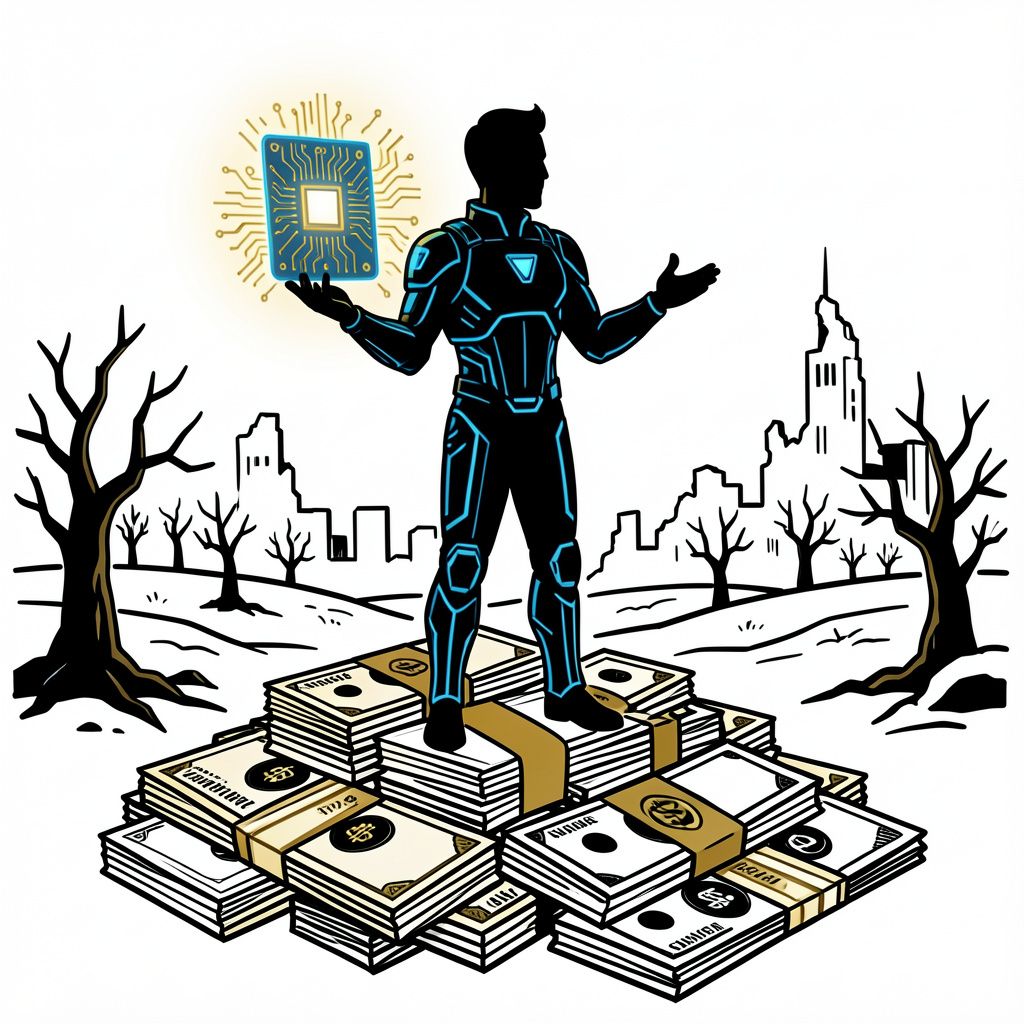
Author Naomi Klein warns that Silicon Valley billionaires are embracing anti-democratic ideologies, leveraging artificial intelligence and climate chaos to consolidate power and create exclusive post-collapse havens for the ultra-wealthy.
The Psychology of Compounded Wealth
Prominent author Naomi Klein argues that extreme wealth concentration fundamentally alters psychological frameworks, leading to a form of supremacy among the ultra-wealthy [1]. In her analysis, wealth is not merely a static asset but a compounding force that distorts economic systems and political power when concentrated in unaccountable hands [1][3]. This dynamic is explored in the book End Times Fascism, co-authored with Astra Taylor, which opens with a scene at the 2026 World Economic Forum in Davos, Switzerland [1]. The text highlights how technology executives leverage climate and financial volatility to expand market domination, raising concerns for policymakers regarding democratic governance [1][3].
Specific political maneuvers illustrate this shift toward privatized governance structures. Donald Trump announced his “Board of Peace” for the reconstruction of Gaza on 2026-08-06, an initiative Klein argues signifies a move toward a “privatised United Nations” [1]. While the text notes claims regarding the initiative’s timeline, the announcement date confirms the project is in its early stages relative to the current date of 12 September 2026 [1]. Klein posits that this concentration of financial, mediagenic, and technological weaponry allows a small group to stop attempting to seduce the public through traditional means, instead operating with shamelessness [1]. The authors categorize these billionaires into ideologues, such as Peter Thiel, and pragmatists like Mark Zuckerberg, who adapt personas to suit business interests [1].
Artificial Intelligence and Energy Demands
A significant driver for the alignment between tech billionaires and political figures like President Trump is the energy consumption required for artificial intelligence [2]. During a second inauguration period, wealthy business leaders who previously criticized Trump for leaving the Paris climate accord have shifted their stance due to the ravenous energy needs of AI development [2]. Klein notes that figures like Elon Musk have transitioned from “seduction rituals” via philanthropy to open nihilism, exemplified by the construction of 35 gas turbines in Memphis to power the Grok AI model [1][2]. This infrastructure causes significant environmental degradation, yet proponents argue it is necessary for an AI arms race that requires fossil fuel deregulation [2][4].
This economic incentive is coupled with a philosophical shift toward a “hierarchy of humanity” that dictates who survives potential global collapse [4]. Klein argues that the business model embraced by these elites is antithetical to shared human existence, requiring a story that discounts the lives of those deemed less valuable [2]. This narrative supports a VIP vision of the future where a subset of humanity enjoys upgrades and rocket ships while social programs for vulnerable populations are slashed [4]. The money involved in these ventures is described as actively making the owners fascist, as they justify the sacrifice of humans for technological progression [2].
Resistance and the Right to the Future
Local resistance movements are emerging to counter these developments, such as the opposition led by KeShaun Pearson and Justin Pearson against Musk’s Colossus 2 data center in Memphis [1]. These leaders connect their struggle to the city’s civil rights history, noting that Memphis is where Martin Luther King Jr. was assassinated after marching with sanitation workers [1]. Justin Pearson, a congressional candidate, and the Memphis Community Against Pollution group aim to secure victories against industrial carcinogenic releases, framing their work within the environmental justice movement [1]. Klein emphasizes that believing in a shared future is a right, and not believing in the future is described as treasonous [4][5].
The critique extends to the aesthetic and spiritual disconnection observed in these elites, who fail to see the beauty of the natural world [5]. Klein describes the bioluminescence of the Salish Sea and the presence of orcas as elements of life that are worthwhile, contrasting this with the willingness of powerful figures to let the world burn [5]. This perspective is framed against the backdrop of historical trauma, such as the 25-year legacy of the 9/11 attacks, which continues to influence geopolitics and conflict [6]. Ultimately, the argument concludes that wealth has a deranging effect, turning individuals into supremacists who must rationalize their abundance amidst global want and need [1].
Sources
- www.theguardian.com
- www.nytimes.com
- www.nytimes.com
- www.nytimes.com
- www.nytimes.com
- www.theguardian.com