Ukraine Launches Strategic Anti-Drone Dome to Counter Aerial Swarms
Kyiv, Tuesday, 20 January 2026.
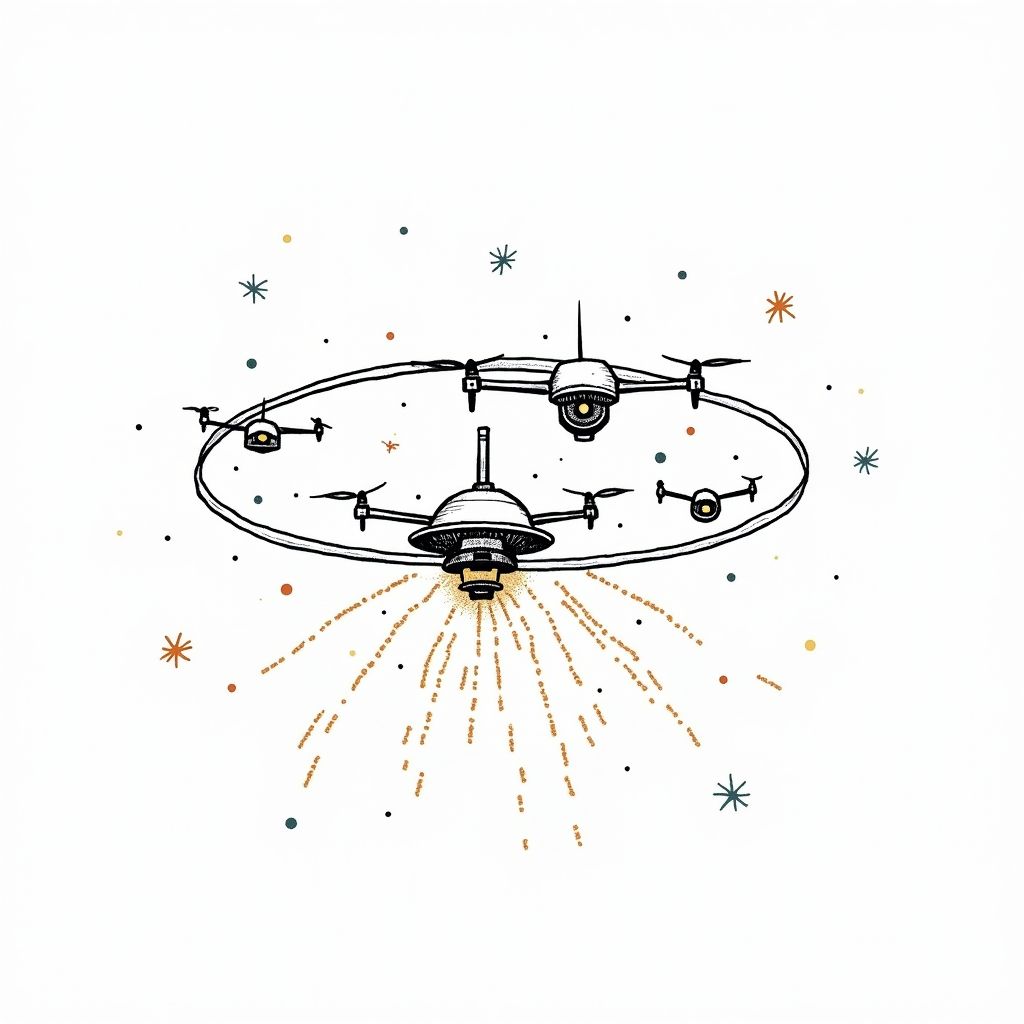
Responding to 100,000 Russian aerial attacks in 2025, Ukraine initiates a cost-effective “Anti-Drone Dome.” This strategic shift utilizes interceptor UAVs to neutralize threats proactively, protecting critical infrastructure from saturation strikes.
New Leadership for a New Defense Architecture
On January 19, 2026, the Ukrainian Ministry of Defense formalized a significant tactical shift by appointing Pavlo Yelizarov as the Deputy Commander of the Air Force [1][2]. This appointment, mandated by Defense Minister Mykhailo Fedorov and approved by President Volodymyr Zelensky, places Yelizarov in charge of developing a comprehensive “anti-drone dome” [1][6]. The core objective of this system is to transition from a reactive posture to a proactive one, designed to destroy aerial threats during their approach rather than intercepting them after they have already penetrated critical airspace [1][3]. President Zelensky emphasized that this overhaul of short-range air defense tactics is a priority that must be implemented as quickly as possible to protect the nation’s sky [1].
The Economics of Asymmetric Warfare
The strategic pivot is driven by the sheer volume of aerial saturation attacks. In 2025 alone, Russia launched approximately 100,000 Shahed drones and other unmanned aerial vehicles (UAVs) at Ukrainian targets [2][3]. This intensity has placed an unsustainable burden on traditional air defense systems, with President Zelensky noting earlier in January that surface-to-air missile batteries were frequently left “without missiles” due to the high rate of fire [2]. The new defense model aims to mitigate these costs by utilizing mobile fire teams and interceptor drones, which offer a far more economically viable means of neutralizing cheap loitering munitions compared to high-value missile interceptors [2][4].
Scaling Proven Battlefield Success
Yelizarov, known by the call sign “Lazar,” brings a track record of high-efficiency drone warfare to his new role. His previous command, the National Guard’s “Lasar Group,” is credited with destroying over $13 billion worth of Russian military equipment [2][4]. The unit’s effectiveness is highlighted by data indicating they were responsible for approximately 20% of all Russian tanks destroyed by Ukrainian forces [2][6]. In December alone, this unit accounted for the elimination of 364 artillery pieces and 12 Multiple Launch Rocket Systems (MLRS) [6]. The challenge now lies in scaling this specialized success into a nationwide system capable of operating across the entire country rather than in isolated sectors [3][6].
Critical Infrastructure and Survival
The urgency of the “anti-drone dome” is underscored by the targeting of civilian life support systems. Minister Fedorov stated that the increasing frequency of Russian attacks is aimed at destroying civilian infrastructure to plunge Ukraine into darkness [4]. While acknowledging that transforming the air defense architecture is a complex process that cannot be completed in a few days, Fedorov framed the initiative as a matter of immediate survival rather than a future capability [3][6]. The system is intended to function systematically to close the skies against swarms that threaten residential buildings and critical energy facilities [6][8].