EPA Revokes Key Scientific Finding, Ending Federal Power to Regulate Climate Emissions
Washington, Thursday, 12 February 2026.
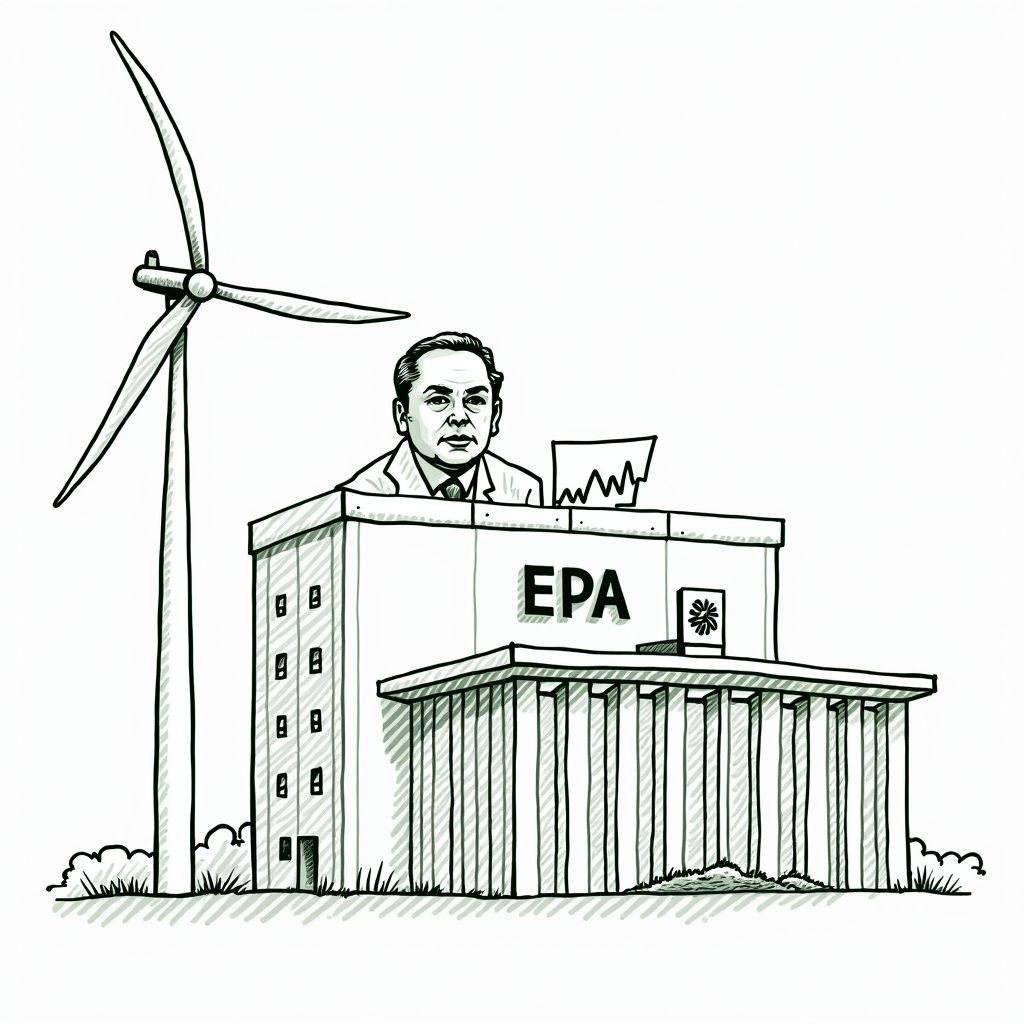
On February 12, 2026, the Environmental Protection Agency formally repealed the 2009 Endangerment Finding, fundamentally altering the U.S. regulatory landscape. This action erases the legal prerequisite for regulating greenhouse gases under the Clean Air Act, effectively dismantling the federal government’s authority to impose emissions standards on vehicles and power plants. Administrator Lee Zeldin characterized the move as the most significant deregulatory action in American history, intended to decouple the energy sector from climate mandates. However, analysts warn that removing this scientific bedrock creates immediate volatility for solar and wind investments and guarantees a protracted legal battle, as environmental groups seek to restore the finding before the Supreme Court.
Dismantling the Regulatory Framework
The repeal specifically targets the 2009 scientific determination that carbon dioxide, methane, and four other greenhouse gases constitute a threat to human health and welfare [2][7]. This finding had served as the statutory foundation for a wide range of environmental rules, including emissions standards for cars, trucks, power plants, and oil and gas facilities [7]. President Trump described the original finding as a “disastrous Obama-era policy,” asserting that its termination is necessary to unburden the economy [2]. In support of this directive, EPA Administrator Lee Zeldin argued that the reversal would save the U.S. economy “trillions of dollars” by eliminating what he termed a “legal fiction” used to regulate polluting industries [3][4]. The administration executed this regulatory rollback with notable speed; while the EPA typically requires at least three years to finalize such complex changes, this repeal was completed in just over a year [8]. Legal experts suggest this accelerated timeline is a strategic maneuver designed to ensure any resulting litigation reaches the Supreme Court while the current administration remains in office [8].
Impact on Clean Energy Investment
The revocation introduces immediate volatility into the renewable energy market, particularly regarding federal incentives. The administration has already moved to reclaim billions in funding, including $7 billion designated for the “Solar for All” program, although a court ruled these specific funding cuts unlawful on January 13, 2026 [3]. Developers now face a critical compliance window; wind and solar facilities must commence construction before July 5, 2026, to remain eligible for specific tax credits under Sections 45Y and 48E [3]. Industry analysts warn that this heightened policy uncertainty creates a risk environment that may stifle private investment in clean energy infrastructure [3]. Furthermore, the repeal fundamentally shifts the trajectory for the automotive industry. Administrator Zeldin explicitly stated that automakers will no longer be pressured to transition their fleets toward electric vehicles, effectively nullifying the previous regulatory drivers for electrification [7].
Legal Ramifications and International Divergence
The decision has triggered immediate opposition from environmental advocates and highlighted a growing regulatory divergence with U.S. trading partners. Environmental groups, led by the Environmental Defense Fund (EDF), have vowed to challenge the repeal in court, with EDF President Fred Krupp stating the move “endangers all of us” and ignores scientific evidence that has increased dramatically since 2009 [3]. A complex legal paradox may also emerge for the industrial sector. In 2011, the Supreme Court ruled that corporations could not be sued under federal common law for greenhouse gas emissions because the EPA held the regulatory authority to manage them [7]. By stripping the agency of this authority, the administration may inadvertently expose industries to a new wave of common law litigation [7]. Meanwhile, the U.S. stance contrasts sharply with its northern neighbor; on February 4, 2026, Canadian Prime Minister Mark Carney announced new vehicle emissions standards, signaling a deepening policy rift between the North American economies [5].
Sources
- apple.news
- www.nytimes.com
- pv-magazine-usa.com
- www.nytimes.com
- www.cbc.ca
- www.youtube.com
- www.cnbc.com
- www.nytimes.com