Pakistani Airstrikes on Kabul Hospital Escalate Conflict and Threaten Regional Trade
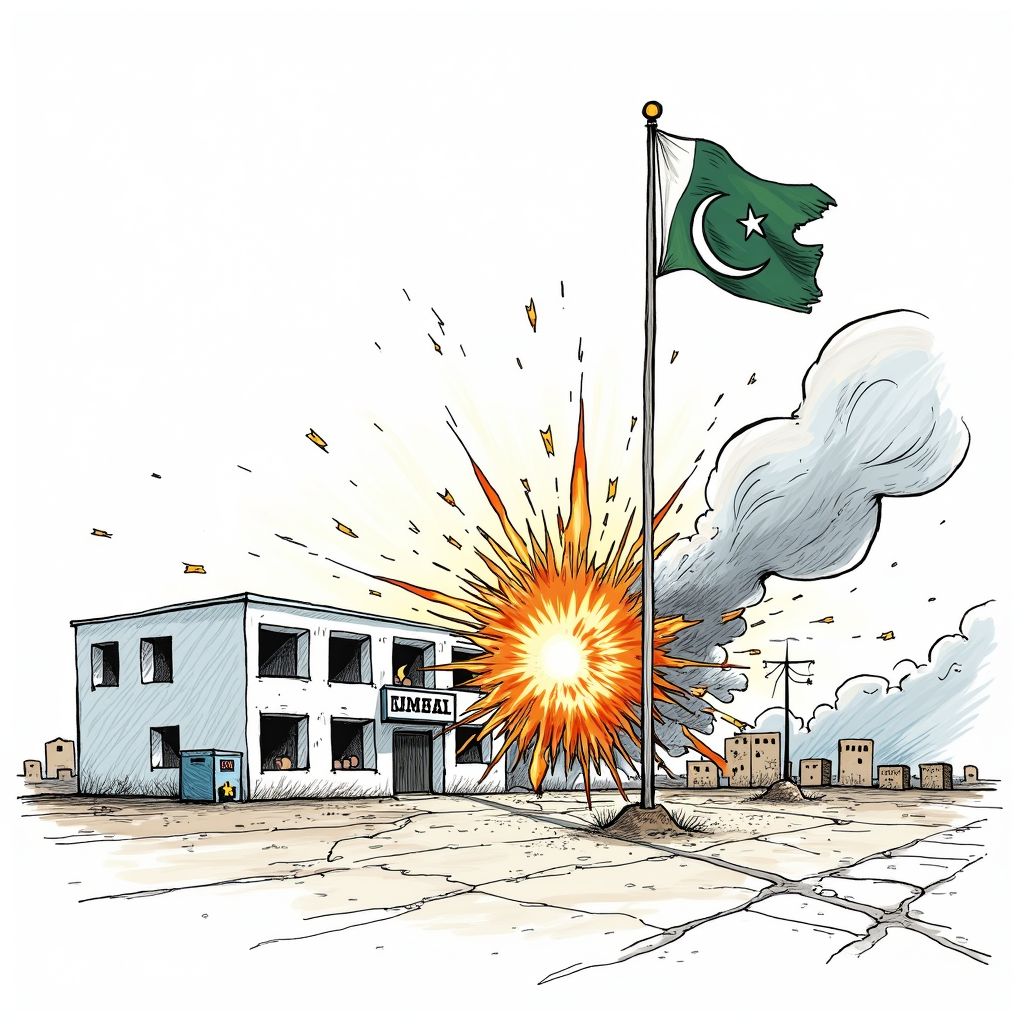
Kabul, Monday, 16 March 2026.
Deadly Pakistani airstrikes on a Kabul hospital have sharply escalated regional conflict, risking severe disruptions to South Asian trade corridors and prompting renewed global security concerns.
Escalation in the Capital and Border Regions
On the evening of Sunday, 15 March 2026, the Afghan capital experienced a severe breach of its airspace. Around 20:50 local time, the sounds of fighter jets and at least two explosions echoed through Kabul’s Shahr-e-Naw and Wazir Akbar Khan districts, followed by anti-aircraft fire that continued until approximately 22:00 [3][4]. The Afghan Taliban government reported that these Pakistani airstrikes struck a medical facility dedicated to treating drug addicts, resulting in the deaths of at least four individuals and leaving several others wounded [1][3][4]. Visual evidence from the aftermath of recent strikes in Kabul shows residents and Taliban police collecting projectile remnants from the targeted sites [2].
A Deteriorating Ceasefire and Mounting Casualties
The current wave of hostilities, which marks its third consecutive week, represents the total collapse of a ceasefire brokered by Qatar in October 2025 [1][3]. The conflict reignited in late February 2026 following initial Pakistani airstrikes within Afghan territory [1]. The core of the dispute lies in Islamabad’s persistent allegations that Kabul is harboring militant organizations, specifically the Pakistani Taliban, a charge the Afghan administration vehemently denies [1][4].
Economic Paralysis and the Humanitarian Toll
Beyond the immediate loss of life, the military escalation has triggered a severe economic and humanitarian crisis. Cross-border trade between the two nations has completely halted [3]. For regional markets, the closure of these critical trade corridors disrupts supply chains and extinguishes local economic activity, compounding the financial instability of an already fragile Afghan economy [GPT].
Diplomatic Deadlock and Regional Security Risks
International efforts to de-escalate the crisis have thus far proven ineffective. China announced on 16 March that its special envoy had spent a week attempting to mediate an immediate ceasefire, but these diplomatic overtures have yielded limited success [3]. Furthermore, traditional mediators from the Arab Gulf nations, who were instrumental in previous negotiation rounds, are currently constrained by their own regional conflicts [3]. The UN Security Council recently adopted a resolution condemning terrorist activity and extended the United Nations Assistance Mission in Afghanistan (UNAMA) for an additional three months, yet a tangible roadmap for peace remains elusive [1].