Federal Voting Reform Bill Sparks Intense Capitol Hill Debate Over Proof of Citizenship Mandate
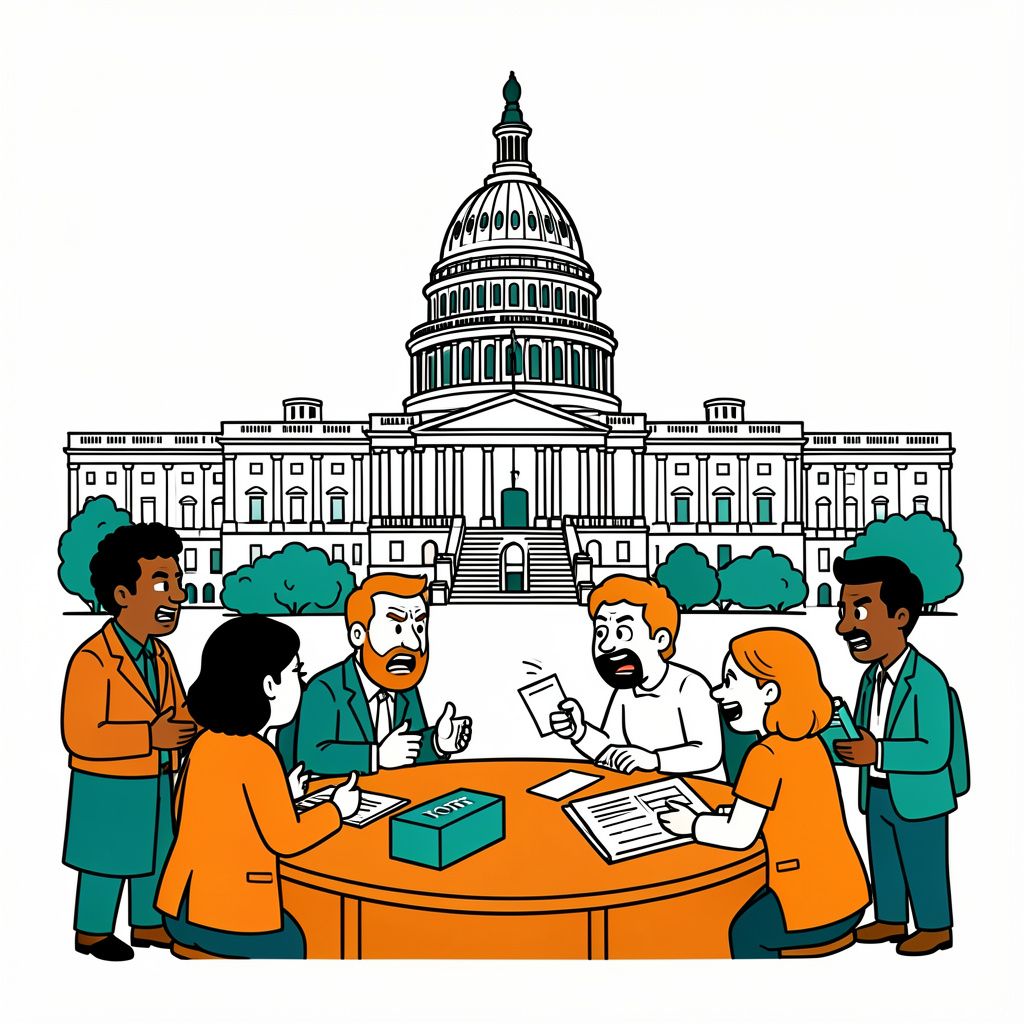
Washington, Thursday, 5 November 2026.
The contentious measure mandates nationwide photo identification and citizenship verification for voters, facing high procedural hurdles and fierce debate over administrative costs, access, and potential ballot restrictions.
The SAVE America Act: A Republican-Driven Push for Federal Voting Reform
The SAVE America Act, a Republican-led federal voting reform bill, has become the focal point of a contentious legislative battle in Washington as of November 5, 2026. The proposed legislation, which passed the House in early 2026 [alert! ‘exact date not specified in sources’], would mandate photo identification at all polling places in federal elections and require states to verify documentary proof of U.S. citizenship before registering individuals to vote. The bill, championed by House Republicans including Representative Lisa McClain of Michigan, who stated that ‘House Republicans passed the SAVE America Act because ONLY citizens should vote,’ reflects a broader conservative effort to overhaul election procedures nationwide [2]. Conservative commentator David J. Harris Jr. highlighted the frustration within the conservative base, noting that ‘the House has passed a lot of bills on judges, the SAVE Act for voter ID, and border security, and many are stuck’ [1].
Senate Gridlock and the Filibuster Challenge
Despite House passage, the SAVE America Act faces formidable procedural hurdles in the Senate, where debate began in mid-March 2026 following discussions between former President Donald Trump and Senate Majority Leader John Thune. The bill’s fate hinges on overcoming a 60-vote threshold to advance, a requirement that Senate Democrats, led by Minority Leader Chuck Schumer, have staunchly opposed. Schumer has labeled the legislation ‘one of the most despicable pieces of legislation I’ve come across in the many years I’ve been a legislator,’ underscoring the deep partisan divide over the bill’s provisions [3]. Senate Republicans, including Thune, have resisted calls from Trump to alter Senate rules to bypass the filibuster, citing insufficient support within their own ranks [3][5].
Key Provisions and Political Divisions
The SAVE America Act’s provisions extend beyond voter identification and citizenship verification, including restrictions on mail-in ballots, bans on transgender women participating in women’s sports, and prohibitions on gender-affirming surgeries for minors. These additional measures have further fueled Democratic opposition and drawn criticism from advocacy groups concerned about administrative compliance costs and voter access. During Senate debates in April 2026, Senator John Thune argued that 80% of Americans support voter ID requirements, citing polls to bolster his case, while every Senate Democrat voted against a standalone voter ID amendment proposed by Senator Frank LaRose (formerly Ohio’s chief election official) [4]. The debate over acceptable forms of ID—such as driver’s licenses, Tribal IDs, military IDs, veteran IDs, or passports—has highlighted the partisan divide over what constitutes sufficient proof of identity and citizenship [4].
Midterm Elections and the Bill’s Political Aftermath
The failure of the SAVE America Act to advance in the Senate has become a focal point in the post-midterm political landscape, as Democrats secured enough gains to flip control of the Senate from Republicans in the November 3, 2026, elections. Republican Representative Nancy Mace of South Carolina publicly blamed Senate Majority Leader John Thune for the bill’s failure, stating, ‘We have John Thune to thank for not passing the SAVE America Act and securing our elections earlier’ [5]. Conservative commentator Gunther Eagleman echoed this sentiment, criticizing Thune for prioritizing Senate rules over legislative action, and demanding his removal from leadership [6]. Former White House Press Secretary Katie Zacharia also pointed to the Senate’s inability to pass even a baseline photo ID requirement as a factor in the election’s outcome, arguing that broader national issues, such as economic concerns and inflation, were overshadowed by the legislative gridlock [8].
Public and Political Sentiment: A Divided Electorate
The SAVE America Act’s journey through Congress has laid bare the stark divisions within the electorate and between the two major political parties. While supporters argue that the bill is a necessary safeguard against voter fraud and ensures that only citizens participate in elections, opponents contend that it imposes unnecessary barriers to voting, disproportionately affecting marginalized communities. Senate Minority Leader Chuck Schumer’s public remarks during the midterm elections, where he described himself as ‘nauseously optimistic’ as he cast his vote, reflect the heightened tensions surrounding the legislation and its broader implications for democratic participation [7]. The bill’s failure to advance, despite Republican control of both chambers earlier in the year, has raised questions about the party’s ability to deliver on its legislative priorities and the long-term impact of such reforms on the electoral process [6].
Sources
- www.facebook.com
- www.facebook.com
- abcnews.com
- www.congress.gov
- www.facebook.com
- www.hindustantimes.com
- www.facebook.com
- www.facebook.com