UN Chief Urges Global Economy to Value Nature Over GDP Growth
New York, Monday, 9 February 2026.
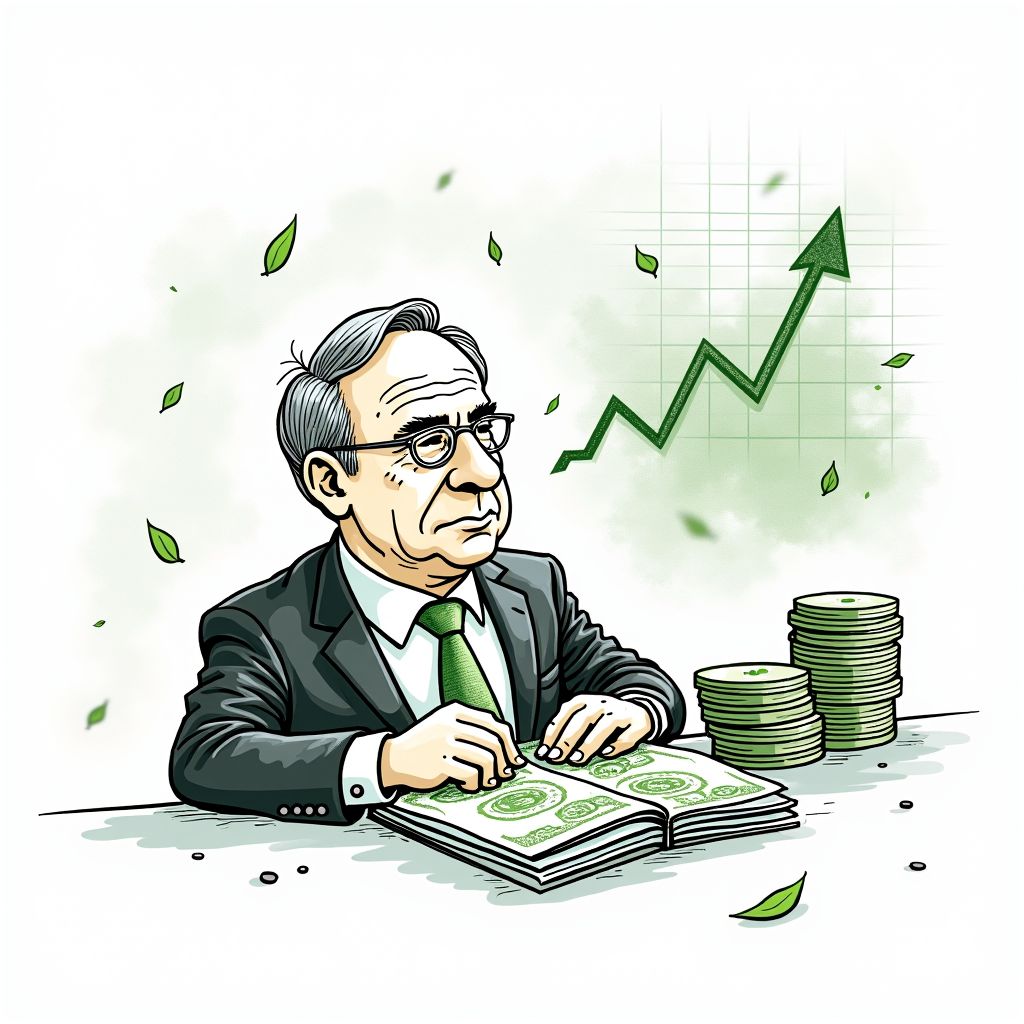
UN Secretary-General António Guterres warns that relying solely on GDP drives ecological disaster. He argues for new metrics valuing nature, noting that currently, destroying forests paradoxically boosts economic growth.
The Perverse Incentives of Current Accounting
Speaking on Monday, February 9, 2026, UN Secretary-General António Guterres emphasized that the global economy requires a radical transformation to stop rewarding pollution and waste [1][2]. The core of his argument rests on a fundamental flaw in how economic success is tallied: under current International systems, activities that degrade natural capital are often recorded as positive economic output. As Guterres explicitly noted, the destruction of forests and overfishing currently generate GDP, creating a dangerous illusion of progress while eroding the planet’s life-support systems [1][2]. This intervention follows a specialized conference held in Geneva in January 2026, where the UN convened leading economists—including Joseph Stiglitz, Kaushik Basu, and Nora Lustig—to address these systemic failures [1][2].
The Mirage of Growth
The urgency of this shift is underscored by recent economic performance data that highlights the disconnect between traditional growth metrics and planetary health. Global economic output expanded by 2.8 percent in 2025, with a slight easing to 2.7 percent expected for 2026 [5]. While these figures suggest resilience, they remain well below the pre-pandemic average of 3.2 percent [5]. More critically, this growth has come at a steep environmental cost; global carbon emissions and GDP per capita both reached new highs in 2024, and emissions hit another record in 2025 [4][5]. This correlation challenges the narrative of “green growth,” as evidence suggests that seven of nine planetary boundaries had already been breached to a dangerous degree by September 2025 [4].
A Complementary Dashboard, Not a Replacement
The initiative led by the UN does not seek to discard GDP entirely but rather to contextualize it within a broader framework of human and ecological well-being. Nora Lustig, a co-chair of the UN group tasked with devising these new measures, clarified that the goal is to complement GDP to help governments assess whether development genuinely advances equity and sustainability [1][2]. The group argues that economic growth can coexist with poverty and human rights violations—outcomes that remain invisible in conventional accounts [1]. Kaushik Basu, also a co-chair, warned that nations are currently “locked into the game” of competing on GDP metrics, a rivalry that fuels inequality and polarization while ignoring the welfare of ordinary citizens [1][2].
The Path Forward
This push for a new economic dashboard is driven by fears that current models are ill-equipped to handle future volatility. A report published on February 5, 2026, warned that existing economic frameworks fail to account for climate shocks, posing a risk of a global economic crash [1]. With the UN advocating for a shift that values environmental health alongside financial data, the focus is now on creating a system where the preservation of natural resources is valued as highly as their extraction [1][2]. As the world faces the reality that no nation has yet met the basic needs of its residents within biophysical limits [4], the proposed metrics aim to provide the necessary tools to navigate the precarious balance between development and survival.
Sources
- www.theguardian.com
- www.cna.al
- egypt.un.org
- www.theguardian.com
- caribbeannewsglobal.com
- www.instagram.com