Miami Upgrades World Cup Security with Real-Time Fan Reporting Technology
Miami, Monday, 1 June 2026.
To prevent past stadium breaches, Miami is deploying a real-time reporting app for the 2026 World Cup, allowing fans to instantly alert authorities to emergencies and security threats.
Integrating Technology for Crowd Management
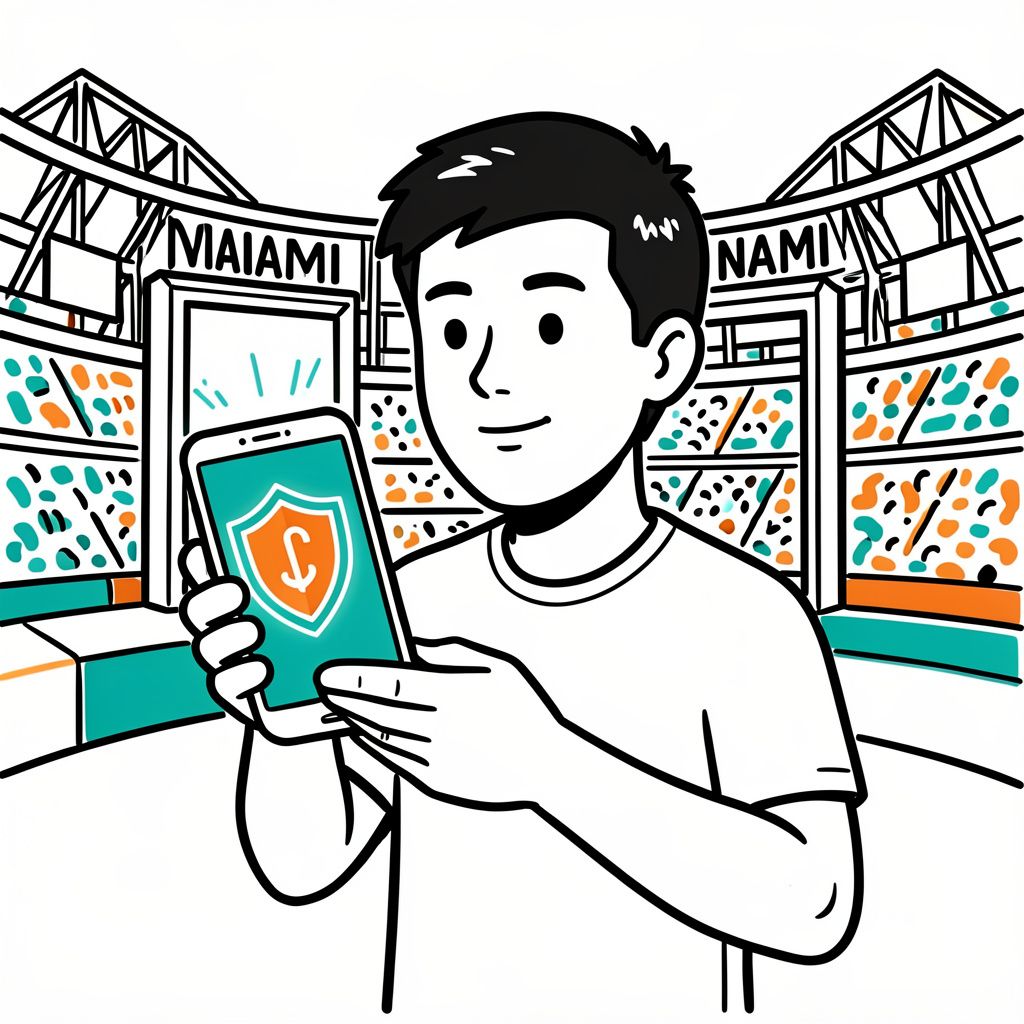
On June 1, 2026, public safety technology provider SaferWatch—a privately held enterprise with no public ticker symbol [alert! ‘No ticker symbol provided in source material’]—announced its selection as the official safety and communication platform for Miami’s upcoming FIFA World Cup festivities [1]. The deployment will cover the FIFA 2026 Kickoff Watch Party & Concert in Miami Beach on June 11, 2026, and the subsequent free, public FIFA Fan Festival at Bayfront Park, which will operate for 23 days from June 13 to July 5, 2026 [1]. Attendees will be required to utilize the SaferWatch application not only for emergency communications but also to access and display digital event tickets [1].
Mitigating Risks Following Past Breaches
The push for enhanced security infrastructure comes in the wake of significant crowd control failures and security breaches that marred the Copa America final on July 14, 2024 [2]. To prevent a repeat of those dangerous conditions, authorities are establishing multiple hard security zones around Hard Rock Stadium—temporarily rebranded as Miami Stadium for the tournament—and the surrounding festival areas [2]. FBI Deputy Director Andrew Bailey emphasized the strict enforcement of these perimeters, explicitly warning fans without tickets to stay away from the venues [2].
Multi-Agency Coordination and Drone Defense
Security operations for the seven matches slated for South Florida extend far beyond ground-level crowd management [2]. On May 29, 2026, the FBI and local law enforcement detailed a comprehensive aerial defense strategy [2]. The Federal Aviation Administration (FAA) is implementing temporary flight restrictions over both the stadium and the Bayfront Park Fan Festival [2]. To enforce this, authorities have deployed seven specialized Counter-Unmanned Aircraft Systems officers equipped to intercept unauthorized drones [2]. Violators breaching this airspace face severe federal penalties, including up to $100,000 in fines and a maximum of one year in prison [2].
The Future of Event Security Infrastructure
The selection of SaferWatch for a global stage like the World Cup represents a significant scaling of its operational capabilities. Historically utilized nationwide by school districts, healthcare organizations, and local law enforcement, the platform provides anonymous tip reporting, mass notifications, and live video streaming [1]. By bridging the communication gap between the public and first responders, the application facilitates real-time incident management [1]. As international sporting events continue to face escalating logistical and security challenges, the Miami World Cup blueprint—combining strict federal enforcement with decentralized, app-based public reporting—may set the standard for future host cities [GPT].