White House Defends Rising Tariffs Despite Steep Voter Backlash Over Living Costs
Washington, Tuesday, 10 November 2026.
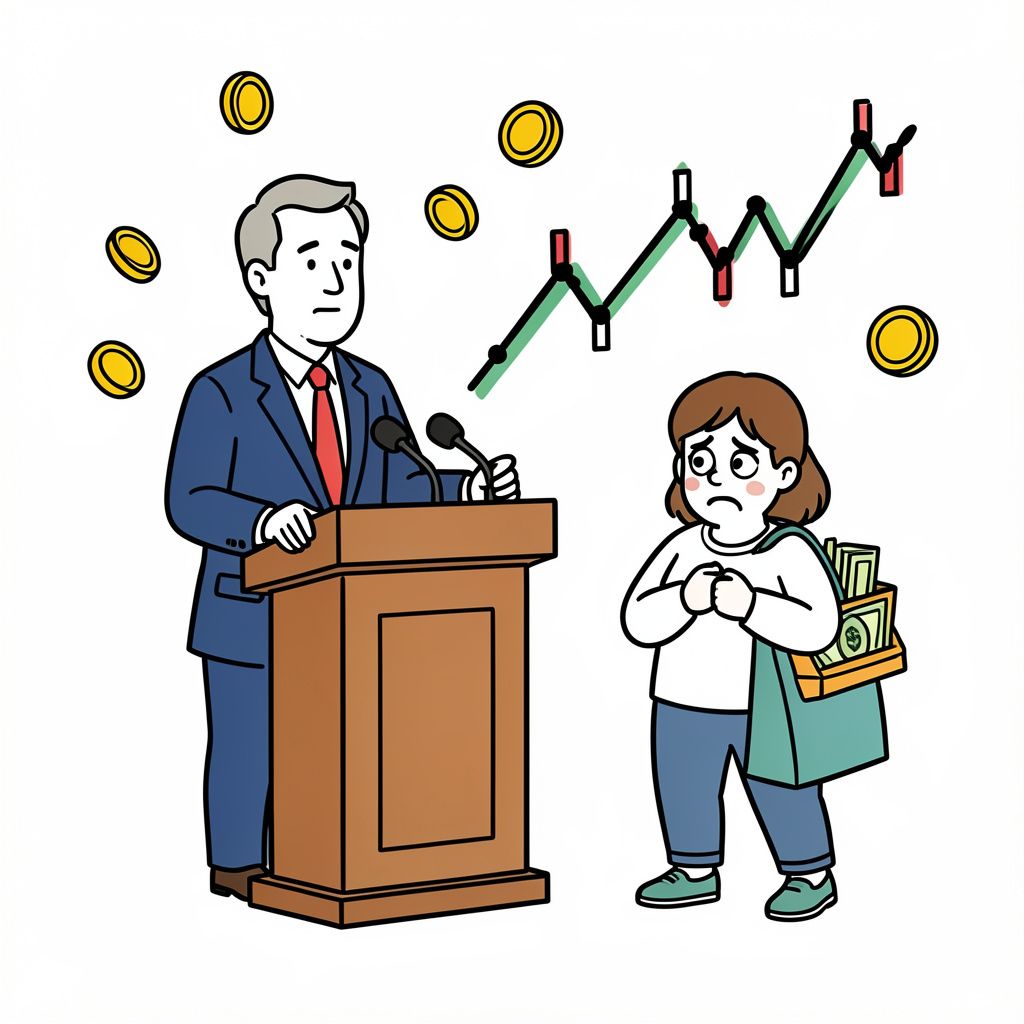
Despite 62% of Americans opposing import taxes and inflation remaining high at 3.7%, the White House pledged on Tuesday to aggressively maintain its tariff policy for the remaining term.
White House Doubles Down on Tariffs After Midterm Election Defeat
On Tuesday, 10 November 2026, the White House reaffirmed its commitment to maintaining and expanding tariffs despite overwhelming public opposition and economic headwinds. Speaking at the B20 summit in Washington, D.C., hosted by the U.S. Chamber of Commerce, Jim Goyer, Director of the White House Office of Public Liaison, declared: ‘And we are just getting started. Our ambition is to continue this pace for the remainder of the president’s term in office’ [1][4][10]. This stance comes just one week after the Republican Party suffered historic midterm losses, with voters explicitly blaming tariffs and inflation for their economic struggles. A Reuters/Ipsos poll conducted on 10 November 2026 revealed that 62% of Americans supported repealing the tariffs, while only 21% approved of the administration’s handling of the cost of living crisis [1][3].
Economic Fallout: Inflation Pressures Mount as Tariffs Persist
Government data released on 10 November 2026 showed that consumer prices rose by 0.4% in October 2026, exceeding economists’ expectations and pushing annual inflation to 3.7% in September 2026—well above the Federal Reserve’s 2% target [1][3]. Former National Economic Council Director Gary Cohn, now Vice Chairman of IBM, forcefully criticized the tariffs, calling them ‘a consumption tax on the U.S. consumer.’ He argued that tariffs disproportionately burden middle-class Americans, stating: ‘There’s the debit side of the balance sheet, which is every hardworking American who happened to pay the tariff through some product that they bought’ [1][3]. The Federal Reserve Bank of New York has estimated that approximately 26% of tariff increases are passed through to consumer prices, with effects taking 9 to 12 months to fully materialize in supply chains [GPT].
Business Leaders Sound Alarm Over Supply Chain Disruptions
Corporate executives at the B20 summit warned that sustained tariffs are accelerating supply chain fragmentation and regionalization. UPS CEO Carol Tomé noted that ‘supply chains are diversifying’ and ‘regionalizing,’ as companies relocate production closer to home to mitigate tariff risks [1]. This shift is exemplified by UPS’s decision to open a new $80 million air hub in the Philippines in October 2026, a move aimed at expanding its Asian network and improving connectivity across 1,100 global trade lanes [1]. Meanwhile, Peter Navarro, the White House’s top trade adviser, announced a dramatic escalation, declaring: ‘We are quadrupling down on tariffs’ [7]. Two independent estimates from the Yale Budget Lab and the Tax Foundation suggest that the average American household will bear an additional $1,100 and $820 in costs annually, respectively, under the current tariff regime [7].
Political and Economic Crosscurrents Shape Tariff Stance
The administration’s defiance in the face of voter backlash reflects a broader strategic calculus. President Trump’s recent appointment of Stephen Miller as White House Chief of Staff signals an intent to double down on hardline policies, including tariffs, despite the electoral drubbing [4]. Political analysts suggest that the White House views tariffs as a tool to bolster U.S. manufacturing and protect national security, even as critics argue they undermine economic competitiveness. Suzanne Clark, CEO of the U.S. Chamber of Commerce, acknowledged voter frustrations, stating: ‘Last week, American voters sent a clear message about the cost of living and their economic security’ [3]. However, she stopped short of calling for tariff repeal, highlighting the complex interplay between economic policy and political survival. With Democrats now controlling Congress, the legislative path to repealing tariffs remains fraught, requiring a two-thirds majority in the Senate and a veto-proof majority in the House [7].