Romney Urges Republicans to Tax the Wealthy to Avert Looming Fiscal Crisis
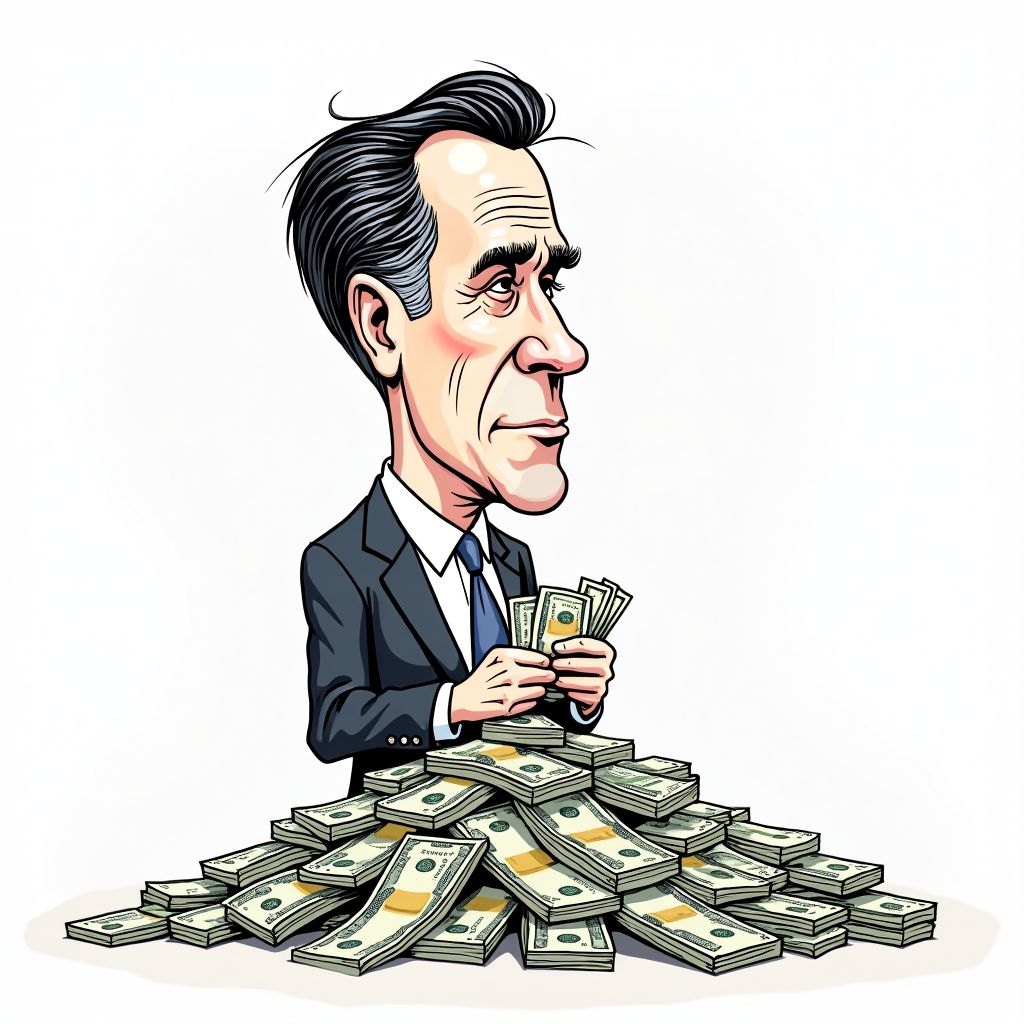
Washington D.C., Saturday, 20 December 2025.
Former Senator Romney urges the GOP to tax the wealthy, admitting “rich people like me” must pay more to prevent a projected 23% Social Security benefit cut by 2034.
A Strategic Pivot on Fiscal Policy
In a significant departure from the fiscal conservatism that defined his 2012 presidential campaign, Senator Mitt Romney (R-Utah) published an op-ed in The New York Times on December 19, 2025, arguing that the Republican Party must embrace tax increases on the wealthy to avert a national financial catastrophe [1][3]. Romney, who famously faced criticism for his remarks regarding the “47 percent” of Americans who pay no income tax during his presidential bid, has now reversed that narrative, declaring, “it’s time for rich people like me to pay more” [1][4]. This pivot comes as the Senator warns that relying solely on spending cuts is mathematically insufficient to address the nation’s escalating debt crisis [2].
Structural Changes to the Tax Code
Romney’s proposal targets specific mechanisms within the federal tax code that he describes as “caverns” benefiting the ultra-wealthy [1]. Central to his plan is raising the limit on income subject to the 12.4% federal payroll tax, which is currently capped at $176,100 for the year 2025 [2][3]. Additionally, Romney advocates for increasing capital gains taxes by eliminating exclusions for inherited stocks and real estate, specifically targeting depreciation rules that favor multi-billionaires [1][2]. These measures aim to correct a disparity highlighted by an August 2025 study from the National Bureau of Economic Research, which found that the 100 wealthiest Americans pay an effective tax rate of 22%, compared to approximately 30% for the average U.S. population [1].
The Fiscal “Cliff”
The urgency of Romney’s appeal is driven by the rapid accumulation of national debt, which has risen by $15 trillion since 2020 to reach a total of $38 trillion [2]. This represents a surge of approximately 65.217% in just five years. The fiscal strain has intensified to the point where U.S. interest payments on the debt surpassed the national defense budget in 2024, with interest costs projected to total $14 trillion over the next decade [2]. Furthermore, the Social Security Trust Fund is projected to be depleted by the 2034 fiscal year; without intervention, this would trigger an automatic benefit cut of about 23% for beneficiaries [1][3]. To mitigate this, Romney suggests making entitlements like Social Security and Medicare “need-based” and linking the eligibility age to life expectancy [2].
Economic Debate and Public Sentiment
Romney’s proposals have met resistance from conservative economists who maintain that the fiscal crisis is driven by expenditure rather than revenue. Adam Michel, director of tax policy studies at the Cato Institute, argues there is “no mathematical way to tax our way out” of the crisis and warns that removing the payroll tax cap could effectively raise the top marginal income tax rate by 12% [2]. Similarly, Judge Glock of the Manhattan Institute suggests that such hikes would push the limits of revenue generation [2]. However, public sentiment appears to align with Romney’s new stance; an October 2025 Gallup poll found that 63% of Americans support increasing income tax rates for upper-income earners, a view shared by 86% of Democrats and 38% of Republicans as of December 2025 [1].