Iranian Missiles Strike Dubai Luxury Hotel and Gulf Infrastructure in Regional Escalation
Dubai, Saturday, 28 February 2026.
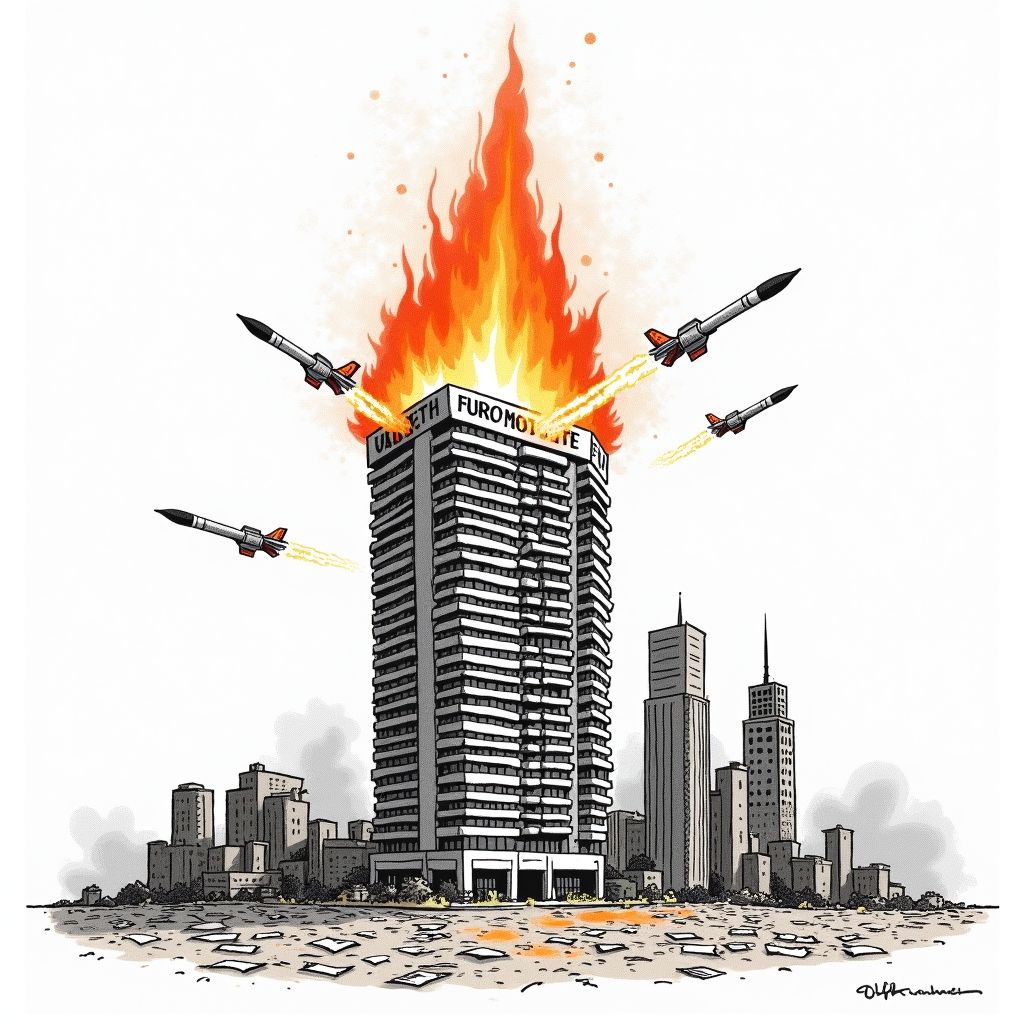
Iranian missiles set Dubai’s Fairmont Hotel ablaze today, marking a severe escalation that struck major business hubs across the Gulf and forced immediate airspace closures.
Tourism and Civilian Infrastructure Under Fire
The conflict in the Middle East has rapidly expanded beyond the military targets detailed in our previous coverage of “Operation Epic Fury” and Iran’s initial retaliation [https://wsnext.com/42eb266-Middle-East-conflict-Energy-security/], now striking directly at the region’s commercial and tourism sectors. On Saturday, February 28, 2026, the geopolitical landscape of the Gulf shifted dramatically as Iranian missiles and debris from interceptions struck civilian infrastructure in the United Arab Emirates [2][5]. In Dubai, the Fairmont The Palm, a luxury resort with nearly 400 rooms located on the iconic Palm Jumeirah archipelago, was set ablaze following a missile strike [3][6]. While the Dubai Media Office maintained that the emirate continues to operate normally and that safety remains a priority [4], reports confirmed that the hotel fire was caused by missile debris, resulting in injuries to at least four individuals [1][6]. Eyewitnesses, including tourists and influencers present at the scene, described a chaotic atmosphere where air defense interceptions occurred overhead for hours before the property was struck [3]. Simultaneously, in Abu Dhabi, the interception of three waves of ballistic missiles resulted in falling debris that killed one civilian, identified as a worker of Asian nationality [2].
Widespread Regional Disruption
The scope of Saturday’s offensive, termed “Operation Truthful Promise 4” by Iran’s Islamic Revolutionary Guard Corps (IRGC) [5], extended well beyond the UAE, disrupting critical infrastructure across the Gulf Cooperation Council (GCC) states. In Kuwait, a drone crashed into the country’s main international airport, wounding several employees and damaging the facility, challenging the security of a major regional transit hub [1]. Bahrain also faced significant aggression; a high-rise building in Manama’s Seef district was hit by a drone and set on fire, while other strikes reportedly targeted the national security agency and the vicinity of the U.S. Navy’s Fifth Fleet headquarters [1][5][6]. Qatar saw missiles targeting the Al-Udeid air base, the largest U.S. military facility in the region [5]. Consequently, the UAE General Civil Aviation Authority suspended most flights from Abu Dhabi and Dubai, effectively closing the airspace and severing vital global travel connections [6].
Diplomatic Fallout and Safety Warnings
This escalation has drawn sharp diplomatic rebukes and triggered urgent safety advisories. Qatar’s Ministry of Foreign Affairs condemned the strikes on its territory as a “flagrant violation of its national sovereignty” and an unacceptable escalation [5]. Meanwhile, the United Kingdom’s Foreign, Commonwealth & Development Office issued urgent warnings to British nationals in Bahrain, the UAE, Qatar, and Kuwait to remain indoors and avoid travel [6]. As the U.S. Mission to the UAE issued shelter-in-place orders [3], former President Donald Trump, monitoring the situation from Mar-a-Lago, had previously announced “major combat operations” aimed at neutralizing Iran’s nuclear capabilities [3][6]. With Iranian proxies, including Kataib Hezbollah and Yemen’s Houthis, vowing to join the strikes [1], the region faces a volatile trajectory that threatens to further destabilize global energy markets and international commerce.