Rising Inflation and Unpaid Wages Trigger Widespread Protests Across Iran
Tehran, Saturday, 12 September 2026.
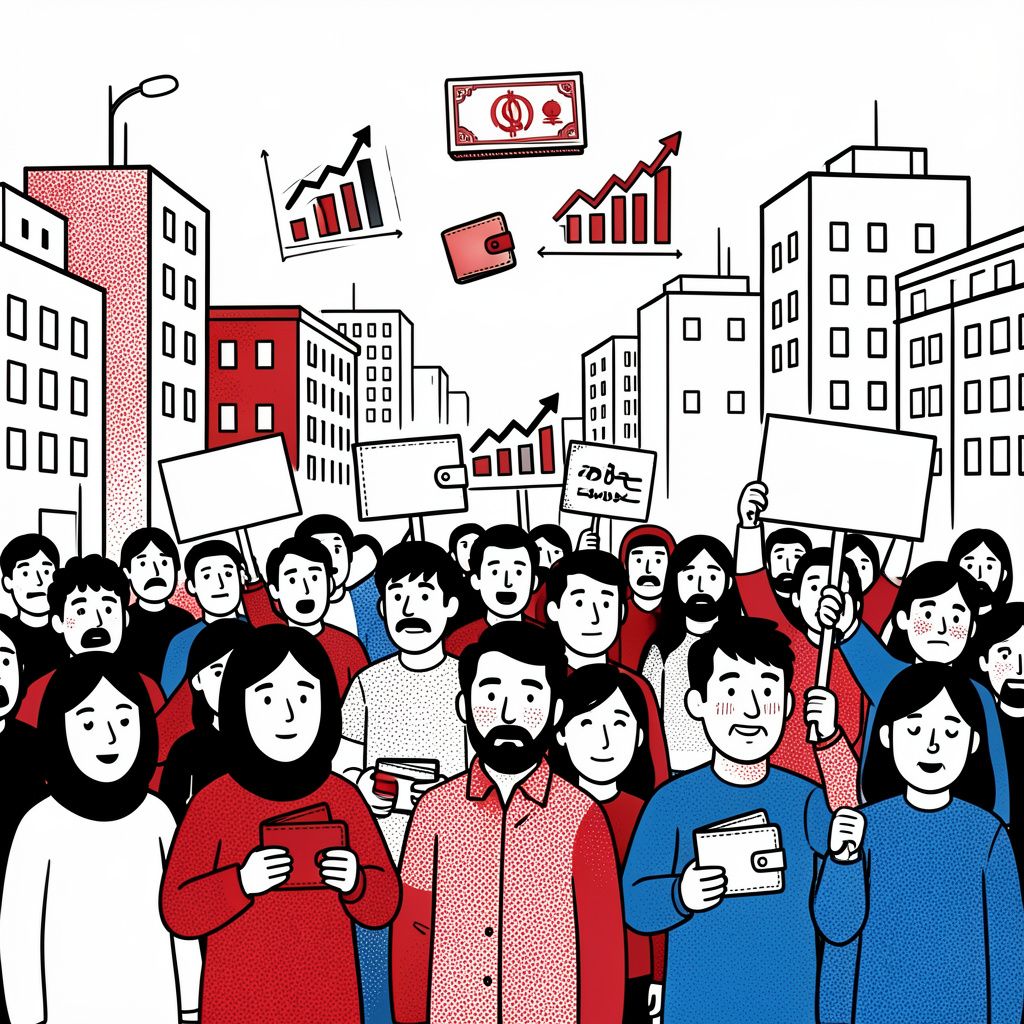
Severe inflation and unpaid wages have driven 40 percent of Iran’s population into absolute poverty, triggering widespread protests and threats of nationwide academic strikes this September.
A Devastating Confluence of War, Blockade, and Hyperinflation
The economic foundations of Iran have entered a state of rapid destabilization following the outbreak of the US-Israeli war on February 28, 2026 [1]. This geopolitical conflict was compounded on April 13, 2026, when a US naval blockade was imposed on the country [1]. The consequences of this maritime chokehold have been severe; on August 29, 2026, Iranian President Masoud Pezeshkian acknowledged that the naval blockade had caused Iran to lose 35 percent of its total imports and exports [1]. This sudden contraction in trade has severely disrupted domestic supply chains and starved the manufacturing and retail sectors of vital materials [1].
Poverty and Hyperinflation Grip the Population
As of September 11, 2026, at least 40 percent of the Iranian population is living below the absolute poverty line, representing a sharp increase from the pre-war level of 34 percent [1]. This shift constitutes an absolute increase of 6 percentage points, meaning that approximately 17.647% more of the population has fallen into absolute poverty since the war began [1]. An additional 40 percent of the country’s citizens are currently classified as being at risk of falling below the poverty threshold [1]. This widespread impoverishment is driven by rampant hyperinflation; economic metrics from August 2026 revealed that the annual inflation rate had surged to up to 80 percent, with food inflation reaching an astronomical 130 percent [1].
The Collapse of Purchasing Power and the Pension Crisis
The purchasing power of Iranian workers and pensioners has plummeted by approximately 50 percent since the beginning of 2026, according to a September 10, 2026, report by the labor news agency ILNA [3]. This collapse is illustrated by the gulf between the country’s minimum wage—which stood at approximately 17 million toman, or €63, based on September 9, 2026, exchange rates [1]—and the soaring cost of consumer goods. For instance, an electronics retailer reported that the wholesale price to restock a single mobile phone had reached 76.5 million toman (€283) [1], a sum that represents 4.5 times the entire monthly minimum wage of an ordinary worker [1]. Compounding this strain, the director of the Iranian retirement syndicate reported that as of September 7, 2026, the government had ceased paying state pensions for five consecutive months [1].
Unpaid Wages and Localized Labor Strikes
The prolonged withholding of wages has sparked intense labor unrest across various public and industrial sectors. On September 8, 2026, healthcare workers and nurses held a coordinated sit-in in Kermanshah to protest unpaid wages [1]. This followed earlier strikes by nurses in Neyshabur on August 11, 2026, and industrial workers in Mahshahr on August 15, 2026 [1]. Coordinated demonstrations by retirees representing teachers, telecommunications workers, and Social Security Organization retirees also took place on September 6, 2026, across major urban hubs including Tehran, Ahvaz, Shush, Kermanshah, Rasht, and Dezful [2]. The desperation of the workforce was tragically highlighted in Ahvaz, where a railway worker self-immolated following his dismissal and five months of unpaid wages [3].
Rising Utility Costs and Impending Academic Boycotts
The financial pressure on citizens has been further exacerbated by sudden hikes in state-controlled prices. On September 8, 2026, fuel prices doubled as station-card gasoline rose to 10,000 tomans per liter, causing long queues at fuel pumps that lacked five-digit displays [3]. This was followed on September 11, 2026, by a 45 percent increase in the price ceiling for fixed-line to mobile phone calls, rising from 625 to 906 rials per minute [3], which is an absolute increase of 281 rials per minute [3]. In response to these unmitigated cost-of-living increases, the syndicate of university professors issued an open letter on September 9, 2026, threatening a complete boycott of classes for the upcoming academic year starting September 23, 2026, unless the government fulfills its salary promises [1].
Regime Repression and the Threat of Nationwide Unrest
Fearing a repeat of the January 2026 bazaar protests, the Iranian regime has maintained a policy of strict security repression [1][2]. In the eight months leading up to September 11, 2026, the government executed at least 54 political prisoners, including 31 demonstrators linked to the January protests [1]. Armed clashes have also broken out, such as a deadly security operation in Mehran, Ilam Province, which resulted in the death of dissident Mojtaba Babakhani [3]. Despite this intense crack-down, independent analysts and experts warn that because the authorities failed to announce any structural solutions or economic remedies by September 12, 2026 [2], these scattered professional and labor grievances are highly likely to coalesce into a broader, uncontrollable nationwide protest movement [2].